Camping with toddlers sounds like a recipe for chaos: a tiny person with endless energy, no sense of danger, strong opinions about bedtime, and a campfire right there. And yet, thousands of families do it every summer and call it one of the best things they have done with their little ones.
The trick is to plan for toddlers, not for yourself. That means short drives, easy campsites, flexible schedules, lots of snacks, and a sleep plan. This guide covers everything toddler parents ask about, from sleeping in a tent and staying warm to safety around fire and water, naps, food, potty training,g and a sample first trip. If you have never camped as a family before, read our first-time family camping guide too.
Quick answer: can you camp with a toddler? Yes. Choose a drive-up campground close to home with restrooms, book one or two nights, practice sleeping in the tent first, keep your toddler’s usual routine as much as possible, dress them in warm layers, bring a familiar comfort item, stay within arm’s reach near fire and water, and keep your plans flexible.
Is Camping With a Toddler a Good Idea?
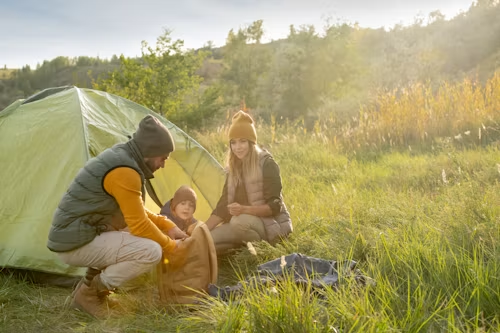
For most families, yes. Toddlers love dirt, sticks, water, bugs, grass,s and being outside, and they often sleep well after a day of fresh air. Camping also helps them practice independence, with simple tasks like carrying a small bag or helping to set the table.
It is more work than a hotel stay, and some trips will go better than others. But with realistic expectations, you can build great memories, and each trip gets easier.
Step 1: Choose the Right Campsite
For toddlers, convenience matters most.
- Drive-up site, so you can park beside the tent and carry gear easily.
- Restrooms and running water nearby, for diaper changes, potty breaks, and handwashing.
- Shade, since toddlers overheat quickly and shade helps nap time in the tent.
- Flat, clear ground, with few rocks, roots,s and holes.
- Away from busy roads, steep drops, ps and fast water.
- A play area or short, easy trail nearby.
- A short drive, about one to two hours, is plenty for a first trip.
Book early, especially for weekends and holidays. Many campgrounds are reserved through Recreation.gov or state park systems. Check the official page for rules on quiet hours, fires, and pets.
Step 2: Keep the Trip Short and Simple
One night is a great start. Two nights is plenty for most toddlers. Choose simple activities and avoid packing the schedule. A walk, some playtime, and a campfire are enough.
Step 3: Practice Sleeping in the Tent
Sleep is the biggest worry for most parents, so rehearse.
- Try a backyard or living room campout first, with the same sleeping setup you will use at camp.
- Let your toddler explore the tent and get used to it in daylight.
- Keep the usual bedtime routine, such as bath, pajamas, teeth, story,y and song.
- Bring familiar sleep items, like a favorite blanket, stuffed animal, al or white noise device.
If your toddler is nervous, a small battery lantern can make the tent feel cozy.
How to Help Toddlers Sleep Well While Camping
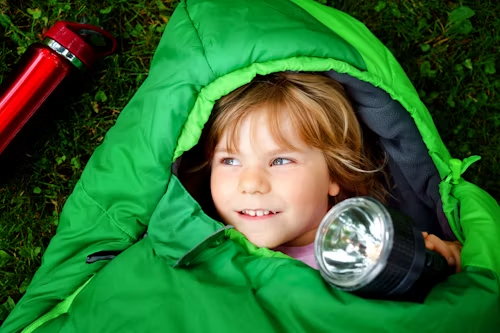
- Use a tent big enough for everyone, with room for pads, bags, and a few belongings.
- Insulate from the ground. A sleeping pad helps keep toddlers warm, since the ground pulls heat away from the body.
- Use a sleeping bag or sleep sack suited to the temperature instead of loose blankets. For babies under one year, follow safe-sleep guidance from your pediatrician and the American Academy of Pediatrics, including a firm, flat sleep surface and no loose bedding. HealthyChildren.org has detailed advice.
- Dress for sleep. Use a warm base layer, socks, and a hat if it is cool, and keep clothes dry.
- Keep it dark and quiet. Choose a shaded site, and use a white noise machine or phone app to cover campground noise.
- Keep naps flexible. A nap in the tent, a carrier,r or the car is fine, and a short rest is better than a missed one.
- Expect an earlier or later bedtime. Daylight and excitement change everything, and that is okay.
- Sleep close. Many parents sleep next to their toddler so they can respond quickly.
If it is not working, there is no shame in packing up. Many families keep a plan B, like a nearby hotel or driving home.
Step 4: What to Pack for Camping With a Toddler
You can start with our full family camping checklist and add toddler-specific items. Our guide to the best travel gear for kids explains what is worth buying.
Sleep and comfort
- Sleeping bag or sleep sack for the temperature, plus a sleeping pad
- Pajamas, extra layers, socks,s and a warm hat
- Comfort item, such as a blanket or stuffed animal
- White noise device or phone app
- Small lantern or night light
Clothing
- Several full changes of clothes (mud, spills, and accidents will happen)
- Rain jacket and rain pants
- Sun hat and sunglasses
- Sturdy closed shoes, plus spare socks. See our guide to hiking shoes for kids for fit tips.
Diapering and potty
- Diapers, wipes, changing mat, and bags to pack out used diapers
- Portable potty or a potty seat, if potty training
- Extra underwear and wet bags
Food and feeding
- Familiar snacks and meals
- A lunchbox and cooler with ice packs
- Sippy cups, bottles and bibs
- Child-safe plates, bowls and utensils
- A high chair or booster seat, or a portable seat
Safety and health
- First-aid kit, thermometer and any prescribed medicines
- Sunscreen and insect repellent suitable for toddlers (check label age limits)
- Whistle for older toddlers
- Contact card with your name and phone number in their pocket
Play
- A few small toys, books, and a bucket and shovel
- A small backpack, so they can carry something
Step 5: Food for Camping With Toddlers
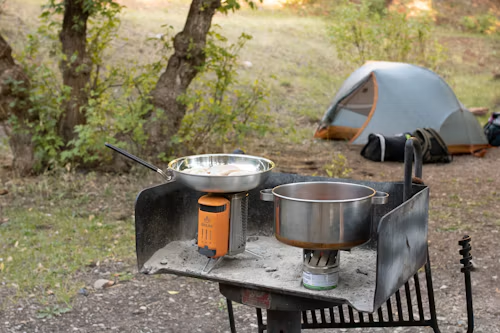
Toddlers are picky eaters on a normal day, and camping does not change that. Keep meals familiar.
- Bring favorites. Pasta, sandwiches, fruit, cheese, yogurt, crackers,s and cereal travel well.
- Offer snacks often. Small, frequent snacks help prevent meltdowns.
- Prepare meals at home when you can, such as chopped vegetables and pre-cooked foods.
- Avoid choking hazards such as whole nuts, whole grapes, hard candy,dy and popcorn.
- Keep food cold. Use plenty of ice packs, and keep the cooler closed. Do not leave perishable food out for more than two hours, or one hour in hot weather.
- Wash hands before eating.
- Use safe water. If you must use stream or lake water, treat it first, and boil water for at least one minute (three at high elevations).
For more meal ideas, see our guide to easy camping meals for kids.
Step 6: Toddler Safety at the Campsite
Toddlers move fast and do not understand danger. Keep a close watch.
Fire safety
- Keep toddlers well away from campfires, stoves, and hot cookware.
- Set a clear boundary, such as a ring of rocks or camp chairs, and explain “hot, do not touch.”
- Never leave a fire unattended, and put it out completely before bed. Follow the U.S. Forest Service’s Smokey Bear rule: drown, sti,r and feel.
- Keep matches, lighters, rs and fuel out of reach.
Water safety
- Stay within arm’s reach at all times near lakes, streams and pools.
- Do not rely on floaties or life jackets as a substitute for supervision.
Tent and ground hazards
- Mark tent lines with bright tape so they are easy to see.
- Check the site for sharp rocks, glass, ant nests, sticks, and low branches.
- Keep zippers closed so toddlers cannot wander out at night. Some families use a tent door alarm or a bell.
Carbon monoxide
Never use stoves, heaters, or grills inside a tent.
Wildlife and bugs
- Store food in locked vehicles or bear boxes, and keep it out of the tent.
- Do not let toddlers chase or feed animals.
- Check for ticks after outdoor play. The CDC has tick prevention advice.
- Check repellent labels for age limits, and use bug netting where helpful.
Sun and heat
- Use shade, hats, light clothing, and sunscreen as appropriate for their age.
- Offer water often.
- Watch for signs of overheating and move to shade if needed.
Weather
Check the forecast with the National Weather Service, and be ready to retreat to the car or a building if storms arrive.
For a full safety checklist, see our family travel safety tips.
Step 7: Keeping Toddlers Busy and Happy
Toddlers need constant, simple activities.
- Dirt and sand play: a bucket and shovel can entertain for an hour.
- Nature scavenger hunt: find a leaf, a rock, a stick,k and a feather.
- Water play: splashing in a shallow, safe spot with an adult in arm’s reach.
- Short walks: a few hundred feet to the creek or a log. Our guides to hiking with toddlers and how to get kids to like hiking have ideas.
- Songs, stories, es and puppets around the tent.
- Bubbles and chalk for easy fun.
- A job for them: carrying firewood sticks, helping with the table or putting spoons on plates.
- Campfire time at a safe distance, with songs and marshmallow roasting by adults.
Do not overschedule. Toddlers need downtime too.
Step 8: Naps, Meltdowns and Routines
- Protect nap time when you can. Many toddlers nap in the tent, a carrier, or the car.
- Plan quiet time in the middle of the day, especially if your child gives up naps.
- Expect meltdowns. Tired, hungry, or overstimulated toddlers will fall apart. Stay calm, offer snacks, water, and a hug, and give them a quiet space.
- Keep the routine familiar. Even small things, like a bedtime song, anchor a toddler in a strange place.
Step 9: Potty Training and Diapers
- Pack out used diapers. Never bury or leave them at the campsite.
- Bring a portable potty, so you do not have to hike to the restroom with a toddler who needs to go right now.
- Know where the restrooms are and walk there before bed.
- Pack extra clothes, since accidents are likely.
- Use a night light and flashlight to help with trips at night.
If you must go in the woods, follow Leave No Trace guidance. The Leave No Trace Center recommends digging a small hole well away from water, trails, ls and camp, and packing out toilet paper.
A Sample First Camping Trip With a Toddler
This is an example for a one-night trip. Adjust it for your child.
| Time | What happens |
|---|---|
| 10:00 | Leave home after breakfast, drive to camp |
| 12:00 | Arrive, walk the site, eat a picnic lunch |
| 1:00 | Toddler nap in the car or tent while you set up quietly |
| 3:00 | Play, short walk, and snack |
| 5:30 | Dinner and cleanup |
| 7:00 | Campfire and songs (at a safe distance) |
| 7:30 | Pajamas, teeth, story and bed |
| 7:00 next day | Slow breakfast, play and pack up |
| 11:00 | Check out and head home |
Treat this as a framework, and expect the plan to bend.
Common Mistakes When Camping With Toddlers
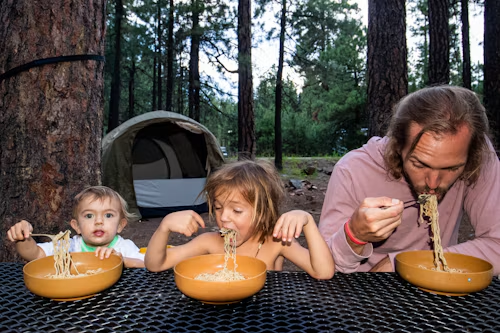
- Going too far from home. Start close.
- Skipping the practice run. Test the tent and sleeping setup first.
- Underestimating the cold. Toddlers get cold fast, so pack warm layers and a good pad.
- Forgetting enough diapers and wipes.
- Taking your eyes off fire and water, even for a moment.
- Overplanning. One or two simple activities a day is enough.
- Not bringing comfort items.
- Ignoring your own needs. Bring coffee, snacks, and a way to rest.
Next Steps as Your Toddler Grows
As your toddler grows, you can try longer trips, more adventurous campsites, and short hikes. Our guides to winter hiking with kids and backpacking with kids show how to take family adventures further.
Frequently Asked Questions
Can toddlers sleep in a tent?
Yes. Most toddlers can sleep in a tent with the right sleeping bag or sleep sack, an insulated pad, warm clothes,s and a familiar comfort item. A practice night at home helps.
How do you keep a toddler warm camping?
Dress them in layers, use a sleeping bag rated for the temperature, put an insulated pad underneath, keep clothes dry, add a hat and socks, and offer a warm drink before bed.
What age can toddlers go camping?
Toddlers of any age can camp with planning, and many families camp with babies too. Ask your pediatrician if you have questions about your child, and follow safe-sleep guidance for infants.
How do you camp with a toddler who will not sleep?
Stick to the usual bedtime routine, bring familiar items, use white noise, keep the tent dark and cool but warm enough, and be flexible. If it does not work, you can pack up or try again another time.
What should I pack for a toddler camping trip?
Sleep gear, extra clothes, diapers and wipes, familiar snacks and food, a first-aid kit, sun and bug protection, comfort items and toys. Use our camping checklist as a base.
How do you keep a toddler safe near a campfire?
Keep them well away, set a clear boundary, hold their hand near the fire, never leave the fire unattended, and put it out completely at the end of the night.
Final Thoughts
Camping with toddlers is not about doing everything right. It is about choosing an easy spot, bringing what you need, staying flexible, and enjoying small things like toast on a camp stove or a toddler discovering a worm. Some trips will be smooth, and some will be messy, but they are all part of building a family that loves the outdoors.
Looking for more? Explore the best family vacations in the U.S. for places with great campgrounds, and see our guide to hiking with a baby for the next adventure.
Pingback: First-Time Family Camping: A Complete Beginner's Guide