If your kids groan the moment you say the word “hike,” you are not alone. Many children think hiking means walking for a long time with nothing to do. The good news is that kids do not actually dislike the outdoors. They dislike being bored, tired, hungry, hot, or pressured. Fix those problems, and many “I hate hiking” kids become enthusiastic trail explorers.
This guide shares 15 practical ideas to help kids like hiking, along with age-based advice, quick fixes for common complaints, and ways to build a habit. If you are just getting started, our beginner’s guide to hiking with kids is a good place to begin.
Quick answer: how do you get kids to like hiking? Keep hikes short, choose trails with a fun payoff, bring snacks, give kids real jobs and games, let them lead and stop before they are exhausted. A happy 30-minute hike builds enthusiasm much better than a long, miserable one.
Why Kids Resist Hiking
Understanding the reason behind the complaint helps you solve it. Common causes include:
- Boredom. Walking with no goal or activity feels pointless.
- Tiredness. Hikes that are too long, too early, or too late in the day.
- Hunger or thirst. Low energy leads to grumpiness fast.
- Discomfort. Hot, cold, wet, itchy, blisters, or ill-fitting shoes.
- Pressure. Being told to keep going or hurry up makes hiking feel like a chore.
- Fear. Steep trails, noises, bugs, or the dark can worry small children.
- Lack of choice. Kids like having a say in what they do.
Almost all of these are fixable.
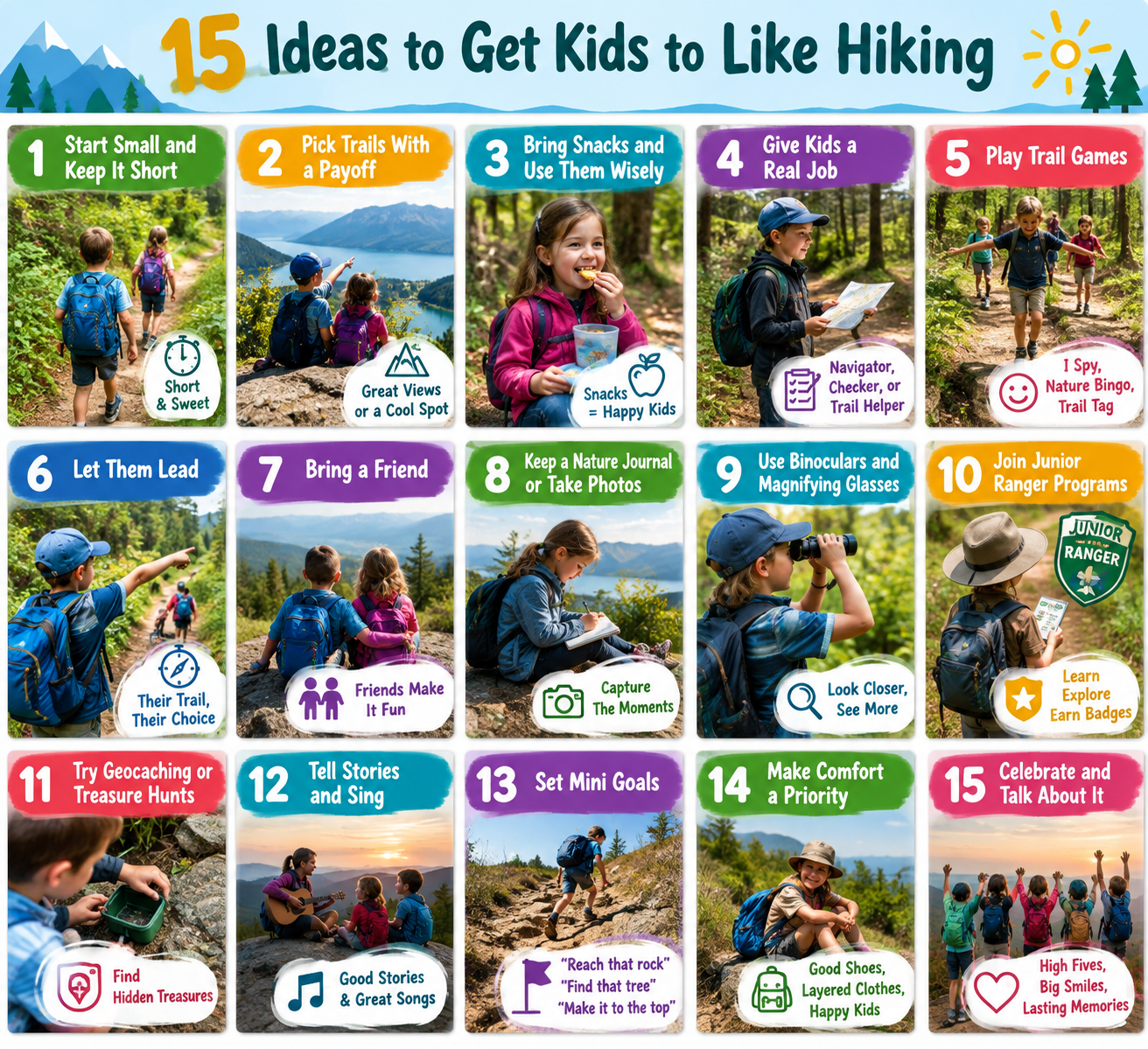
15 Ideas to Get Kids to Like Hiking
1. Start Small and Keep It Short
Begin with hikes of about half a mile to two miles, depending on age, and end while kids are still having fun. A short success beats a long struggle. Check the distance guide in our hiking with kids guide for age-based ideas.
2. Pick Trails With a Payoff
Children walk better when there is something to look forward to: a waterfall, a lake, a bridge, a cave, a lighthouse, a playground,d or a creek to splash in. Our list of family-friendly hikes in the U.S. includes trails with rewards like these.
3. Bring Snacks and Use Them Wisely
Snacks are one of the strongest motivators. Pack easy favorites and offer them every 45 to 60 minutes, or at landmarks along the way. Save a special treat for the end. Check allergies and avoid choking hazards for younger children.
4. Give Kids a Real Job
Children love responsibility. Ideas include:
- Trail leader: Walk first, within sight of an adult
- Navigator: Look for trail markers or follow the map
- Snack manager: Hand out snacks at breaks
- Wildlife spotter: Watch for birds and animals
- Photographer: Take photos of the best finds
5. Play Trail Games
Games turn walking into play. Try:
- I spy with nature items
- Scavenger hunts (a pinecone, a feather, something red, a smooth rock)
- Trail bingo with pictures of items to find
- Animal tracking: Look for prints, nests, and holes
- Counting games: Count birds, bridges, or red leaves
- 20 questions about animals or plants
6. Let Them Lead
Letting kids choose which way to go (at safe, obvious junctions) and set the pace gives them ownership. If they want to stop and look at every beetle, that is okay. You are building a relationship with nature, not training for a race.
7. Bring a Friend
Kids walk much farther when they are with a buddy. Invite a friend or another family. Friends make hiking social, and kids often forget they are tired.
8. Keep a Nature Journal or Take Photos
Give kids a small notebook, pencil,l or camera. They can sketch a leaf, record the animals they see, ee or take photos of the day’s best finds. It makes hiking creative and gives them something to show afterward.
9. Use Binoculars and Magnifying Glasses
Simple tools make nature feel like a mission. A small pair of binoculars for birds, or a magnifying glass for bugs and moss, helps kids notice details.
10. Join Junior Ranger Programs
Many national parks and some state parks offer free Junior Ranger programs with activity booklets and badges. Kids complete activities, learn about the park, and earn a badge or certificate. Check the official National Park Service page for the park you plan to visit. Our guide to the best national parks for families with young kids highlights parks that work well for this.
11. Try Geocaching or Treasure Hunts
Geocaching is a real-world treasure hunt where you use a phone or GPS to find hidden containers. You can also create your own treasure hunt by hiding a small prize along the trail for kids to find. Always follow park rules about hiding or digging for objects.
12. Tell Stories and Sing
Make up stories about the creatures of the forest, give trees funny names, or sing silly songs. Storytelling keeps younger children’s minds busy and legs moving.
13. Set Mini Goals
Break the hike into small chunks. “Let’s get to the big rock, then have a snack.” Mini goals feel doable, and kids enjoy ticking them off.
14. Make Comfort a Priority
A cranky child is often an uncomfortable child. Check:
- Shoes and socks for fit and blisters
- Layers for heat or cold
- Sun protection and bug protection
- Pack weight (keep kids’ packs very light)
- Water and bathroom breaks
Our guide to the best travel gear for kids helps you choose items that keep children comfortable. If it is raining, read our guide to hiking in the rain with kids, and if your child is very small, see hiking with toddlers.
15. Celebrate and Talk About It
Finish with a treat, a picnic,c or a swim. Afterward, ask, “What was your favorite part?” and “What do you want to find next time?” Hang a photo or a pinecone on the fridge. Positive memories make kids ask for the next hike.
Ideas by Age
| Age | What works best |
|---|---|
| Toddlers (1-3) | Very short walks, sensory games, snacks, being carried when tired |
| Preschoolers (3-5) | Scavenger hunts, animal spotting, mini goals, fun destinations |
| School age (6-10) | Jobs, Junior Ranger programs, journals, geocaching, longer goals |
| Tweens (10-12) | Photography, navigation, friends, a say in trail choice |
| Teens | Challenge, independence, social time, photography and music |
Teens often respond to independence and social connection more than games. Let them plan part of the route, bring a friend, nd or capture the hike on camera.
Quick Fixes for Common Complaints
| What your child says | Try this |
|---|---|
| “I’m bored.” | Start a game, give a job, point out something unusual |
| “I’m tired.” | Stop for a rest, snack and water, carry them briefly or turn around |
| “I’m hungry.” | Snack right away, since hunger causes most meltdowns |
| “My feet hurt.” | Check shoes and socks for blisters or rubbing, then adjust |
| “It’s too hot.” | Find shade, drink water, remove a layer |
| “I’m scared.” | Slow down, hold hands, name what you see,e and choose an easier trail next time. |
| “Are we there yet?” | Show progress on the map, set a mini goal |
What to Say (and Avoid Saying)
The way you talk about hiking shapes how kids feel about it.
Try:
- “Let’s see what we can find.”
- “You are doing a great job. Want a snack at the next bench?”
- “Which way should we go at the fork?”
- “That was a tough hill, and you did it.”
Avoid:
- “Stop complaining.”
- “It’s only a little further” (unless it is true)
- “You are slowing everyone down.”
- Comparing them to siblings or other kids
Kids are quick to notice when hiking becomes a test. Keep the tone light and flexible.
Build a Hiking Habit
Enthusiasm grows with repetition. A few ways to make hiking a regular part of family life:
- Pick a regular day, such as one weekend morning a month
- Make a hiking list or map and let kids color in trails they have finished
- Start a trail photo collection or scrapbook
- Join a challenge, such as a state park hiking program (where available)
- Plan a “special” hike for birthdays or holidays
- Gradually increase distance as stamina grows
When your child is ready for a bigger adventure, our guide to backpacking with kids shows how to take the next step, and our article on adventure activities that are safe for kids shares other ways to add excitement.
Safety Basics for Fun Hikes
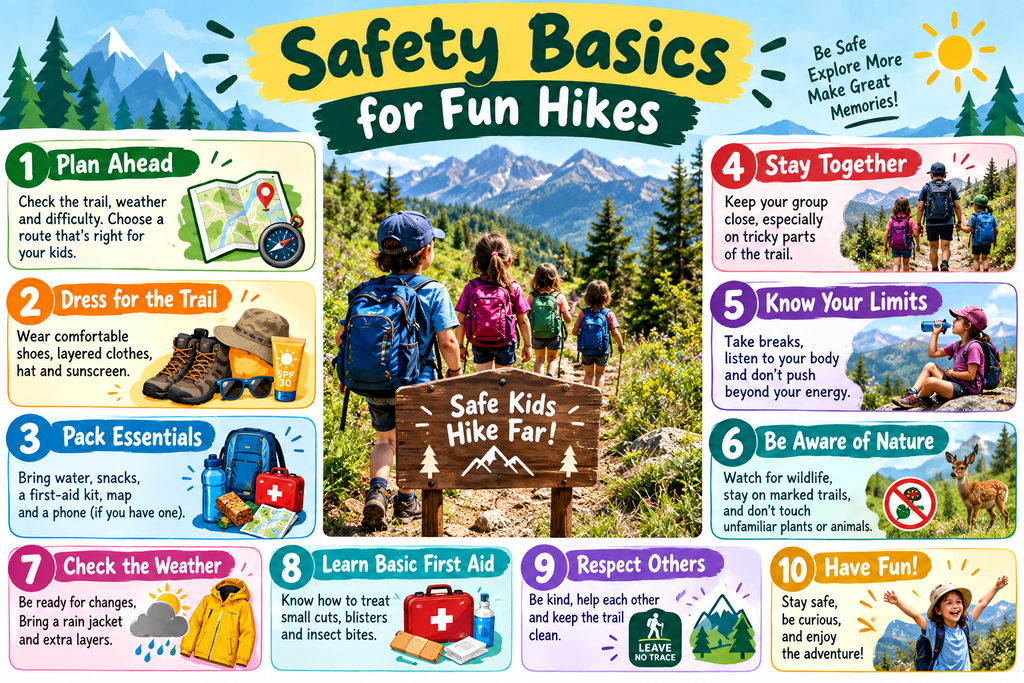
Motivation matters, but safety comes first. Teach kids to stay on the trail, stay within sight,t and use a whistle in an emergency. Our guide to family travel safety tips covers sun, heat, water, wildlife, and lost-child plans in detail. For sun safety and children’s health topics, the American Academy of Pediatrics’ HealthyChildren.org is a trusted resource. Teaching Leave No Trace habits, such as packing out trash and respecting wildlife, is also a great way to give kids a sense of purpose.
Frequently Asked Questions
How do I get my kids to like hiking if they hate it?
Find the cause first. Common reasons are boredom, tiredness, hunger, discomfort, or pressure. Keep hikes short, choose trails with a fun reward, bring snacks, games,s and let your child help plan.
What age do kids start enjoying hiking?
Many kids enjoy it from toddler age if hikes are short and playful. Interest often grows as they gain stamina and independence. Match the trail and activities to your child’s age and mood.
How do I motivate a child who refuses to walk?
Stay calm, offer a snack and rest, change the game, or set a mini goal. Carrying them for a bit or turning back is fine. Pushing too hard can make them dislike hiking.
What are the best games to play while hiking with kids?
Scavenger hunts, trail bingo, I Spy, animal tracking, and storytelling are popular and need no equipment. Adding a Junior Ranger booklet or geocaching gives older kids a bigger challenge.
How long should a first hike with kids be?
Short. About half a mile to two miles is a comfortable start for many families, depending on age. End on a high note, and add distance gradually.
Should I bribe kids to hike?
Small rewards such as a special snack or a picnic at the destination are fine and can work well. Try to focus rewards on the experience itself, like a swim or an ice cream stop, rather than making hiking feel like a task they must be paid for.
Final Thoughts
The secret to getting kids to like hiking is not forcing it. It is making the trail feel like a place where good things happen: snacks, discoveries, games, friends, and a little bit of independence. Start with short hikes, pay attention to your child’smood,d and let them take part in the plan. Over time, they may surprise you by being the one who asks, “When can we go again?”
Ready for more ideas? Browse the best family vacations in the U.S. for places to explore, or check our guide to family-friendly mountain getaways for a base near great trails.
Pingback: First-Time Family Camping: A Complete Beginner's Guide