Backpacking with kids sounds like a stretch. You are carrying your home on your back, sleeping in a tent far from the car, and feeding a family without a kitchen. Yet thousands of families do it every year, and many say it is the trip their kids remember most. The secret is not strength or fancy gear. It is starting small, planning well, and keeping the whole thing fun.
This beginner’s guide walks you through your first family backpacking trip: how to know if your kids are ready, how to choose a route, what to pack, how to handle food and water, and how to keep everyone safe and happy. If your kids are still new to the trail, spend a few weekends on easy day hikes first, using our guide to hiking with kids and our list of family-friendly hikes in the U.S.
Is Your Family Ready for Backpacking?
You do not need to be experts, but a few signs suggest you are ready:
- Your kids have enjoyed several day hikes of two to four miles or more.
- You have camped together at least once, even at a drive-up campground. If not, start with our family camping checklist.
- Everyone can sleep outdoors without panic.
- Adults feel comfortable carrying extra weight for a short distance.
- You are willing to turn around if the trip is not working.
There is no minimum age. Some families backpack with babies and toddlers carried in framed carriers, while others wait until children can carry their own small packs. Use your own children’s comfort, and your doctor’s advice for very young babies, as your guide.
Backpacking vs. Car Camping: What Changes?
| Car camping | Backpacking | |
|---|---|---|
| Gear | As much as the car holds | Everything you carry |
| Distance from the car | A few steps | Miles |
| Food | Cooler, camp stove, full kitchen | Lightweight, simple meals |
| Water | Often at the campground | Must be found and treated |
| Comfort | High | Basic |
| Planning | Moderate | More careful |
The biggest shift is weight. Every item has to earn its place in the pack.
Step 1: Choose an Easy First Route
Your first trip should feel easy, even boring to an experienced hiker. Look for:
- A short distance. Many families aim for about one to three miles to the first campsite, depending on the kids’ ages. Younger children may do well with even less.
- Low elevation gain. Steep climbs with a heavy pack wear everyone out.
- A destination worth the walk. A lake, creek, meadow, or waterfall gives kids something to look forward to.
- Water nearby. A stream or lake at camp makes cooking and cleaning easier, and gives kids something to play with.
- A good turnaround option. Choose a route you can leave early if someone gets sick, injured,d or simply miserable.
- A clear campsite. Reserved or well-established sites are less stressful than hunting for a spot at dusk.
Check the official page for the trail or park for permit rules, group size limits, campfire restrictions, and seasonal closures. Federal sites such as Recreation.gov list many wilderness permits and campgrounds, and the National Park Service and U.S. Forest Service post current conditions.
Step 2: Plan Around the Kids
- Pick the right season. Mild weather and long daylight make everything easier.
- Start early. Arrive at camp with plenty of light to set up and play.
- Allow extra time. Plan on a slow pace and many breaks. A mile an hour can be a realistic speed with little ones.
- Keep the first trip short. One night is a good start. Two nights is plenty for most beginners.
- Have a backup plan. Know where you will turn around if the weather turns or someone is struggling.
Step 3: What to Pack for Backpacking With Kids
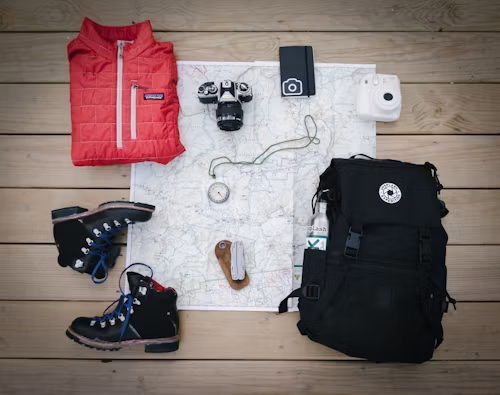
Gear is where families often panic. The truth is that you need less than you think, but what you bring must work well. Our guide to the best travel gear for kids covers choosing carriers, packs, and sleeping gear in more depth.
Shelter and sleep
- Tent large enough for the family, ideally lightweight
- Sleeping bags rated for the expected temperatures, and sleeping pads for everyone
- Small pillows or a stuff sack filled with clothes
- Groundsheet or footprint to protect the tent floor
- A comfort item for each child
Cooking and eating
- Lightweight stove and fuel
- One pot and a few spoons
- Bowls or cups that can double for meals and drinks
- Water bottles for each person
- Water filter or purification tablets
- Trash bags to pack out all waste
- Bear canister or food storage where required
Clothing
- Base layers, a warm fleece layer, a waterproof jacket and rain pants
- Warm hats and gloves for cool nights
- Sun hat and sunglasses
- Two pairs of socks per child, plus a dry pair for sleeping
- Sturdy shoes that are already broken in, plus camp shoes or sandals
Safety and extras
- First-aid kit with blister care and any prescribed medicines
- Map, compass or offline navigation, and a charged phone
- Headlamps and spare batteries
- Whistles for kids
- Sunscreen and insect repellent suitable for children
- Small tool kit or repair tape
- A lightweight game, small toy or notebook
For a more complete list of safety essentials, read our family travel safety tips.
How Heavy Should the Packs Be?
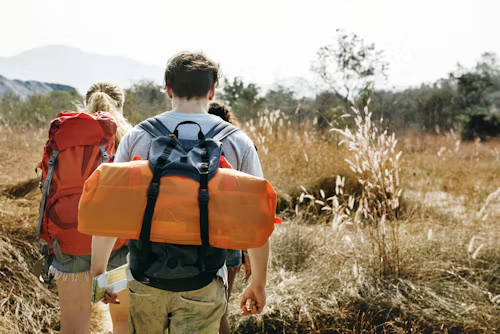
Adults can carry the heaviest loads, but weight discipline matters for everyone. A common guideline suggests that children carry no more than about 10 to 15 percent of their body weight, and lighter is better. Many families have kids carry only a water bottle, a snack, a jacket, and a favorite toy in a small daypack, while adults carry the tent, food, stove,e and bulk gear.
To keep weight down:
- Share items, such as one stove, one tent,nt and one first-aid kit.
- Repackage food into lightweight bags.
- Skip duplicate items.
- Leave luxuries at home.
- Weigh your packs before the trip and adjust.
Step 4: Food and Water
Easy backpacking meals
Keep it simple and familiar. Hungry, tired kids do not want to try something strange.
- Breakfast: Instant oatmeal, granola with powdered milk, breakfast bars
- Lunch: Tortillas with cheese, nut butter or tuna (check allergies), crackers, dried fruit
- Dinner: Pasta, instant rice dishes, dehydrated meals or couscous
- Snacks: Trail mix, jerky, fruit leather, granola bars, and a small treat
- Drinks: Hot chocolate for cool evenings
Bring a little more food than you think you need, because kids burn energy quickly and morale depends on snacks.
Water
Plan where you will refill. Wild water should be filtered or treated before drinking, since it can carry germs that make people sick. Teach kids not to drink straight from streams or lakes. Carry enough to reach the next water source, and remember that water is heavy.
Step 5: Camp Skills and Leave No Trace
Camp time is when kids shine. Give each child a real job:
- Gathering small sticks where fires are allowed
- Helping set up the tent
- Filtering water with supervision
- Packing out trash
- Setting out cups and bowls
Teach the basics: Leave No Trace. The Leave No Trace Center explains seven principles that work for families, including packing out what you pack in, staying on durable surfaces and respecting wildlife.
Step 6: Keep Kids Motivated
Motivation is the key skill in backpacking with kids. A few tricks help:
- Break the hike into mini goals. “Let’s reach that big rock, then snack.”
- Let kids choose a job, such as map reader, snack manager, or wildlife spotter.
- Bring a friend. Kids walk more happily with a buddy.
- Play games while walking. Scavenger hunts, word game,s and storytelling work well.
- Plan lots of play time at camp. Skipping rocks, building fairy hous,es and splashing in a creek can be the best part.
- Celebrate small wins. A special snack at the end makes the effort worthwhile.
Safety Basics for Backpacking With Kids
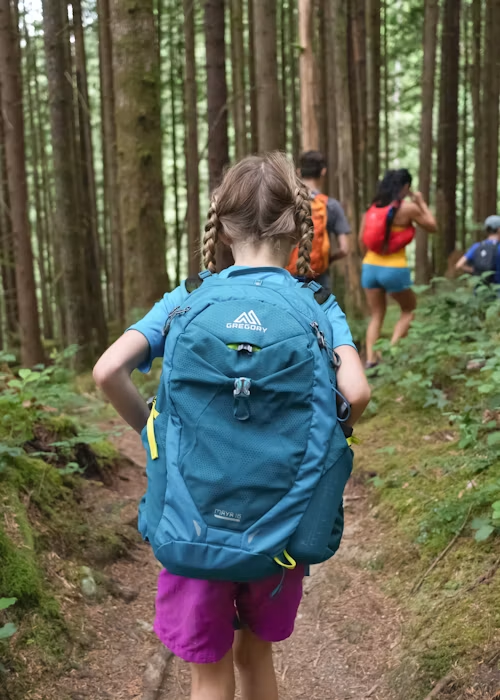
Safety needs extra attention when you are far from the car.
- Tell someone your plan and expected return time.
- Check the weather forecast with the National Weather Service, and know when to turn around.
- Stay together, and give each child a whistle.
- Treat water and wash hands before eating.
- Store food properly to avoid attracting wildlife.
- Keep kids away from cliffs, fast water, and campfires.
- Watch for hypothermia and heat illness, and carry extra layers.
- Check for ticks in grassy or wooded areas.
- Learn basic first aid. A short course is a worthwhile investment.
Cell service is often limited in backcountry areas. Consider a satellite messenger if you will be remote.
A Simple Two-Day Backpacking Plan
Day 1
- Arrive at the trailhead mid-morning, use the restroom,s and double-check gear.
- Hike slowly to camp with snack breaks and a picnic lunch
- Set up the tent, explore, and play
- Cook dinner, brush teeth,eeth and enjoy a campfire if allowed, or stargaze
- Bed down early in warm layers
Day 2
- Make a relaxed breakfast, then pack up and clean the site
- Hike out slowly, leaving time for breaks
- Celebrate at the trailhead with a treat
- Talk about what worked and what to improve next time
Common First-Trip Mistakes
- Going too far. Short is nearly always better.
- Overpacking. More weight means less fun.
- Skipping a practice run. Test your gear in the backyard.
- Wearing new shoes. Break them in first.
- Underestimating food and snacks. Hungry kids melt down.
- Ignoring the weather. Be willing to cancel or change plans.
- Forgetting that it is supposed to be fun. Keep your expectations flexible.
Looking for more adventurous ideas once you have the hang of it? Our guide to adventure activities that are safe for kids shares other ways to add excitement to family trips.
Frequently Asked Questions
What age can kids start backpacking?
There is no fixed age. Many families begin with babies and toddlers in carriers, while others wait until children can walk a few miles. Choose a short, easy first trip and let your kids’ comfort guide you.
How far should we hike on our first backpacking trip with kids?
A common starting point is about one to three miles to a campsite, but younger children may need less. Choose a distance that leaves energy for camp and play.
How much should kids carry?
Keep loads light, often a water bottle, snack, jacket,acket and a favorite toy in a small pack. A general guideline is no more than about 10 to 15 percent of body weight, and lighter is better.
What if my child refuses to hike?
Stay calm, take a break, offer a snack, and change the game. If your child is truly done, turning back or camping early is fine. Keep the mood positive so they want to try again.
Do we need a permit for backpacking?
Many parks and wilderness areas require permits for overnight stays, and some have limits on group size. Check the official page for your route and book early if needed.
Is backpacking with a baby safe?
Many families do it with careful planning, a well-fitted framed carrier,r and extra attention to warmth, sun protection, feeding, and sleep. Talk to your pediatrician first and choose a short, easy route.
Final Thoughts
Backpacking with kids does not need to be extreme. A short walk to a lakeside campsite, a simple dinner and a night under the stars can change how a child sees the outdoors. Start small, pack light, keep snacks coming, and be ready to adjust. The goal is not to cover miles. It is to build a family that likes being outside together.
Ready to plan the next step? Revisit our guide to the best family vacations in the U.S. for destination ideas, or explore family-friendly mountain getaways for a base camp near the trails.