Camping with a baby sounds like a lot: diapers, formula, naps, a baby who does not know the difference between day and night and a tent with no walls. But thousands of families do it every year, and many say it is easier than camping with toddlers. Babies are portable, they sleep a lot and they are not yet running toward the campfire.
This guide covers what parents most want to know about camping with a baby: when you can start, how to keep your baby safe, warm, and comfortable, safe sleep in a tent, feeding and water, diapers, gear, campsite choices,s and a simple plan for your first trip. If you are new to camping, read our first-time family camping guide too.
Important: This article offers general information, not medical advice. Talk to your pediatrician before camping with a baby, especially a newborn, a premature baby or a baby with health conditions.
Quick answer: can you camp with a baby? Yes, many families do. Choose a drive-up campground close to home with restrooms, pick mild weather, follow safe-sleep guidance with a firm, flat sleep surface and no loose bedding, dress your baby in layers, protect from sun and bugs, use safe water for feeding and keep the first trip to one or two nights.
When Can You Start Camping With a Baby?
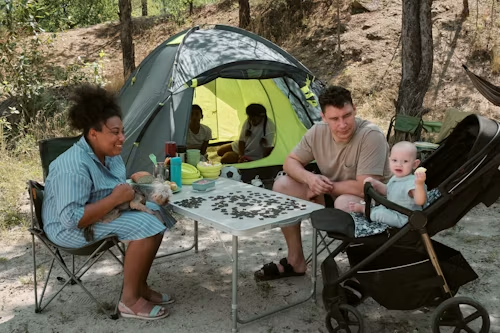
There is no single right age. What matters is your baby’s health, the weather, your comfo, rt and your doctor’s advice.
- Newborns (under about 3 months) are the most vulnerable. They cannot regulate body temperature well and have weaker immune systems. Many families wait, and others choose very short, close-to-home trips in mild weather. Ask your pediatrician what is right for your baby.
- Babies about 3 to 6 months are easier to travel with, but still need careful temperature control and safe sleep.
- Babies 6 months and older can sit, crawl and eat more foods, which can make camping more fun and more active.
Your own recovery matters, too. Newborn parents are tired, and camping adds extra effort. Choose what feels manageable, and permit yourselves to head home.
Step 1: Choose the Right Campsite
A comfortable campsite makes a huge difference with a baby.
- Drive-up site so you can carry gear easily and retreat to the car if needed.
- Close restrooms and drinking water for diaper changes, bottle prep, and handwashing.
- Shade, since babies overheat quickly in the sun, and shade helps naps.
- Flat, clear ground for the tent and play space.
- Short drive from home, ideally one to two hours.
- Away from busy roads, steep drop,s and water.
- Easy access to medical help. Know the nearest hospital or clinic.
- Cell service, if possible, in case you need to call for help.
Book early, since popular sites fill quickly. Many campgrounds can be reserved through Recreation.gov or state park systems. Check rules on quiet hours, fires and pets.
Step 2: Pick the Right Season and Check the Weather
Mild weather makes everything easier. Extreme heat, cold, strong wi,,nd and storms are hard on babies.
- Aim for comfortable temperatures, such as late spring or early fall in many areas.
- Check the forecast with the National Weather Service, including overnight lows.
- Avoid peak heat, since tents can get very hot in sunlight.
- Skip stormy weekends for your first trip.
- Have a backup plan, like a cabin, a h,otel or the drive home.
If it rains, read our guide to camping in the rain with kids, and talk to your pediatrician before camping in cold weather with a baby.
Safe Sleep When Camping With a Baby
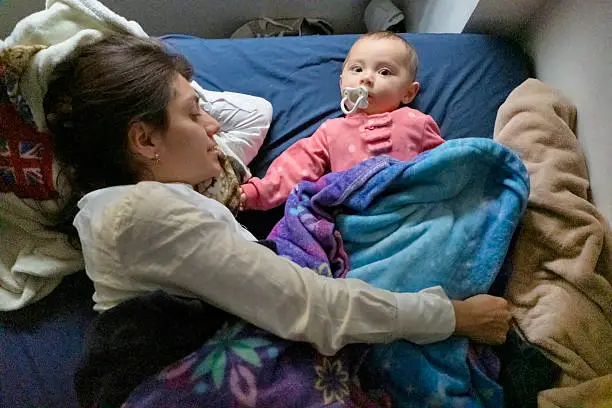
Safe sleep is the number one concern for many parents, and it is important to get right. The American Academy of Pediatrics’ safe-sleep guidance, which you can read on HealthyChildren.org, applies when camping too.
- Use a firm, flat sleep surface made for babies, such as a portable crib or play yard that meets current safety standards, with a fitted sheet. Follow the manufacturer’s instructions.
- Place your baby on their back to sleep, for every sleep.
- Keep the sleep area free of loose bedding, pillows, bumpers and soft toys.
- Do not let your baby sleep on air mattresses, sleeping bags, camping,, pads, or an adult bed, which can be too soft or unsafe.
- Avoid bed-sharing. Keep your baby’s sleep space in the same room as you, but on a separate surface.
- Use a wearable blanket or sleep sack instead of loose blankets, sized for your baby and suited to the temperature.
- Do not leave your baby to sleep in a car seat,, swing or carrier for long stretches.
- Do not use heaters or hot items in the tent. Overheating is a risk.
- Keep the baby’s sleep area away from the tent walls cords and heaters.
- Check on your baby often.
If you are unsure, ask your pediatrician. A practice night in your backyard is a great way to test your setup. See our guide to backyard camping with kids.
How to Keep a Baby Warm (and Not Too Warm)
Babies lose heat quickly, and they can also overheat.
- Dress in layers. A soft base layer, a warm layer and a sleep sack suited to the temperature.
- Add a hat and socks if it is cool, and take them off if the baby gets warm.
- Check your baby’s temperature by feeling the back of the neck or chest, not just the hands and feet.
- Avoid overdressing, since overheating can be dangerous.
- Use a tent with good ventilation. Condensation and heat both cause problems.
- Keep the tent out of direct sun when possible, with shade or a reflective cover.
- Do not use heaters, stoves or candles in the tent. Carbon monoxide and fire are serious risks.
Our guide to how to choose a family tent explains ventilation and sizing, including space for a play yard.
Sun, Heat and Bug Protection
Sun
The American Academy of Pediatrics advises keeping babies under six months out of direct sun and using shade, wide-brimmed hats and light clothing for protection. Ask your pediatrician about sunscreen for young infants, and use a broad-spectrum sunscreen as directed on older babies.
Heat
- Choose shaded sites and plan active time for morning and evening.
- Offer feeds more often in hot weather.
- Watch for signs of overheating, such as flushed skin, sweating, fussiness or lethargy.
- Never leave a baby in a parked car, a tent or a stroller in the sun.
Bugs and ticks
- Use baby-safe bug netting on carriers, strollers and play yards where it does not block airflow.
- Dress your baby in light long sleeves and pants in buggy areas.
- Check repellent labels for age limits. Health agencies such as the CDC advise against using insect repellents on babies under two months, and some products have higher age limits, so ask your pediatrician.
- Check for ticks after time in grass or woods.
Feeding a Baby While Camping
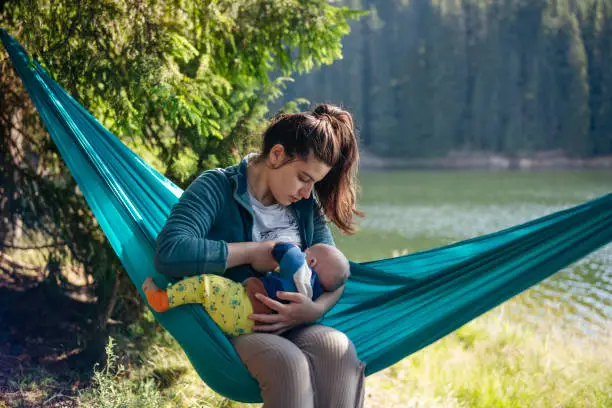
Breastfeeding
- Plan a comfortable, shaded or sheltered spot for feeding, with a camp chair or a blanket.
- Bring a nursing cover or whatever makes you comfortable.
- Drink plenty of water and eat regularly yourself.
Formula feeding
- Use safe water. For formula, use bottled water or water that has been boiled for at least one minute (three minutes at high elevations) and cooled. Do not use untreated stream or lake water. Ask your pediatrician for specific guidance for your baby.
- Keep formula and bottles clean. Bring extra bottles and nipples, a bottle brush, a ,small tub and soap, and clean them with hot water.
- Pre-measure formula into containers or use ready-to-feed bottles for convenience, and check the manufacturer’s storage guidance.
- Mix fresh bottles when needed, and discard leftovers after a feeding, as directed.
- Keep breast milk or prepared bottles cold in a cooler with ice, following safe storage guidance.
Starting solids
- Bring familiar foods your baby already eats, such as pouches, soft fruit or baby cereal.
- Avoid choking hazards, and always supervise eating.
- Keep food cold and clean, and wash hands before feeding.
For more camp food ideas for the rest of the family, see our guide to easy camping meals for kids.
Diapers and Hygiene
- Pack more diapers and wipes than you think you will need. Add extras in case you get delayed.
- Pack out used diapers. Never bury or leave them at the campsite. Use sealed bags and a dedicated trash bag.
- Bring a changing mat or towel, and choose a clean, flat spot.
- Pack diaper cream and a few spare outfits.
- Wash hands before feeding and after changing, or use hand sanitizer when water is not available.
- Know where the restrooms are, and keep baby wipes handy.
If you must go in the woods, follow Leave No Trace guidance. The Leave No Trace Center recommends digging a small hole well away from wwater er, trails ,and camp, and packing out toilet paper.
Baby Camping Checklist
You can start with our family camping checklist and add baby-specific items. Our guide to the best travel gear for kids explains which gear is worth buying or borrowing.
Sleep and comfort
- Portable crib or play yard with a firm mattress and fitted sheet
- Wearable blanket or sleep sack for the temperature
- White noise device or phone app
- Small night light or dim lantern
- Pacifier or comfort item (safe for sleep)
Clothing
- Several layers, including a hat, socks,, and mittens
- Rain jacket or cover for the carrier
- Sun hat and light long sleeves
- Plenty of spare outfits
Diapering and hygiene
- Diapers, wipes, changing mat, diaper cream
- Sealed bags for used diapers
- Hand sanitizer and a small basin or tub
Feeding
- Bottles, nipples, a brush and soap
- Formula or breast milk storage
- Bottled or properly treated water
- Baby food, spoons and bibs
- A cooler with ice packs
Safety and health
- First-aid kit, baby thermometer and any prescribed medicines
- Sunscreen if appropriate and insect netting
- Phone, charger and list of emergency contacts
- Contact information for your pediatrician and the nearest hospital
Carrying and play
- A well-fitted baby carrier or a stroller for short walks. See our guide to hiking with a baby.
- A play mat or blanket
- A few soft toys, books and teething toys
- A shade tent or umbrella
Campfire and Fire Safety With a Baby
- Keep your baby well away from fires, stoves and hot cookware.
- Never hold a baby while cooking over a fire or stove.
- Never use stoves, heaters or candles in the tent.
- Keep matches, lighte,rs and fuel out of reach.
- Use a play yard or carrier to keep your baby safe while you move around camp.
For a full guide, see our article on campfire safety for kids. The U.S. Forest Service’s Smokey Bear site has simple fire rules for families.
Safety Tips for Campsite Life With a Baby
- Baby-proof the campsite. Check for sharp objects, ants, poison ivy, and hot surfaces.
- Keep small objects out of reach, such as rocks, sticks,s and acorns that babies might put in their mouths.
- Supervise constantly, especially for crawlers and walkers.
- Never leave your baby alone, even for a minute.
- Store food away from the tent, in locked vehicles or bear boxes, to avoid wildlife.
- Avoid water unless you are within arm’s reach.
- Keep a first-aid kit handy, and learn infant CPR before you go.
- Know the emergency number and where the nearest hospital is.
Our family travel safety tips include a full first-aid and safety checklist.
Keeping a Baby Happy at Camp
Babies are usually content with simple things.
- Tummy time on a blanket in the shade
- Songs, rhymes and stories
- Nature exploration with leaves, grass and sounds (supervise closely)
- A short walk in a carrier or stroller
- Gentle play with soft toys and teething toys
- Splashing hands in a shallow basin of water, with an adult right there
- Family time, since your baby may enjoy being close to everyone
Older siblings can help with simple jobs and games. See our guide to camping games for kids for ideas.
A Sample First Camping Trip With a Baby
This is an example for one night with a baby who is a few months old. Adjust it for your child.
| Time | What happens |
|---|---|
| 10:00 | Feed and change baby, then drive to camp (plan for stops) |
| 12:00 | Arrive, set up the play yard and tent in the shade |
| 1:00 | Feed, nap in the play yard, picnic lunch for adults |
| 3:00 | Tummy time, short walk or carrier outing |
| 5:00 | Feed, change and prepare dinner |
| 6:30 | Dinner, with baby in the play yard or carrier |
| 7:30 | Bath-wipe, pajamas, sleep sack and feed |
| 8:00 | Bedtime in the portable crib |
| 7:00 next day | Feed, slow breakfast and pack up |
| 11:00 | Head home |
Expect the plan to flex, and give yourself time to rest.
Common Mistakes When Camping With a Baby
- Going too far from home. Start close.
- Skipping the practice night. Test your sleep setup first.
- Unsafe sleep arrangements. Use a proper portable crib or play yard.
- Underestimating temperature changes. Dress in layers and check often.
- Forgetting enough diapers, formula and clean bottles.
- Using unsafe water. Bring bottled water or boil it.
- Overplanning. One or two simple activities a day is plenty.
- Not having a backup plan.
- Ignoring your own rest.
Next Steps as Your Baby Grows
As your baby grows, you can try longer trips, more adventurous campsites and short hikes. Our guide to camping with toddlers picks up where this one leaves off, and our guide to hiking with a baby covers the trail.
Frequently Asked Questions
Can you take a newborn camping?
Many families wait until their baby is a few months old, while others try very short, close-to-home trips in mild weather. Ask your pediatrician what is appropriate, especially for newborns, premature babies and babies with health conditions.
Can babies sleep in a tent?
Yes, with a safe sleep setup: a portable crib or play yard with a firm surface, a fitted sheet, no loose bedding,, and a wearable blanket or sleep sack suited to the temperature. Follow the American Academy of Pediatrics’ safe-sleep guidance.
How do you keep a baby warm while camping?
Dress them in layers, use a sleep sack, add a hat and socks when it is cool, avoid overheating,,nd check the back of the neck or chest. Do not use heaters in the tent.
What do you need for camping with a baby?
A safe place to sleep, layers and spare clothes, diapers and wipes, feeding supplies and safe water, sun and bug protection, a first-aid kit, a carrier and a few toys. Use our camping checklist as a base.
How do you do formula feeding while camping?
Use bottled water or water that has been boiled and cooled, keep bottles clean, pre-measure formula, and mix fresh bottles when needed. Ask your pediatrician for specific advice for your baby.
What do you do with diapers when camping?
Pack out used diapers in sealed bags and carry them home or dispose of them in designated trash bins. Never bury or leave them at the site.
Is camping with a baby hard?
It takes planning, but many parents find babies easier to camp with than toddlers. Choose an easy site, mild weather and a short trip, keep safe sleep in mind and stay flexible.
Final Thoughts
Camping with a baby is not about doing everything perfectly. It is about choosing an easy campsite, planning for safe sleep and temperature, bringing what you need and staying flexible. A baby wrapped in a blanket under the shade of a tree, with a parent nearby, is the kind of simple memory camping is made for.
Looking for more? Read our guide to how to choose a family tent, try our first-time family camping guide, or browse the best family vacations in the U.S. for places with family-friendly campgrounds.