Your first family camping trip can feel like a lot. There is a tent to set up, food to plan, a place to sleep, and a whole list of things you hope you did not forget. But camping does not have to be complicated, and it is one of the most affordable ways to travel with kids. Millions of families do it every year, and almost all of them started as nervous beginners.
This step-by-step guide covers everything you need for first-time family camping: how to choose a campsite, what to bring, how to set up camp, what to eat, how to keep kids safe and busy, and how to handle common problems. If you want a printable list of gear, keep our family camping checklist open as you read.
Quick answer: how do you go camping with kids for the first time? Choose a drive-up campground close to home with restrooms and water, book for one or two nights, practice setting up your tent in the yard, pack simple meals and warm layers, arrive early to set up in daylight, and keep the plan flexible. Treat the first trip as practice, not a test.
Why Start With Family Camping?
Camping gives kids freedom, fresh air, and time with you, away from screens. It is also easier on a budget than hotels, restaurants,s and attractions. And the skills build with every trip: your kids learn to help, you learn what to leave at home, and each outing gets smoother.
Step 1: Choose the Right First Campsite
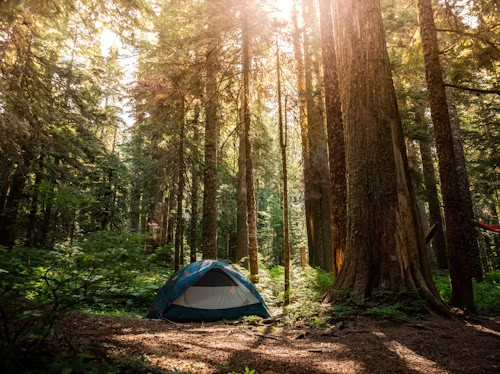
Where you camp matters more than any gear. For a first trip, the goal is comfort and convenience, not wilderness.
What to look for
- Drive-up access. Park next to your site so you can bring comfort items and retreat easily.
- Restrooms and drinking water nearby. Flush toilets and running water make a big difference with kids.
- Flat, shaded ground. Level sites sleep better, and shade keeps tents from overheating.
- A short drive from home. About one to two hours is plenty. If it goes badly, you are close to your own bed.
- Safe surroundings. Look for a site away from busy roads, steep drops, and fast water.
- Family-friendly amenities. Playgrounds, swimming areas, short trails and ranger programs keep kids busy.
Where to look
- State parks: often affordable,well-maintained,d and relaxed.
- National parks and national forests: beautiful, but popular ones fill up fast. See our guide to the best national parks for families with young kids.
- Private campgrounds: usually have more amenities, such as pools and play areas.
- County and city parks: often close to home and cheap.
Many federal campgrounds can be reserved at Recreation.gov, and state parks usually have their own reservation systems. Book early, since summer weekends and holidays sell out months ahead. Check the official page for rules on campfires, quiet hours, check-in times, and pets.
Step 2: Decide How Long to Stay
Keep the first trip short. One night is a good test, and two nights is plenty for most beginners. It is long enough to feel like an adventure and short enough to survive if the weather or the kids are difficult.
Step 3: Practice Before You Go
A short practice run saves a lot of stress.
- Set up the tent in the yard or living room. Learn how it goes together while it is still daylight, and nobody is tired.
- Try the stove and lantern, so you know how they work.
- Sleep in the tent for a night if you can, especially if you have toddlers or nervous kids.
- Check all your gear for holes, missing stakes, or dead batteries.
Our guide to camping with toddlers goes deeper if you have little ones.
Step 4: What to Pack
You do not need to buy everything new. Borrow or rent gear for your first trips. The full list is in our family camping checklist, and here is a quick summary of the essentials.
Shelter and sleep
- Tent with rainfly, stakes, and a groundsheet
- Sleeping bag for each person, rated for the expected temperatures
- Sleeping pads or air mattresses (warmth from the ground matters more than most people think)
- Pillows and a comfort item for each child
Cooking and eating
- Camp stove and fuel, lighter or matches
- Pot, pan, utensils, plates, cups,s and a can opener
- Cooler with ice packs
- Water container and reusable bottles
- Dish tub, biodegradable soap and trash bags
Clothing
- Layers for everyone, including warm clothes for cool nights
- Rain jackets
- Sturdy shoes and spare socks
- Hats and sunglasses
- Pajamas and a change of clothes for each child
Safety and comfort
- First-aid kit
- Headlamps or flashlights for everyone
- Sunscreen and insect repellent suited to children
- Camp chairs and a table
- Games, books and nature tools
For advice on what is worth buying, see our guide to the best travel gear for kids.
Step 5: Arrive Early and Set Up Camp
Arriving with plenty of daylight turns setup from stressful to fun.
- Walk the site. Check for hazards like sharp rocks, ant nests, low branches, es and uneven ground. Walk the boundaries with the kids.
- Choose the tent spot. Pick a flat, clear area, away from hills where water might run in and away from dead branches overhead.
- Set up the tent first. Lay the groundsheet, assemble the poles, stake it down, and add the rainfly.
- Set up the kitchen a good distance from the tent, and store food properly.
- Arrange the sleeping area with pads, bags, and pillows before dark.
- Make a plan for the campfire, if fires are allowed.
- Give kids jobs. Helping builds ownership and keeps them busy.
Step 6: Cooking and Eating at Camp
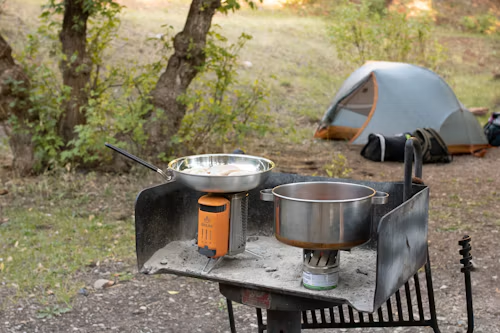
Keep meals simple, familiar, and quick. Hungry kids do not want a fancy menu.
- Breakfast: oatmeal, pancakes made from pre-mixed batter, scrambled eggs, fruit
- Lunch: sandwiches, wraps, cheese, crackers and fruit
- Dinner: hot dogs, pasta, foil packet meals, chili made ahead
- Snacks and treats: trail mix, fruit, popcorn and s’mores
Prepare as much as you can at home, such as chopped vegetables and pre-mixed batter. A full meal guide is coming in our post on easy camping meals for kids.
Food safety basics
- Keep cold food at 40°F (4°C) or below with plenty of ice, and open the cooler as little as possible.
- Do not leave perishable food out for more than two hours, or one hour in hot weather.
- Cook meat to safe temperatures (ground meat to 160°F, poultry to 165°F) and keep raw and cooked foods separate.
- Wash hands before eating.
- Store food in locked vehicles or bear boxes, never in the tent.
Water safety
Use water from the campground’s safe tap if available. If you need to use water from a stream or lake, treat it first. Boiling for at least one minute (three minutes at high elevations) is a reliable method, and filters or purification tablets also work.
Step 7: Keeping Kids Safe at the Campsite
Camping adds a few hazards, but they are manageable. Our family travel safety tips cover more, and here are the essentials.
- Set boundaries. Walk the edges of the site and agree on a “stay where I can see you” rule.
- Give each child a whistle. Teach them to blow it in groups of three if they are lost or need help.
- Fire safety. Keep fires small and in designated rings, never leave them unattended, keep kids at a distance,e and put the fire out completely before bed. The U.S. Forest Service’s Smokey Bear guidance is simple: drown, stir,ir and feel.
- Never use stoves, grills,lls or heaters inside a tent. They can produce carbon monoxide.
- Mark tent lines with bright tape or flagging to prevent tripping.
- Watch for wildlife. Keep your distance, never feed animals, and store food properly.
- Check for ticks after time in grass or woods.
- Supervise near water and keep young children within arm’s reach.
- Check the weather forecast and be ready for storms.
Step 8: Bedtime and Staying Warm
Sleep is the part of camping that worries many parents. A few things help.
- Use sleeping bags rated colder than the expected nighttime temperature. Kids lose heat faster than adults.
- Insulate from the ground. A sleeping pad matters as much as the bag.
- Dress in dry layers for bed, and avoid damp clothes in sleeping bags.
- Bring a familiar blanket or toy.
- Keep the bedtime routine. Brush teeth, read a story, and keep a calm wind-down.
- Use a small lantern or night light for comfort.
- Pee before bed and keep a flashlight near the door.
- Be ready for noises. Explain that owls, rustling leaves,s and distant voices are normal.
If it is very cold, add a spare blanket, a hat for sleeping and a warm drink before bed.
Step 9: Things to Do at the Campsite
Boredom is the real challenge with kids, but camping gives you plenty to play with.
- Nature scavenger hunt: pinecone, feather, smooth rock, something red
- Short hikes on easy trails. See our guide to how to get kids to like hiking for ideas.
- Campfire stories and songs
- Stargazing with a simple star chart or app
- Games: cards, a ball, frisbee, or a kite
- Junior Ranger programs at many national parks, which are free and fun. Check the National Park Service page for the park you plan to visit.
- Swimming or splashing where it is safe and allowed
- Nature journal and colored pencils
- S’mores, of course
Let kids have downtime too. Often their best memories come from simple things like digging in dirt or watching ants.
Step 10: Camp Etiquette and Leave No Trace
Good campers leave places better than they found them.
- Follow quiet hours, typically in the evening and overnight.
- Respect your neighbors, since sites are often close together.
- Keep your site tidy and your food stored.
- Pack out all trash.
- Use designated bathrooms.
- Do not cut or damage trees, and use only firewood bought locally or provided.
- Leave rocks, plants, and wildlife alone.
The Leave No Trace Center shares seven simple principles that work for families, including planning, staying on durable surfaces, and disposing of waste properly.
A Simple Plan for Your First Night
Here is a sample timeline for a one-night trip. Adjust it for your family.
| Time | What happens |
|---|---|
| 2:00 | Arrive, walk the site, choose the tent spot |
| 2:30 | Set up tent and sleeping area, with kids helping |
| 3:30 | Snack, explore the campground and play |
| 5:00 | Start dinner, gather firewood if allowed |
| 6:30 | Dinner and dishes |
| 7:30 | Campfire, s’mores, stories or stargazing |
| 8:30 | Teeth, pajamas,s and bedtime routine |
| 8:00 next day | Slow breakfast, short walk and pack up |
| 11:00 | Check out and head home |
Notice how much time is simple play and rest. That is where the memories live.
Common First-Time Camping Mistakes
- Going too far from home. Start close.
- Skipping the practice run. Test your gear first.
- Overpacking. Stick to a checklist.
- Arriving after dark. Set up in daylight.
- Underestimating the cold. Pack extra layers and warm sleeping gear.
- Planning too many activities. One or two a day is plenty.
- Forgetting the weather forecast. Check before you go, and pack for rain.
- Not having a backup plan. Know where the nearest hotel or exit is if you need it.
What Does First-Time Camping Cost?
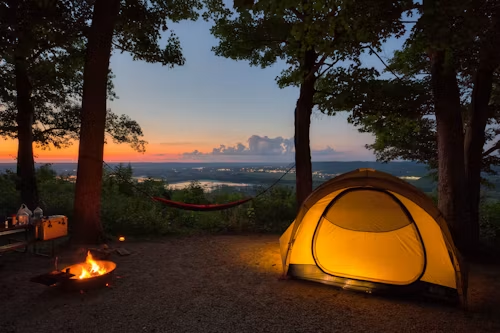
Camping can be very affordable, but costs vary. The main expenses are the campsite fee, food, fuel, and any gear you buy or rent. Many families borrow gear for the first trips, buy secondhand,d and add pieces slowly. Campsite fees differ by state, park,rk and season, so check the official page. Compared with hotels and restaurants, camping often costs much less per night, which makes it a great fit for the family budget. For more budget ideas, see our guide to budget-friendly family road trip ideas.
Frequently Asked Questions
What do you need for your first camping trip?
A tent, sleeping bags and pads, a stove and cooking gear, a cooler, water, layers, rain gear, headlamps, and a first-aid kit. Our camping checklist has the full list.
How do you camp with kids for the first time?
Choose an easy, drive-up campground close to home, stay one or two nights, practice setting up the tent, bring simple meals and warm clothes, and keep the plan flexible. Let kids help with setup and give them time to play.
What age can kids go camping?
Any age, with planning. Babies and toddlers can camp if you plan for warmth, safe sleep, and supervision. Talk to your pediatrician if you have questions about very young children. The American Academy of Pediatrics’ HealthyChildren.org has general safety guidance.
How do you keep kids warm while camping?
Dress them in layers, use sleeping bags rated colder than the forecast, add insulated pads under them, keep them dry, and offer warm drinks before bed.
Do you need reservations to camp?
Often yes, especially in popular parks and on weekends. Some places have first-come, first-served sites, but they can fill quickly. Check the official page and book ahead where you can.
What should you not bring camping?
Leave behind duplicates, bulky items you will not use, valuables,s and anything you cannot afford to get dirty. Keep it simple and stick to your checklist.
Is camping safe for families?
Yes, when you follow basic safety rules: supervise children, store food properly, use fire carefully, check the weather, and keep a first-aid kit handy.
Final Thoughts
Your first family camping trip does not have to be perfect. It just has to be fun enough that everyone wants to go again. Pick an easy campsite, practice your setup, pack simple meals, and keep expectations flexible. A little mud, a burnt marshmallow, and a night under the stars are often exactly what kids remember.
Ready for the next step? Read about camping with toddlers, try an overnight adventure with our guide to backpacking with kids, or browse the best family vacations in the U.S. for destinations with great campgrounds.
Pingback: Free Things to Do in National Parks With Kids (30 Ideas)