A long car ride with a toddler can feel like a test of endurance. A tiny passenger who is strapped into a seat, bored after 20 minutes, and not at all interested in “just five more miles” is a challenge for even the most patient parents. But road trips with toddlers are also one of the most affordable and flexible ways to travel, and with the right plan they can be calm, even fun.
This guide covers how to plan a long car ride with a toddler: how to schedule driving around naps, how often to stop, car seat safety, what to pack, snacks, entertainment ideas that actually work, how to handle potty breaks and meltdowns, and a sample driving day. For more road trip ideas, see our guide to budget-friendly family road trip ideas.
Quick answer: how do you survive a long car ride with a toddler? Drive during nap time or bedtime when possible, plan a real stop every two hours (or sooner), keep snacks, water and a few new toys within reach, use audio and songs instead of relying on screens, follow car seat safety rules and keep your expectations flexible. A shorter, slower day is better than a stressful one.
How Long Can a Toddler Handle a Car Ride?
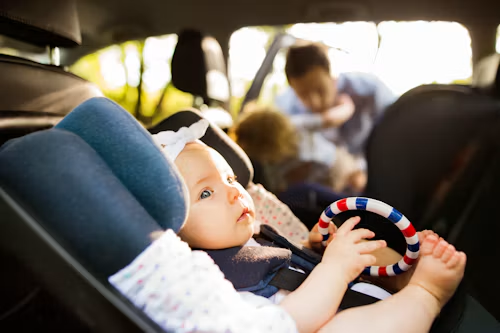
Every toddler is different, but most can handle shorter stretches before getting restless. Many families find that:
- Short rides (under an hour) are easy.
- Rides of about two hours are usually manageable with snacks and a toy or two.
- Long days (four to six hours or more) need planning, breaks, and a schedule.
A common rule is to stop about every two hours, or sooner if your toddler is fussy. Plan your daily driving limit around your child, not the map. For a toddler, four to six hours of driving in a day, split by breaks, is often plenty.
Step 1: Plan the Day Around Naps and Bedtime
Timing is the biggest factor in a successful road trip.
- Drive during nap time. Many families start the longest stretch right before or at the beginning of a nap.
- Consider driving at night for part of a trip, if you have a second adult to share driving and you are rested. Never drive drowsy.
- Start after a good meal and a diaper change, so your toddler is fed, dry,y and calm.
- Avoid forcing a schedule. If your toddler is overtired or hungry, stop and reset.
- Keep bedtime routines when you reach your destination, even if you shorten them.
Step 2: Plan Your Stops
Stops are not wasted time. They are what makes the drive possible.
- Stop about every two hours, or sooner if needed.
- Choose places where toddlers can move: parks, playgrounds, picnic areas, rest stops with grass or a short walk.
- Make each stop count. Let your toddler run, stretch, and burn energy for 15 to 20 minutes, not just a quick bathroom visit.
- Eat meals at stops. Eating while moving can be a choking risk, since you cannot watch your child closely while driving.
- Check diapers or potty needs at every stop.
- Use an app or map to find family-friendly rest areas ahead of time.
Step 3: Car Seat and Safety Basics
Safety comes first on any trip.
- Use a properly installed car seat that suits your child’s age, weight, and height, and follow your seat manual and local law. The NHTSA car seat guidance helps you choose and check. Many pediatric groups recommend keeping children rear-facing as long as the seat allows, so ask your pediatrician or a certified technician if you are unsure.
- Never take a toddler out of the car seat while the car is moving.
- Never leave a child alone in a parked car, even for a minute. Cars heat up dangerously fast.
- Use window shades to reduce glare and heat.
- Avoid heavy, hard toys that could become projectiles in a crash. Choose soft toys and lightweight items.
- Keep the car at a comfortable temperature and dress your toddler in layers.
- Share driving when you can, and take breaks so the driver stays alert.
- Set the navigation and music before you drive to avoid distractions.
For more road safety and outdoor safety advice, see our family travel safety tips.
Step 4: Set Up the Car
A little organization saves a lot of stress.
- Keep an “easy access” bag within reach of the front passenger, with snacks, wipes, a spare outfit, diapers, water, nd a few toys.
- Use a seat-back organizer for books, cups, and small items.
- Keep a small trash bag and wipes handy.
- Attach toys with soft toy straps or use a clip so they do not fall. Soft straps are safer than hard objects.
- Use a sunshade on the side windows.
- Bring a small blanket and a travel pillow if they are safe for your child’s age and seat.
- Pack a full change of clothes in an accessible bag in case of spills or accidents.
What to Pack for a Long Car Ride With a Toddler
Our guide to the best travel gear for kids covers more, and here is a toddler road trip checklist.
Comfort and care
- Diapers, wipes, a changing mat, and diaper cream
- Spare clothes, including for the adult
- A portable potty if your toddler is potty training
- A blanket, a comfort item, and a sun hat
- Sunscreen and hand sanitizer
Food and drink
- Water and a spill-proof cup
- A variety of snacks (see our guide to road trip snacks for kids)
- A small cooler and ice packs
- Napkins and a small trash bag
Entertainment
- A few new or rarely used toys
- Board books and soft books
- Sticker books and washable markers
- A small tablet with downloaded shows for emergencies
- An audio playlist or audiobooks
Health and safety
- A first-aid kit and any prescribed medicines
- A thermometer
- A phone charger and emergency contacts
- Sick bags and a towel, in case of car sickness. See our guide to car sickness in kids.
Snacks and Meals on the Road
Keep food simple, safe and mess-free.
- Offer snacks at regular times, such as mid-morning and mid-afternoon, to keep energy and mood steady.
- Choose soft, small foods that are easy to chew, and avoid choking hazards such as whole grapes, nuts, popcorn, hard candy,dy and chunks of raw vegetables.
- Use spill-proof containers.
- Offer water more often than juice.
- Stop to eat whenever you can, so you can watch your toddler.
- Keep cold foods cold with ice packs, and follow safe food storage guidelines.
For a full list, see our guide to road trip snacks for kids.
Entertainment Ideas That Actually Work
Toddlers get bored quickly, so rotate activities.
Audio and sing-alongs
- Singalongs with favorite nursery rhymes and action songs
- Audiobooks and story podcasts made for little kids
- Music playlists with calm and upbeat songs
- Simple games, like “What animal says moo?” and “Can you see a truck?”
Hands-on toys
- Sticker books and reusable sticker pads
- Window clings that stick to side windows
- Soft books and board books
- Fidget toys and sensory items (soft and safe)
- Magnetic drawing boards
- A “busy bag” of small, safe items such as scarves, cups, or felt shapes
Visual ideas
- Looking out the window and naming things: truck, bridge, cow, tree
- A simple “I spy” with colors
- Counting cars, trucks or colors
The surprise bag
Wrap a few small, inexpensive items, such as a new toy, a book,k or a sticker, and give one every hour or at each stop. The anticipation makes a big difference.
Screens
Many pediatric groups recommend limiting screen time for toddlers. On a long drive, a small amount of screen time can be a useful emergency tool. If you use it, download shows in advance, use headphones that are safe for children,n and keep sessions short. If your toddler is prone to car sickness, avoid screens and use audio instead.
Handling Potty Breaks, Diapers and Accidents
- Stop earlier than you think. Toddlers cannot wait long.
- Bring a portable potty or a seat cover for rest stops.
- Consider pull-ups for long driving days, even if your toddler is potty trained at home.
- Keep a spare outfit, wipes, and a plastic bag within reach.
- Change diapers at stops, not in a moving car.
- Stay calm. Accidents happen, and a relaxed reaction helps your toddler feel safe.
What to Do When a Toddler Melts Down
Meltdowns happen, even on well-planned trips.
- Pull over when safe. Never try to solve a meltdown while driving in heavy traffic.
- Check basics first: hunger, thirst, diaper, temperature, tiredness, and boredom.
- Offer comfort: a snack, a drink, a song, or a cuddle.
- Change the scenery: a few minutes out of the car often resets the mood.
- Stay patient. Your toddler is not being difficult on purpose. They are tired of being in a seat.
- Take care of yourself. A calm adult makes a calmer child.
If your toddler gets sick in the car, our guide to car sickness in kids explains what to do.
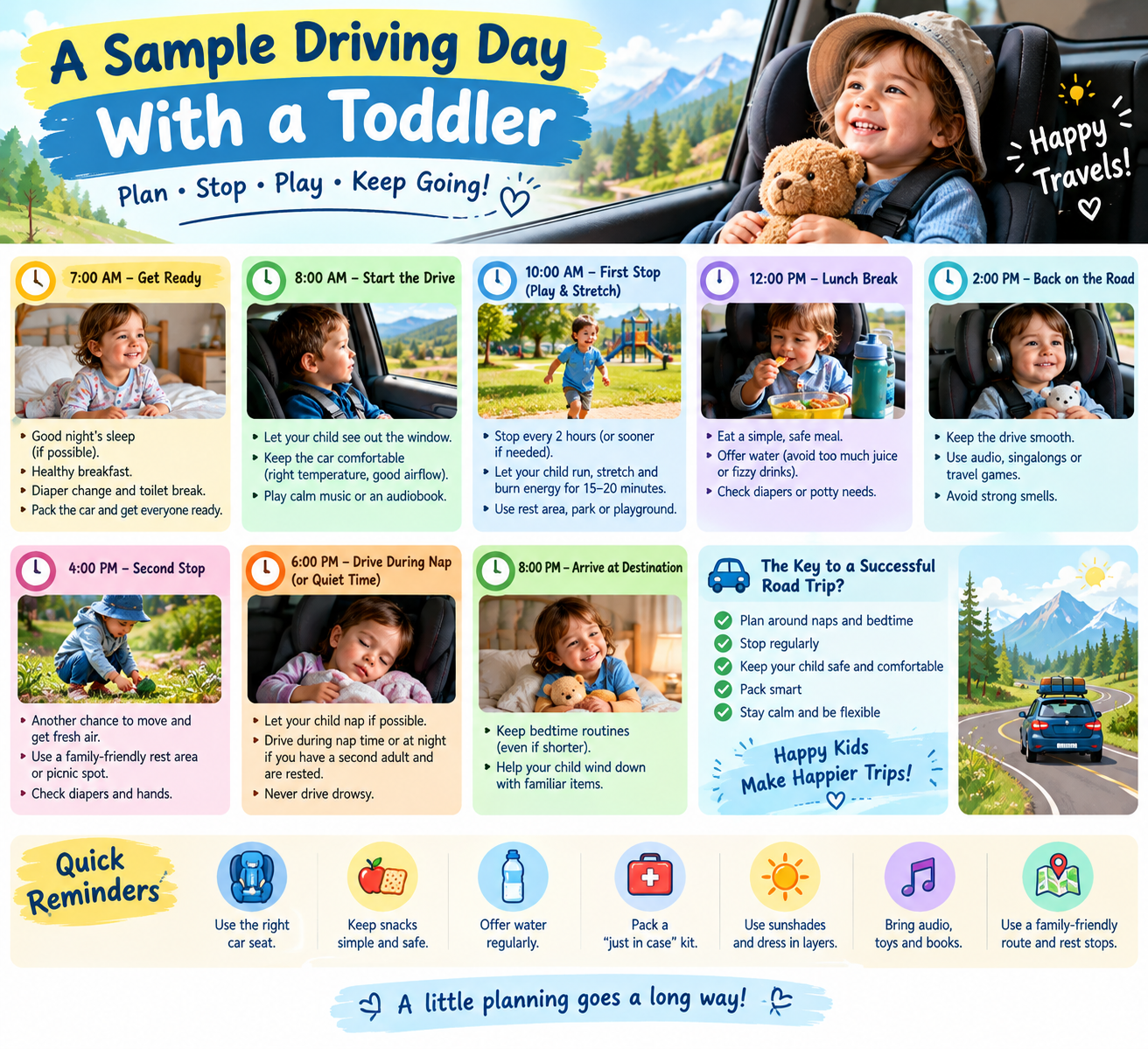
A Sample Driving Day With a Toddler
This is an example for a six-hour driving day. Adjust it for your child.
| Time | What happens |
|---|---|
| 8:00 | Breakfast, diaper change and load the car |
| 8:30 | Drive, audio and songs |
| 10:00 | Stop at a park, snack, run around, potty or diaper |
| 10:30 | Drive, surprise bag item |
| 12:00 | Stop for lunch and playground time |
| 12:45 | Drive during nap time |
| 2:45 | Wake-up stop, diaper, snack,k and stretch |
| 3:15 | Drive with songs and audio |
| 4:30 | Final stop, run around and dinner |
| 5:30 | Arrive, relax, ax,x and get ready for bed |
Expect the schedule to bend. The best plan is the one that keeps your toddler comfortable.
Overnight Stays and Hotels on the Road
- Book a place with a kitchen or fridge if you can, for easy meals.
- Ask for a portable crib or bring your own. Follow safe-sleep guidance, and see our guide to camping with toddlers for sleep tips outside the home.
- Keep a familiar bedtime routine.
- Choose a hotel with a pool or play area to burn energy after a long drive.
- Unload only what you need for the night, and keep a bag ready for the morning.
Common Mistakes on Long Car Rides With a Toddler
- Trying to drive too far in one day. Shorter days make for happier families.
- Skipping breaks. Toddlers need to move.
- Starting when the toddler is hungry or tired.
- Overusing screens early, leaving nothing for later.
- Eating in the car without watching for choking.
- Packing hard or heavy toys.
- Not having a backup outfit.
- Forgetting car seat safety.
- Not planning for the adult needs, such as food, coffee, and rest.
Frequently Asked Questions
How often should you stop on a long car ride with a toddler?
About every two hours, or sooner if your toddler is fussy. Longer breaks of 15 to 20 minutes help them burn energy.
How do you entertain a toddler in the car?
Use songs, audiobooks, stickers, soft books, window clings, a surprise bag, and simple games. Rotate activities, and keep a few new items for later in the trip.
Should I drive during nap time or at night?
Many families drive during nap time or bedtime so the toddler sleeps. Night driving can work if you are well rested and have a second driver, but never drive drowsy.
Is it okay to give a toddler snacks in the car?
Yes, with care. Choose soft, small, safe foods and avoid choking hazards. Stopping to eat is safest, since you cannot watch your child closely while driving.
How do you keep a toddler from screaming in the car?
Check for hunger, thirst, diaper, heat and boredom. Offer a snack, a song, or a toy, and stop for a break if needed. A calm stop often resets the mood.
Can a toddler sleep in a car seat on a long trip?
Toddlers often sleep in car seats while traveling, which is safe when the seat is properly installed and used. Avoid letting a child stay in the car seat for long periods when you are not driving, and take regular breaks.
What if my toddler gets car sick?
Stop when safe, get fresh air,r and offer sips of water. See our guide to car sickness in kids for tips, and talk to your pediatrician if it happens often.
Final Thoughts
A long car ride with a toddler is never going to be perfect, but it can be a lot better than you fear. Plan around naps, stop often, keep snacks and surprises close, follow car seat safety, and let go of a strict schedule. With patience and a little preparation, you can turn a long drive into the start of a great family trip.
Looking for more? Read our guide to budget-friendly family road trip ideas,l learn how to choose road trip snacks for kids, and browse the best family vacations in the U.S. for destinations worth the drive.