Ask any parent what makes or breaks a road trip, and many will say the same thing: snacks. A hungry child in the back seat is a loud child. But road trip snacks are tricky. They need to be easy to eat in a car seat, not too messy, safe for kids, filling enough to keep energy steady, and ideally healthier than a bag of gas station candy.
This guide gives you a complete plan for road trip snacks for kids: what makes a good car snack, healthy and mess-free ideas by age, no-cook options, snacks for kids who get car sick, how to keep food cold and safe, choking and allergy safety, budget tips, and a sample snack plan. For more road trip planning, see our guide to budget-friendly family road trip ideas.
Quick answer: what are good road trip snacks for kids? Choose soft, small, low-mess foods that are easy to eat: fruit (cut for young kids), cheese sticks, crackers, pretzels, whole-grain cereal, trail mix without whole nuts for little ones, yogurt pouches, granola bars and veggie sticks with a lid-style container. Pack snacks in individual portions, bring plenty of water, keep cold foods in a cooler and follow choking and allergy safety rules.
What Makes a Good Road Trip Snack?
The best car snacks share a few traits:
- Easy to eat with one hand, with no utensils or table needed.
- Low mess, with little crumbling, dripping,g or sticking.
- Safe for kids’ ages. Avoid choking hazards for young children.
- Filling, with some protein, fiber, or healthy fat, not just sugar.
- Easy to pack and portion.
- Does not need refrigeration, or can be kept cold in a cooler.
- Easy on the stomach, especially for kids who get carsick.
Choking Safety: Foods to Avoid or Prepare Carefully
Eating in a moving car can be risky because you cannot watch a child closely while driving. Many families offer snacks at stops, or choose very safe foods for the car. For young children, avoid or prepare carefully:
- Whole grapes, cherry tomatoes and berries: cut small ones lengthwise for young children.
- Whole nuts, seeds and popcorn.
- Hard candy, gum and sticky candy.
- Raw carrots, apple chunks and other hard foods, unless cooked, grated or cut very thin for young children.
- Hot dogs and sausages: cut lengthwise and into small pieces.
- Chunks of cheese or meat that are too large.
- Marshmallows and large spoonfuls of nut butter.
Guidelines for choking prevention vary by age, so check with your pediatrician or the American Academy of Pediatrics’ HealthyChildren.org, which has detailed advice on foods that can be choking hazards for young children.
Allergy Safety on Road Trips
- Read labels carefully, since ingredients can change.
- Choose allergy-friendly snacks that suit your family.
- Keep emergency medicine, such as an epinephrine auto-injector, within reach and know where the nearest hospital is.
- Avoid sharing food between kids with different allergies.
- Pack separate containers for kids with allergies.
- Wash hands before and after eating.
- Check campground or hotel food policies if you stay overnight.
Healthy Road Trip Snacks for Kids
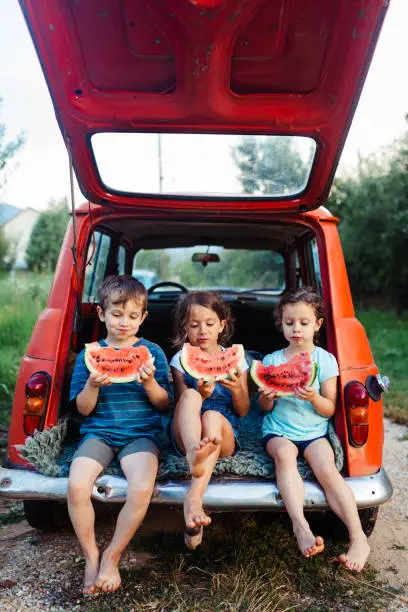
Fruit
- Apple slices, peeled or thinly sliced for little ones
- Bananas, easy to peel and soft
- Grapes, cut for young kids, whole for older children
- Mandarin oranges or clementines
- Berries, in a container, cut for toddlers when needed
- Melon cubes, in a closed container
- Dried fruit, like raisins and apricots (soft and sticky, so use small portions for young kids)
- Fruit pouches or squeeze packs
- Frozen fruit pouches, which thaw as the day goes on
Vegetables
- Cucumber slices
- Cooked sweet potato sticks
- Snap peas, for older kids
- Baby carrots, cut or cooked for young children
- Cherry tomatoes, cut for little ones
- Veggie sticks and hummus in a sealed cup
- Roasted chickpeas, for older kids
- Veggie chips or crunchy snack peas
Protein
- String cheese or cheese cubes, cut small for young children
- Hard-boiled eggs, peeled and kept in a cooler
- Turkey or chicken roll-ups
- Nut butter sandwiches or crackers (check allergies)
- Hummus with pita or crackers
- Yogurt pouches or cups
- Beef or turkey jerky, for older kids
- Edamame, shelled, for older children
Carbs and grains
- Whole-grain crackers
- Pretzels
- Whole-grain cereal in a cup or bag
- Granola bars or oat bars (check for nuts)
- Rice cakes
- Mini muffins or banana bread
- Plain popcorn, for older kids only
- Pita chips or baked tortilla chips
- Bagel bites
Treats
A few treats keep morale high and keep kids from begging at every gas station.
- Graham crackers or animal crackers
- Fruit leather or fruit snacks, in small portions
- A small dark chocolate square
- Homemade energy bites (oats, nut butter, honey and chocolate chips, but no honey for babies under one year)
- A mini cookie or two
Snacks by Age
Babies (6 to 12 months, on solids)
Ask your pediatrician about safe foods, and stick to what your baby already eats. Examples include soft fruit pouches, baby cereal, puffs that dissolve an,, and soft cooked vegetables. Offer snacks when stopped so you can watch your baby.
Toddlers (1 to 3)
Choose soft, small, melt-in-your-mouth foods:
- Banana pieces
- Soft cheese cubes
- Yogurt pouches
- Puffs and soft crackers
- Cooked pasta
- Soft, peeled fruit
- Oat cereal in a cup
Preschoolers (3 to 5)
- Cheese sticks and crackers
- Apple slices (cut thin)
- Cut grapes
- Pretzel sticks
- Sandwich pinwheels
- Mini muffins
- Veggie sticks and dip
School-age kids (6 to 12)
- Trail mix and granola bars
- Beef jerky
- Whole fruit
- Veggie sticks and hummus
- Sandwiches and wraps
- Popcorn and snack mixes
Tweens and teens
Teens often prefer more filling snacks and some independence. Let them pack their own snack bag with a few healthy choices and a few treats.
Road Trip Snacks for Kids Who Get Car Sick
If your child gets car sick, the right snacks matter. Light, bland foods are usually easier on the stomach.
- Crackers, pretzels, and dry cereal
- Toast or plain bagels
- Bananas or applesauce
- Plain rice cakes
- Small sips of water
Avoid greasy, spicy, sugary,y or very strong-smelling foods. Do not give a large meal right before driving. See our guide to car sickness in kids for more ways to prevent and handle it.
Mess-Free Snack Tips
- Pack snacks in individual containers or zip bags. Portioning avoids fights and overeating.
- Use snack cups with lids or spill-proof containers for cereal and trail mix.
- Choose low-crumb foods. Pretzels and fruit make less mess than cookies and chips.
- Bring wet wipes and napkins for sticky hands.
- Lay a towel or small mat under car seats to catch crumbs.
- Use a snack tray with compartments if kids are old enough for a lap tray (follow safety rules and use only when the car is parked or in a way that is safe).
- Keep a trash bag within reach and teach kids to use it.
- Avoid sticky, melty,lty and drippy foods, like chocolate in hot cars, ice cream, and juicy fruit with seeds.
Drinks for the Road
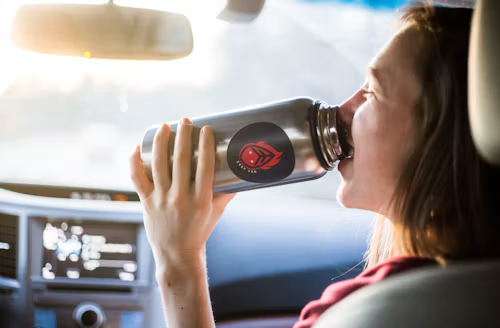
- Water is best. Bring a reusable water bottle for each child and refill at stops.
- Use bottles with lids or straws to prevent spills.
- Limit juice and soda, which can add sugar and cause sticky messes.
- Offer milk or milk alternatives at meals and stops, when kept cold.
- Keep drinks cold with ice packs or a small cooler.
- Offer drinks more often in hot weather to prevent dehydration
How to Keep Snacks Safe and Cold
- Use a good cooler with plenty of ice packs. Pre-chill the cooler and the food before you leave.
- Keep cold foods at 40°F (4°C) or below. The U.S. government’s FoodSafety.gov explains safe storage and the “two-hour rule” for perishable foods.
- Do not leave perishable food out for more than two hours, or one hour if the temperature is above 90°F.
- Keep the cooler out of the sun and in the air-conditioned part of the car, not the trunk in hot weather.
- Open the cooler less often. Use a small, separate cooler or bag for drinks and snacks you will open often.
- Freeze items like yogurt tubes and water bottles so they double as ice packs.
- Wash hands or use sanitizer before eating.
- Throw away leftovers from long, warm days.
Make-Ahead Snack Ideas
Making snacks at home saves money and gives you control over ingredients.
- Homemade trail mix with cereal, pretzels, dried fruit, nd seeds (no nuts for little ones or allergy families)
- Energy bites with oats and nut butter, or seed butter for nut-free
- Mini muffins or banana bread bites
- Pinwheel sandwiches sliced into small bites
- Veggie and cheese plates in sealed containers
- Baked sweet potato sticks
- Frozen yogurt tubes that thaw by snack time
- Homemade granola bars (nut-free if needed)
- Popcorn for older kids, popped at home
- Hard-boiled eggs (keep them cold)
Gas Station and Rest Stop Snacks: Better Choices
Sometimes you need to buy snacks on the road. Look for:
- Fresh fruit, like bananas and apples
- String cheese and yogurt
- Nuts and trail mix for older kids
- Whole-grain crackers or granola bars
- Plain pretzels and rice cakes
- Water and milk instead of soda
- Individually wrapped portions, which help avoid overeating
Read labels for added sugar, and avoid giving a whole bag of candy at once.
Budget Tips for Road Trip Snacks
- Buy in bulk and portion at home. Single-serve packs cost more.
- Shop at grocery stores before the trip, not at gas stations.
- Make your own snacks like trail mix and muffins.
- Reuse containers and bags instead of buying disposable ones.
- Refill water bottles instead of buying bottled drinks.
- Plan your snacks so food does not go to waste.
For more money-saving ideas, see our guide to budget-friendly family road trip ideas.
A Sample Snack Plan for a Full Driving Day
Here is an example for a family with school-age kids. Adjust it for your family and allergies.
| Time | Snack or meal |
|---|---|
| 8:00 | Breakfast at home or a light stop |
| 10:00 | Apple slices, cheese sticks and water |
| 12:00 | Picnic lunch: sandwiches, fruit and veggie sticks |
| 2:30 | Crackers, yogurt pouch and a small treat |
| 4:00 | Trail mix, pretzels and water |
| 6:00 | Dinner at a stop |
For toddlers, keep every snack soft and small, and offer them when you are stopped. Our guide to surviving a long car ride with a toddler explains how to plan stops.
Road Trip Snack Packing Checklist
- Cooler and ice packs
- Reusable snack containers and zip bags
- Snack cups with lids
- Water bottles for every child
- Napkins, wipes, and hand sanitizer
- A small trash bag
- A towel or small mat for crumbs
- Allergy medicine, if needed
- A food thermometer, if you will prepare meals on the road
For more gear ideas, see our list of the best travel gear for kids, and for safety tips on the road, read our family travel safety tips.
Common Road Trip Snack Mistakes
- Packing too much sugar. Sugar highs and crashes cause meltdowns.
- Offering snacks all day long. Kids may fill up and skip meals.
- Giving choking hazards to young kids, especially in a moving car.
- Forgetting water.
- Leaving food in a hot car.
- Not bringing wipes.
- Packing messy foods.
- Forgetting to check for allergies.
- Not having a backup plan for delays.
Frequently Asked Questions
What are the best road trip snacks for kids?
Soft, low-mess foods like fruit, cheese sticks, crackers, pretzels, yogurt pouches, cereal, granola bars, and veggie sticks are great choices. Choose snacks that are safe for your child’s age.
What are healthy road trip snacks for toddlers?
Soft fruit, yogurt pouches, cheese cubes cut small, puffs, cooked pasta, and oat cereal are good toddler options. Avoid whole grapes, nuts, popco, rn and other choking hazards.
What snacks are good for kids who get car sick?
Light, bland snacks like crackers, pretzels, toast, bananas, and dry cereal are usually easier on the stomach. Avoid greasy, spicy, and very sweet foods.
How do you keep snacks cold on a road trip?
Use a cooler with ice packs, pre-chill it, keep it out of the sun, and open it as little as possible. Keep perishable foods at 40°F or below.
How much food should I pack for a road trip with kids?
Plan a snack every two hours or so, and a bit extra. It is better to have too many snacks than too few, but avoid overfeeding.
What are mess-free car snacks?
Pretzels, crackers, fruit pouches, cheese sticks, cereal in cups, bananas, apple slices, and string cheese make little mess. Avoid chocolate, sticky candy, and juicy foods.
Is it safe for kids to eat in the car?
It can be risky for young children because you cannot watch them closely while driving. Many families offer snacks at stops and choose very safe, soft foods for the car. For choking safety, talk to your pediatrician.
Final Thoughts
The best road trip snack plan is simple: pack a variety of safe, easy foods, keep them cold and clean, offer them at regular times, nd bring plenty of water. A well-fed child is a happier passenger, and a snack plan means fewer meltdowns, fewer stops, and more energy for the adventure ahead.
Ready to hit the road? Read our guide to budget-friendly family road trip ideas, learn how to prevent sickness inss n, and browse the best family vacations in the U.S. for your next destination.
Pingback: Best Beach Vacations in the U.S. for Families: 10 Picks