Few things can ruin a road trip faster than a child who says, “I don’t feel good,” just as you hit a winding road. Car sickness is one of the most common travel problems for kids, and it is stressful for everyone, especially when there is no rest stop in sight.
The good news is that car sickness in kids is usually manageable. A few simple changes to seating, food, entertainment, and driving can prevent most episodes, and knowing what to do when it starts makes the situation much less scary. This guide explains what causes car sickness, how to spot the early signs, 15 practical ways to prevent it, what to do when your child feels sick, when to talk to a doctor,r and how to plan a road trip with a car-sick-prone child. For more road trip planning, see our guide to budget-friendly family road trip ideas.
Important: This article offers general information, not medical advice. Talk to your child’s doctor or pharmacist about medicines, dosing and any health concerns.
Quick answer: how do you prevent car sickness in kids? Help your child look outside instead of at a book or screen, give a light meal beforehand rather than a heavy one, keep the car cool with fresh air, drive smoothly, take regular breaks and offer distractions like music or conversation. If your child starts to feel sick, stop as soon as you safely can, get fresh air and offer sips of water. Ask your doctor about medicine options for children age 2 and older.
What Is Car Sickness?
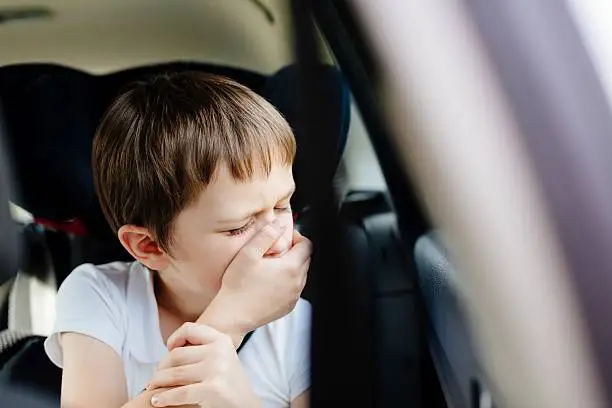
Car sickness is a type of motion sickness. It happens when the brain gets conflicting signals from the inner ears, eyes, es and the nerves in your muscles and joints. When a child sits in a car without seeing the road or reads a book, the inner ear senses motion while the eyes tell the brain the child is sitting still. The mixed message can cause an upset stomach, sweating, dizziness, ess and nausea.
It is not clear why some children are affected more than others. Car sickness is most common in children between about 2 and 12 years old. It does not seem to affect most babies and toddlers very often. Many children grow out of it as they get older, though some are prone to it for years.
Signs of Car Sickness in Kids
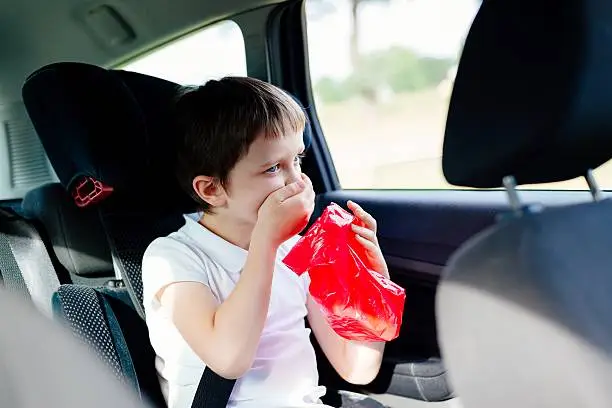
Symptoms can start slowly. Catching them early gives you time to react. Watch for:
- Becoming unusually quiet or sleepy
- Pale or clammy skin, and cold sweats
- Yawning, drooling, or frequent swallowing
- Complaining of a tummy ache, dizziness or headache
- Feeling hot and wanting to lie down
- Loss of appetite
- Nausea or vomiting
In children younger than about 6, the main symptoms are often dizziness and wanting to lie down, rather than vomiting. Younger children may not tell you they feel sick, so watch their behavior. If your usually chatty child goes silent and pale, act quickly.
Why Some Kids Get Car Sick More Than Others
Researchers do not fully understand why, but a few things can make car sickness more likely:
- Looking down. Reading, drawing, or playing on a screen sends mixed signals to the brain.
- Poor view. A child sitting low in the back seat without a view outside may feel worse.
- Winding, bumpy,y or stop-and-go roads. More motion means more risk.
- Heavy or greasy meals. A full or queasy stomach makes things worse.
- Stuffy, hot,ot or smelly cars. Strong smells, such as food or air fresheners, can trigger nausea.
- Anxiety or excitement. Nervous kids may feel sicker.
- Family history. Motion sickness often runs in families.
15 Ways to Prevent Car Sickness in Kids
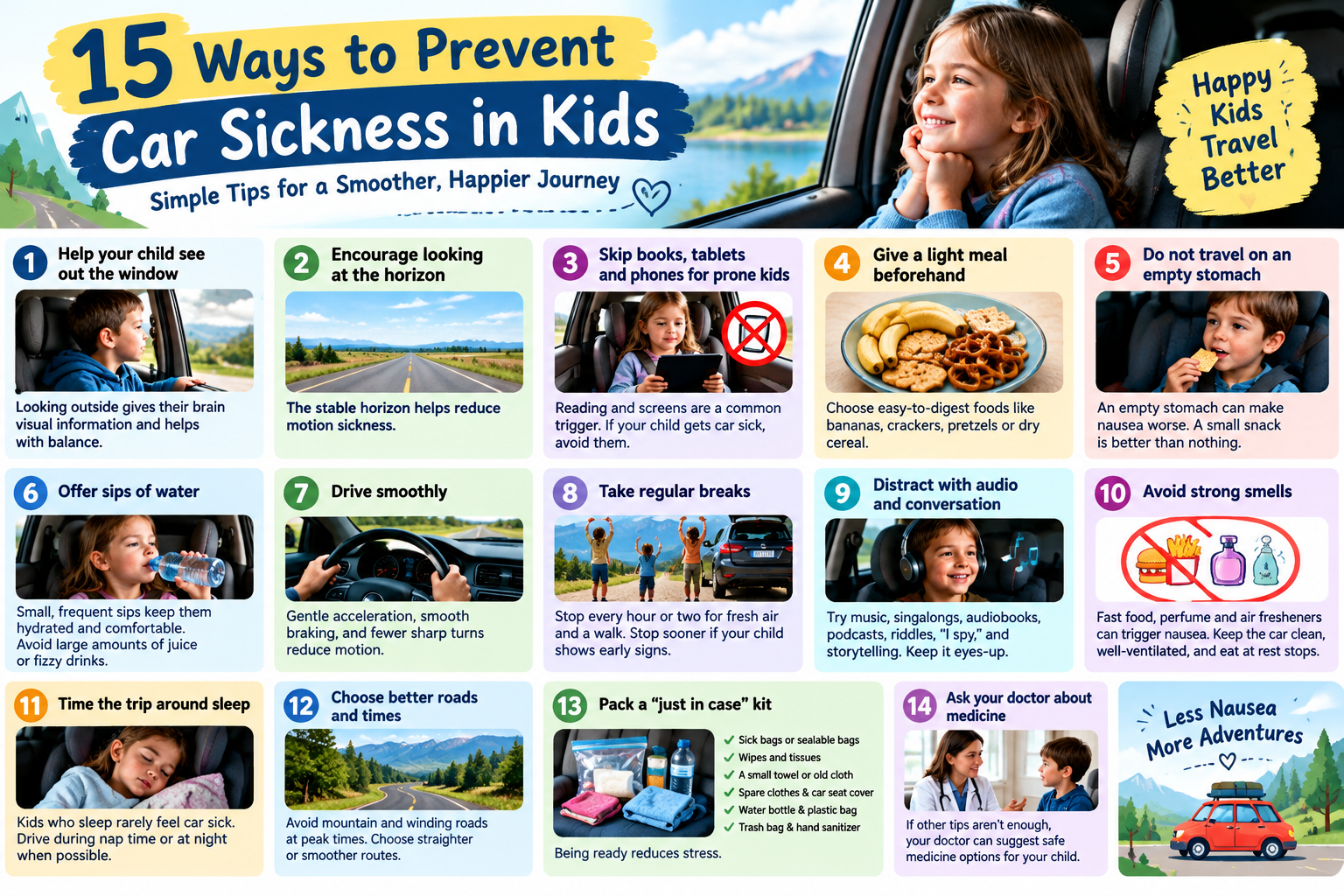
1. Help your child see out the window
A good view helps the brain match what the eyes see with what the body feels. Make sure your child can see out the window. A properly fitted booster seat raises the view for kids who are big enough to use one. Always keep children in the back seat in an age- and size-appropriate car seat or booster, and follow your seat manual and local law. The NHTSA car seat guidance helps you choose and check.
2. Encourage looking at the horizon
Ask your child to look at objects far away, such as hills, trees, and signs. Focusing outside the car can give the brain extra information that eases the mismatch.
3. Skip books, tablets and phones for prone kids
Reading and screens are a common trigger. If your child gets car sick easily, save screen time for rest stops, or switch to audio.
4. Keep the car cool and ventilated
Fresh air or air conditioning helps many kids. Crack a window or point a vent toward your child’s face. Avoid a hot, stuffy car.
5. Give a light meal beforehand
A large meal just before or during a car trip can make car sickness worse. Offer a light, bland meal an hour or two before leaving, such as toast, a banana or cereal. Avoid greasy, spicy, or very sweet foods. See our guide to road trip snacks for kids for ideas that are easy on the stomach.
6. Do not travel on an empty stomach
An empty stomach can also make nausea worse. Small, bland snacks such as crackers, pretzels, ls or dry cereal are often better than nothing.
7. Offer sips of water
Small, frequent sips of water help keep your child comfortable and hydrated. Avoid large amounts of juice or fizzy drinks.
8. Drive smoothly
Gentle acceleration, smooth braking, and fewer sharp turns reduce motion. If your route has long winding sections, plan extra stops before and after.
9. Take regular breaks
Stopping every hour or two lets your child get out, walk around,d and breathe fresh air. Stop sooner if your child shows early signs. Our guide to surviving a long car ride with a toddler has more tips on planning stops.
10. Distract with audio and conversation
Distraction can help prevent nausea. Try music, singalongs, audiobooks, podcasts, riddles, “I spy,” and storytelling. Keep the activities eyes-up.
11. Avoid strong smells
Fast food, perfume, and air fresheners can trigger nausea. Keep the car clean and well-ventilated, and eat meals at rest stops.
12. Time the trip around sleep
Children who sleep rarely feel car sick. Drive during nap time or at night when possible, especially for younger kids. Safe sleep position and car seat rules still apply.
13. Choose better roads and times
Avoid mountain and winding roads at peak times when you can. Choose routes that are straighter or smoother, and plan breaks before the curviest stretches.
14. Pack a “just in case” kit
Being ready reduces stress. Keep these items within reach:
- Sick bags or sealable plastic bags
- Wipes and tissues
- A small towel or old cloth
- A spare set of clothes and a spare car seat cover if you have one
- A water bottle and a plastic bag for dirty items
- A small trash bag and hand sanitizer
15. Ask your doctor about medicine
If your child is prone to car sickness, ask your pediatrician or pharmacist about options. Some over-the-counter antihistamines, such as dimenhydrinate and diphenhydramine, are used for car sickness in children age 2 and older, but they can cause drowsiness and are not right for everyone. Non-drowsy antihistamines do not appear to work for motion sickness. Always follow your doctor’s advice about the right product, timing,g and dose. Do not give medicine to babies or younger children without medical guidance.
What About Wristbands, Ginger and Other Remedies?
Many parents try acupressure wristbands, ginger candies,ies or peppermint. Evidence for these is limited, and results vary from child to child. They are generally low risk, but check ingredients for allergies and choking hazards, and talk to your doctor if you are unsure. Do not rely on them alone if your child gets very sick.
What to Do When Your Child Starts to Feel Sick
Act quickly. The sooner you respond, the better.
- Stop the car as soon as you safely can. Pull into a rest area, parking lot, or safe shoulder.
- Get fresh air. Open the door or window, and let your child step outside if it is safe.
- Let them rest. Some kids feel better walking around, and others feel better lying on their back with closed eyes for a few minutes.
- Offer small sips of water once the nausea settles. Avoid big gulps and food at first.
- Cool your child down with a damp cloth on the forehead or neck.
- Wait a bit before driving again. Motion sickness often eases within a short time after the movement stops, and symptoms usually go away within a few hours.
- Cleann up and change clothes if needed.
- Restart gently. Give your child a good view, fresh air, and a distraction, and drive smoothly.
If vomiting has happened, offer a little more water, wait until your child feels better,r and then offer bland food, such as crackers.
When to Talk to a Doctor
Contact your child’s doctor if:
- Car sickness is severe or happens on almost every trip
- Your child vomits repeatedly or cannot keep fluids down
- You see signs of dehydration, such as a dry mouth, no tears, or very little urine
- Symptoms last long after the trip ends
- Dizziness or nausea happens when you are not in a moving vehicle
- Your child has a severe headache, fever, confusion, or other worrying symptoms
- Car sickness makes travel very difficult
For general health information for parents, the American Academy of Pediatrics’ HealthyChildren.org is a trusted resource.
Car Sickness by Age
Babies and toddlers
Car sickness is less common, but it can happen. Keep trips calm, dress your baby comfortably,y and take regular breaks. Our guide to surviving a long car ride with a toddler covers naps, stops and safety.
Ages 2 to 12
This is the peak age range for car sickness. Use the tips above, especially a good view, light snacks, fresh air,ir and breaks. Avoid reading and screens if your child is prone to it.
Teens
Older kids and teens may still get car sick, especially on winding roads or boats. Let them choose a seat with a good view, use audio entertainment, and consider asking a doctor if it is a frequent problem.
How to Plan a Road Trip With a Car-Sick-Prone Child
- Plan shorter driving days, with more stops.
- Avoid winding routes when possible, or drive them in the morning when kids are fresh.
- Pack bland snacks and water, and avoid heavy restaurant meals before driving.
- Bring audio entertainment, such as audiobooks and music, instead of books and tablets.
- Choose seats with a view, while following car seat safety rules.
- Keep the kit within reach and plan for a clean-up stop.
- Talk to your child about how they are feeling, and encourage them to tell you early.
- Be flexible. A slower trip is better than a miserable one.
See our guide to family travel safety tips for more on road safety, and our list of the best travel gear for kids for car-friendly items.
Common Mistakes With Car Sickness
- Waiting too long to stop. Pull over at the first sign.
- Giving a big meal before driving.
- Letting prone kids read or use screens.
- Keeping the car hot or stuffy.
- Forgetting a clean-up kit.
- Driving aggressively. Sharp turns and hard braking make it worse.
- Giving medicine without a doctor’s guidance.
- Skipping breaks.
Frequently Asked Questions
What causes car sickness in children?
It is a type of motion sickness caused by conflicting signals between the inner ear, eyes, and body. A child who cannot see out the window or who reads or uses a screen in a moving car may feel nauseated and dizzy.
At what age do kids get car sick?
Children ages 2 to 12 are the most prone. It is less common in babies and toddlers, and many kids grow out of it.
How can I stop my child from getting car sick?
Help your child look outside, give a light meal beforehand, keep the car cool with fresh air, drive smoothly, take breaks,s and offer audio entertainment. Ask your doctor about medicine for kids age 2 and older.
What should I do if my child is car sick?
Stop the car as soon as it is safe, get fresh air, let your child rest, st and offer sips of water. Wait until they feel better before continuing.
What foods help with car sickness in kids?
Light, bland foods, such as crackers, pretzels, toast, and dry cereal, are usually easier on the stomach. Avoid greasy, spicy, and very sweet foods. See our guide to road trip snacks for kids.
Do sleeping kids get car sick?
Rarely. Kids who sleep during the drive usually do not feel car sick, which is why many families drive during nap time or at night.
Can I give my child medicine for car sickness?
Some over-the-counter antihistamines are used for children age 2 and older, but they can cause drowsiness and are not right for everyone. Ask your child’s doctor or pharmacist for advice on the right product and dose.
Final Thoughts
Car sickness in kids is common, but it does not have to take over your road trips. A good view, a light snack, fresh air, smooth driving,g and regular breaks solve most problems, and a small kit takes the stress out of the rest. Pay attention to early signs, stop when you need to, and keep a sense of humor. With a little preparation, your next family road trip can be a lot more fun.
Ready to plan your next drive? Read our guide to budget-friendly family road trip ideas, learn how to survive a long car ride with a toddler,ler or browse the best family vacations in the U.S. for your next adventure.