Yellowstone feels like a giant science lesson that kids actually want to attend. Geysers explode into the sky, hot springs glow in impossible colors, mud pots burp and bubble, and bison stroll past the car as if they own the road. For children, it is part museum, part safari, and part adventure movie set.
It is also a huge, wild place where sights are far apart, the ground can be dangerously hot, and the wildlife isn’t tame. This guide shows you how to plan Yellowstone with kids: the best family-friendly sights, easy boardwalks, a one- to three-day plan, safety rules, wildlife tips, Junior Ranger activities, where to stay, what to pack, and how to handle babies and toddlers. It builds on our list of the best national parks for families with young kids.
Important: Road openings, seasonal closures, fees, reservations and rules change. Always check the official Yellowstone page at nps.gov/yell for current conditions before you travel.
Quick answer: how do you visit Yellowstone with kids? Focus on a few short, safe highlights, such as Old Faithful and the Upper Geyser Basin boardwalks, Midway Geyser Basin (Grand Prismatic Spring), West Thumb Geyser Basin, Mammoth Hot Springs and the Grand Canyon of the Yellowstone. Stay on boardwalks, keep a safe distance from wildlife, plan for lots of driving time, join the Junior Ranger program and aim for late spring to early fall when most roads are open.
Why Yellowstone With Kids Is Great
- It is full of “wow” moments. Geysers, hot springs,s and mud pots are unlike anything most kids have seen.
- Many sights are on easy boardwalks. You do not need to hike far to see the best features.
- Wildlife is everywhere. Bison, elk, pronghorn, and, with luck, bears and wolves can be seen from a safe distance.
- The Junior Ranger program is excellent. It turns the visit into a mission.
- It is a real classroom. Kids learn about volcanoes, ecosystems, and conservation.
It is also more demanding than a typical park. Distances are long, altitude is high, weather changes quickly, and safety rules are strict. Good planning makes the difference.
Yellowstone Basics Every Parent Should Know
- The park is huge. Major sights are often an hour or more apart by car, and roads can be slow because of traffic and wildlife. Plan on a lot of driving time.
- The main road is a loop. Most major areas connect by the Grand Loop Road, a figure-eight route through the park.
- Elevation is high. Many areas are above 7,000 feet, so altitude can affect kids and adults. Drink water and take it easy at first.
- Weather can swing. Cold mornings, hot afternoons, and sudden storms are common, even in summer.
- Cell service is limited in many areas. Download maps and plans ahead.
- Services are spread out. Gas, food and restrooms are not available everywhere, so carry snacks and water and fill up when you can.
Best Time to Visit Yellowstone With Kids
Many roads are open from late spring to early fall, and that is when most families visit.
- Late spring (May to June): fewer crowds, baby animals,s and waterfalls at full flow, but some roads and services may not be open yet, and weather can still be cold or snowy.
- Summer (June to August): the most open and the busiest, with the warmest weather and the most ranger programs. Start early, and expect traffic.
- Early fall (September): fewer crowds, cooler weather, er and active wildlife. Some services begin to close.
- Winter: magical for snow lovers, but most roads close to regular vehicles, and travel is by special oversnow vehicles or limited roads. It is not an easy first trip with young kids.
For a full season-by-season guide, see our article on the best time to visit national parks with kids.
The Best Things to Do in Yellowstone With Kids
1. Old Faithful and the Upper Geyser Basin
Old Faithful is the park’s most famous geyser. It erupts roughly every 90 minutes, and rangers post predicted eruption times at the visitor education center, usually within a window of about 10 minutes either way. Seeing it is a highlight for almost every child.
The Upper Geyser Basin has the highest concentration of geysers in the park, and wide boardwalks lead to many of them. The Geyser Hill Loop is roughly 1.3 miles of boardwalk and gives kids a close look at active thermal features, though you can do just a portion.
Tips
- Check the predicted eruption time, then explore nearby while you wait.
- Bring layers, since the wind picks up before an eruption.
- Visit early or late in the day for smaller crowds.
2. Grand Prismatic Spring and Midway Geyser Basin
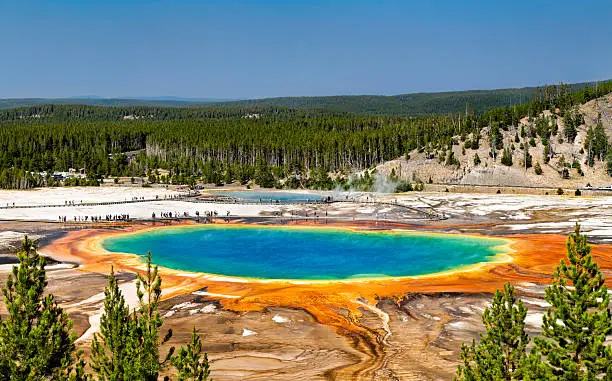
Grand Prismatic Spring is one of the largest hot springs in the world, with rainbow-like bands of orange, yellow and green. The boardwalk at Midway Geyser Basin takes you beside the spring and is relatively short, making it a good choice for young kids.
For a bird’s-eye view, an overlook trail from the Fairy Falls trailhead gives a wider look at the colors. It is a short hike (check the current distance and conditions before you go), and best for kids who can walk a bit.
Tips
- Steam can hide the colors on cold mornings, so late morning to afternoon is often better.
- Stay on the boardwalk. Thermal water is scalding.
- Parking lots fill quickly in summer.
3. West Thumb Geyser Basin
This short, stroller-friendly boardwalk by Yellowstone Lake has hot springs, bubbling pools, and lake views. It is a calm, easy stop, and especially good for toddlers and families with strollers.
4. Mammoth Hot Springs
Mammoth has terraced, layered hot springs that look like frozen waterfalls. Boardwalks and stairs lead around the terraces, and elk are often seen in the area. The town is also a good place to stop for restrooms and food.
5. Grand Canyon of the Yellowstone
This colorful canyon has two huge waterfalls, the Upper and Lower Falls. Several overlooks, including Lookout Point and Inspiration Point, are short walks from parking areas and give big views. Hold hands near the rim, because there are steep drop-offs.
6. Norris Geyser Basin
Norris is one of the hottest and most active thermal areas in the park and home to Steamboat Geyser, the tallest active geyser in the world, which erupts unpredictably. Boardwalks give kids a good look at colorful, steaming pools. Stay on the walkways.
7. Fountain Paint Pot and the Mud Pots
Kids love bubbling mud. Fountain Paint Pot is a short boardwalk loop with mud pots, hot springs, and small geysers. Mud Volcano is another favorite, though the smell of sulfur is strong.
8. Hayden Valley and Lamar Valley for Wildlife
These wide valleys are among the best places to see wildlife, especially in the morning and evening. Bison, elk, and pronghorn are common, and bears and wolves are sometimes seen from a distance. Bring binoculars, stay in your car or at a safe distance and pull over only in designated pullouts.
9. Yellowstone Lake
The largest lake in the park offers shoreline walks, picnic spots, and views. Boating and fishing opportunities exist, and rules and permits apply, so check the park’s official page.
10. Ranger Programs and the Visitor Centers
Rangers lead free programs at many locations, including walks and evening talks. Visitor centers have exhibits, films,s and the Junior Ranger booklets. These are great options when kids need a break from driving or when the weather turns bad.
Yellowstone Junior Ranger Program
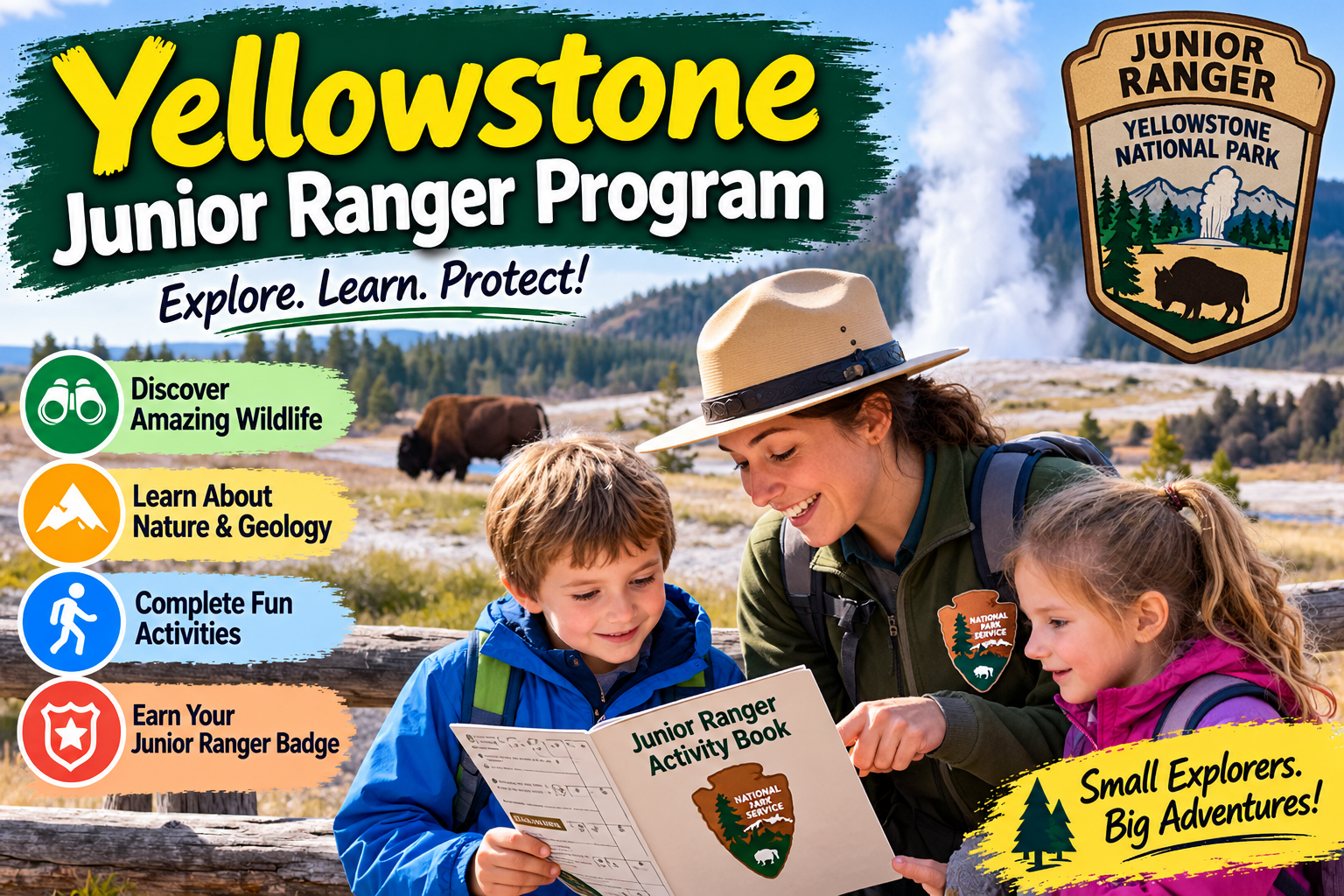
The Junior Ranger program is one of the best ways to keep kids engaged. Yellowstone’s program has been described as being for children ages 4 and above, with an activity booklet available at visitor centers. Kids complete activities that may include attending a ranger program, walking a trail or boardwalk, alk and learning about wildlife and thermal features. A ranger reviews the booklet and awards a badge.
For tips on how the program works, what it costs, how old kids need to be, and how to earn badges online, read our guide to the Junior Ranger program. Check the current requirements and any fees at the park’s official page.
Yellowstone With Kids: Safety Rules for Families
Yellowstone is wonderful, but it is not a theme park. Follow these rules carefully. Our family travel safety tips cover more.
Thermal Areas
- Stay on boardwalks and trails. Thermal ground can be thin, and the water can be scalding.
- Never touch thermal features or let kids put hands or feet in hot springs.
- Hold young children’s hands and keep them from running or climbing on railings.
- Do not throw objects into thermal features.
- Keep pets off boardwalks. Rules vary, so check the official page.
- Stay upwind of steam, and move away if the wind brings strong fumes.
Wildlife
- Keep your distance. In national parks, the general rule is at least 100 yards (about 91 meters) from bears and wolves, and at least 25 yards (about 23 meters) from other wildlife, including bison and elk. Check the park’s specific rules.
- Never approach, feed, ed or follow animals.
- Stay in your car if an animal is close to the road, and do not stop in the middle of the road.
- Use pullouts to watch wildlife safely, and keep voices low.
- Teach kids that bison are dangerous. They look calm, but they can run fast and charge when they feel threatened.
- Store food properly. Keep food in locked vehicles or bear boxes.
Bears
- Make noise on trails, hike in groups,s and keep kids close.
- Carry bear spray if you hike, know how to use it,t and keep it easy to reach. Follow the park’s guidance.
- Never run if you see a bear, and back away slowly while staying calm.
Water, Weather and Altitude
- Never let kids swim in thermal pools or hot rivers. Water can be dangerously hot or cold.
- Check the weather with the National Weather Service, and be ready for storms and fast temperature changes.
- Watch for altitude symptoms, such as headache, tiredness, and nausea. Drink water, rest,t and slow down.
- Avoid heat and sun problems with hats, sunscreen and water.
Driving
- Drive slowly and carefully. Traffic jams caused by wildlife are common.
- Plan breaks for kids, and bring snacks and entertainment for long drives. Our guide to budget-friendly family road trip ideas has tips for car time.
Yellowstone With Toddlers and Babies
Yellowstone can work with little ones if you keep it simple.
- Choose short, safe boardwalks like West Thumb Geyser Basin, the Old Faithful area, and Mammoth Hot Springs.
- Use a carrier or a stroller where boardwalks allow it. See our guides to hiking with a baby and hiking with toddlers for gear and tips.
- Keep a hand on toddlers near thermal areas and railings.
- Plan naps in the car and keep the day flexible.
- Pack layers. Mornings can be cold, even in summer.
- Bring extra snacks, diapers, and water, since services can be far apart.
- Talk to your pediatrician about altitude and travel, especially for babies. The American Academy of Pediatrics’ HealthyChildren.org has general guidance on travel with children.
A 1-, 2,,- and 3-Day Yellowstone Plan for Families
Treat these as flexible frameworks, not strict schedules. Allow extra time for driving, traffic, fic and wildlife stops.
One-Day Plan
- Morning: Old Faithful and Upper Geyser Basin boardwalks
- Midday: Picnic lunch, then Midway Geyser Basin to see Grand Prismatic Spring
- Afternoon: Fountain Paint Pot or a short ranger program
- Evening: Drive slowly through a wildlife area if time allows
Two-Day Plan
- Day 1: Old Faithful area, Midway Geyser Basin and Fountain Paint Pot
- Day 2: Grand Canyon of the Yellowstone in the morning, then Hayden Valley for wildlife in the late afternoon
Three-Day Plan
- Day 1: Old Faithful area, Upper Geyser Basin and a ranger program
- Day 2: Midway Geyser Basin, West Thumb Geyser Basin and Yellowstone Lake
- Day 3: Grand Canyon of the Yellowstone, Hayden Valley and a slow wildlife drive
If you have more time, add Mammoth Hot Springs, Norris Geyser Basin or Lamar Valley. For a bigger Mountain West trip, consider pairing Yellowstone with nearby areas and read our guide to family-friendly mountain getaways.
Where to Stay in and Near Yellowstone
Inside the Park
Lodges, cabins, cabins, and campgrounds inside the park put you closer to the sights, which means less driving each day. They book up far in advance, often many months ahead, so reserve early. Check the official page for current lodging and campground options. Many campgrounds can be reserved through Recreation.gov or the park’s partners.
Gateway Towns
Towns near the park entrances, such as West Yellowstone and Gardiner, offer hotels, restaurants, and shops. They are convenient, but you may spend extra time driving into the park each day. Other gateway areas include Cooke City, Cody, and the communities near Grand Teton.
Camping
Camping is a classic way to experience Yellowstone. Choose a campground close to the sights, and plan for cold nights even in summer. Our first-time family camping guide and family camping checklist explain how to prepare. Follow all food storage rules, because bears live in the area.
What to Pack for Yellowstone With Kids
Our guide to the best travel gear for kids covers general gear. For Yellowstone, add these items.
- Layers for cold mornings, warm afternoons, and wind
- Rain jackets
- Sturdy, comfortable shoes with good grip. See our guide to hiking shoes for kids.
- Sun hats,ngl hats, etc.,s and sunscreen
- Binoculars for wildlife viewing
- Water bottles and plenty of snacks
- Bear spray if you plan to hike (follow park rules for use and carrying)
- A first-aid kit and any prescribed medicines
- A cooler for picnic lunches, since restaurants can be busy and far apart
- A small daypack for each child
- Car entertainment for long drives
- Offline maps, since cell service is limited
- A copy of the Junior Ranger booklet if you downloaded one
Yellowstone on a Budget
Yellowstone can be costly, but you can save.
- Eat picnic lunches. Pack a cooler and stop at scenic picnic areas.
- Camp or choose budget lodging in gateway towns.
- Use free activities: ranger programs, boardwalks, wildlife viewing, and Junior Ranger.
- Check entrance fees and passes on the park’s official page. Costs and pass options change.
- Travel in shoulder seasons for better prices.
See our guide to budget-friendly family road trip ideas for more money-saving tips.
Leave No Trace in Yellowstone
- Stay on boardwalks and trails. This protects fragile thermal ground and plants.
- Pack out all trash, and never leave food unattended.
- Respect wildlife. Keep your distance and never feed animals.
- Do not take rocks, plants,s or other natural items.
- Follow campfire rules and use only designated fire rings.
The Leave No Trace Center offers simple principles for families.
Sample Yellowstone Day With Kids
| Time | What Happens |
|---|---|
| 7:30 a.m. | Early breakfast, pack a picnic and layers |
| 8:30 a.m. | Drive to Old Faithful, check predicted eruption times |
| 9:30 a.m. | Walk part of the Upper Geyser Basin boardwalks |
| 10:30 a.m. | Watch an eruption, then visit the visitor center and pick up Junior Ranger booklets |
| 12:00 p.m. | Picnic lunch |
| 1:00 p.m. | Midway Geyser Basin and Grand Prismatic Spring |
| 3:00 p.m. | snack,snackk and a short ranger program |
| 5:00 p.m. | Drive slowly through a wildlife valley |
| 7:00 p.m. | Dinner and early bedtime |
Notice that the plan includes breaks, meals, and flexibility. That is what keeps kids happy.
Common Mistakes When Visiting Yellowstone With Kids
- Trying to see everything. Distances are large, so choose a few highlights.
- Underestimating driving time. Roads are slow,w and traffic jams happen.
- Leaving the boardwalk. It is dangerous and illegal.
- Getting too close to wildlife. Keep your distance.
- Booking too late. Lodging and campsites sell out.
- Not packing layers. Weather changes quickly.
- Skipping the Junior Ranger program. It is one of the best parts for kids.
- Forgetting snacks and water.
- Ignoring altitude. Go slowly at first.
Yellowstone With Kids: Frequently Asked Questions
Is Yellowstone Good for Kids?
Yes. Geysers, hot springs, wildlife, and the Junior Ranger program make it exciting and educational. Plan short stops, follow safety rules, and expect long drives.
What Is the Best Age to Take Kids to Yellowstone?
Many families find ages 5 and up especially rewarding, since kids can walk boardwalks, enjoy the Junior Ranger program, and understand the safety rules. Babies and toddlers can go too, with careful planning.
How Many Days Do You Need in Yellowstone With Kids?
Two to three days let you see the main highlights without rushing. If you only have one day, focus on Old Faithful and a couple of nearby sights.
What Are the Best Things to Do in Yellowstone With Kids?
Old Faithful and the Upper Geyser Basin, Grand Prismatic Spring, West Thumb Geyser Basin, Mammoth Hot Springs, the Grand Canyon of the Yellowstone, wildlife viewing and the Junior Ranger program.
Is Yellowstone Safe for Kids?
It can be, if you follow the rules: stay on boardwalks, keep a safe distance from wildlife, hold young children’s hands, store food properly, and watch the weather and altitude. Our family travel safety tips have more.
Can You Visit Yellowstone With a Baby or Toddler?
Yes, with short, easy boardwalks, a carrier or stroller where allowed, layers snackscks,s an snacks, and flexibility. Talk to your pediatrician before you go.
What Is the Best Time to Visit Yellowstone With Kids?
Late spring to early fall, when most roads are open. Summer is the busiest, while early fall often has fewer people and cooler weather. Read our guide to the best time to visit national parks with kids.
How Far Should You Stay From Wildlife in Yellowstone?
In national parks, the general rule is at least 100 yards from bears and wolves and at least 25 yards from other wildlife. Check the park’s current rules, and stay in your vehicle if animals are close.
Final Thoughts
Yellowstone is one of the best places in the world to spark a child’s curiosity. Pick a few highlights, give yourself plenty of time between stops, follow the safety rules, es and let the kids lead. A boardwalk walk, a Junior Ranger badge,adge and a bison crossing the road can turn into the stories your family tells for decades.
Looking for more ideas? Read our guide to the Junior Ranger program, explore the best national parks for families with young kids, or browse the best family vacations in the U.S. for your next trip. For easy trails you can try at home, see our list of family-friendly hikes in the U.S., and learn the basics in our hiking with kids guide.