Taking a baby on a hike sounds like a big leap. There are diapers, feedings, naps, sun, bugs, and a lot of gear. And yet, many families find that hiking with a baby is one of the easiest ways to get outside, because babies in carriers are happy, close,e and not yet old enough to complain about the distance.
The key is to start simple, stay flexible, le and put safety first. This guide explains when you can start, how to choose a carrier, what to pack, how to dress your baby, how to handle feeding and sleep, and which trails to try first. Once your baby is walking, our guide to hiking with toddlers is the next step, and our beginner’s guide to hiking with kids covers the basics for the whole family.
Important: This article offers general information, not medical advice. Talk to your pediatrician about when it is appropriate to take a young baby on trails, especially for newborns, premature babies or babies with health conditions.
Quick answer: how do you hike with a baby? Choose a short, flat, shady trail close to home, use a well-fitted carrier that suits your baby’s age and weight, dress your baby in layers, protect from sun and bugs, plan around feedings and naps, and carry plenty of water, diapers and a full change of clothes. Keep the first hikes short and be ready to turn back.
When Can You Start Hiking With a Baby?
There is no single age that works for every family. A few things matter more than a number:
- Your pediatrician’s advice. Ask when it is appropriate for outings on trails, especially for newborns and premature babies.
- Head and neck control. Carriers have minimum age and weight guidelines, and good head control matters for safe carrying.
- Your own recovery and comfort. Carrying a baby while walking is physical, so take your time.
- Weather and season. Extreme heat, cold, and bug-heavy seasons are harder on small babies.
Many hiking-specific framed carriers are designed for babies who can sit up unassisted, often around six months, while soft-structured carriers with an infant insert may be used earlier. Always follow the manufacturer’s age and weight guidance for the carrier you buy.
Choosing a Baby Carrier for Hiking
The right carrier makes the difference between a comfortable walk and a sore back. Our guide to the best travel gear for kids covers carriers in more detail, and here is a quick comparison:
| Carrier type | Best for | Things to know |
|---|---|---|
| Soft wrap or sling | Newborns and very short walks | Needs correct positioning, less support for long distances |
| Soft-structured carrier | Babies and young toddlers, short to medium walks | Easy to use, supportive for the child, comfortable for short outings |
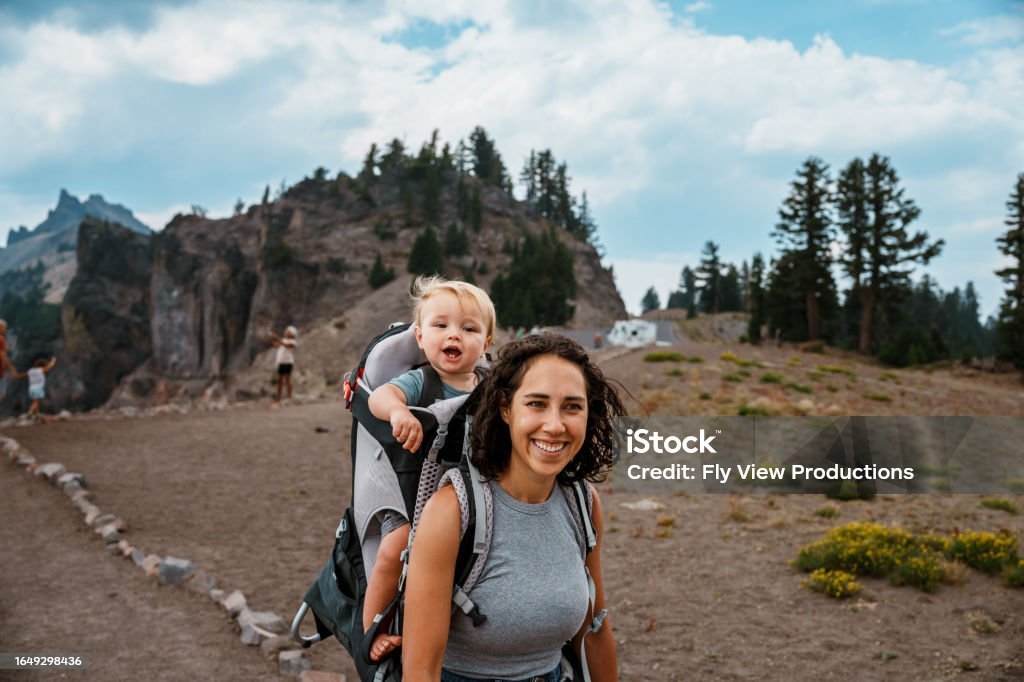
| Framed hiking carrier | Older babies who sit up, longer hikes | Better weight distribution, storage and sun shade, but heavier and bulkier |
Fit and safety tips
- Try the carrier at home before your first hike.
- Adjust it for the adult’s body so the weight rests on the hips, not just the shoulders.
- Follow baby-wearing safety guidance. The well-known “T.I.C.K.S.” rules say the baby should be Tight against you, In view, Close enough to kiss, Keep their chin off their chest,t and have a Supported back.
- Check on your baby often, especially if they fall asleep, and keep their airway clear.
- Avoid slippery, steep, ep or rocky trails. Carrying a baby changes your balance, and a fall is more serious.
- Never leave a baby alone in a carrier set down on the ground.
Trekking poles can give adults extra stability on uneven ground.
Pick the Right First Trail
For your first hikes, think “easy walk” rather than “adventure.”
- Short: About one to two miles or less, depending on your fitness and the weather.
- Flat and smooth: Wide paths, packed dirt or boardwalks.
- Shaded: Trees reduce sun and heat.
- Close to home: Short drives mean fewer car-seat tantrums and easier retreats.
- Facilities: A restroom or a place to change a diaper is a bonus.
- Simple to shorten: Out-and-back trails let you turn around any time.
Our list of family-friendly hikes in the U.S. includes several short loops that work well with a carrier, but check current conditions and park rules before you go.
Plan Around Feedings, Naps and Moods
- Time the hike for a happy window. Many parents go after a feeding and before a nap, when the baby is fed and calm.
- Plan feeding stops. Choose a quiet bench, picnic table, or shady spot. Bring a cover, nursing cap,e or whatever makes you comfortable.
- Expect naps in the carrier. Many babies fall asleep while walking. Stay alert and check on them regularly.
- Allow extra time. Stops for diapers and feedings add up, so plan a shorter distance than you would on your own.
- Be ready to head back. A fussy baby is a sign to stop, check diapers, hunger, temperature, re and comfort.
How to Dress a Baby for a Hike
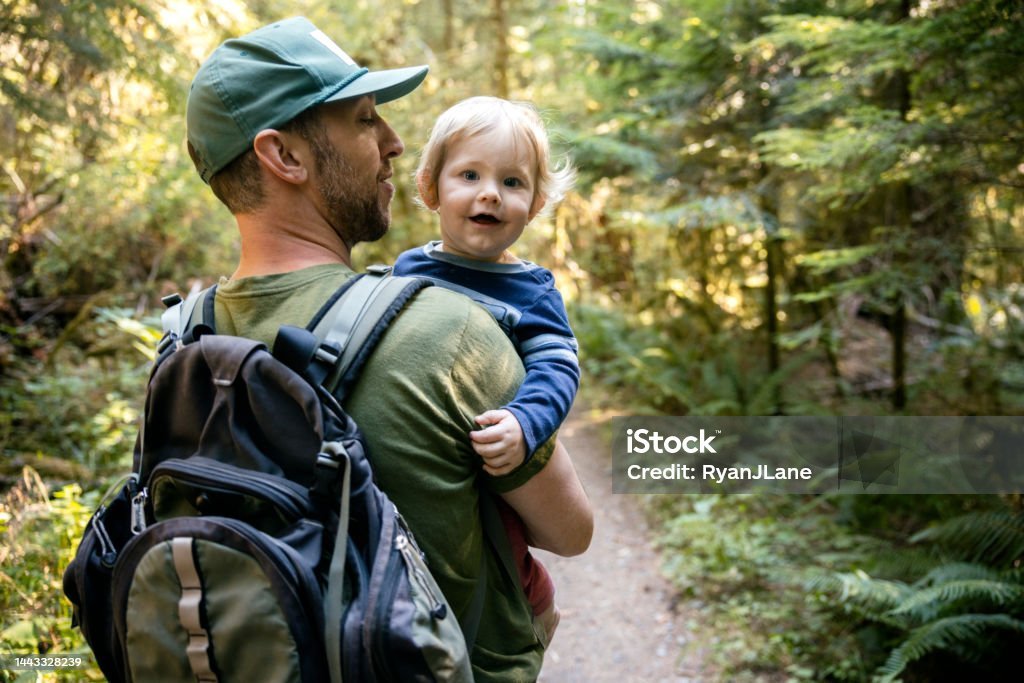
Babies cannot regulate their temperature as well as adults, so dress them thoughtfully.
- Use layers, such as a soft base layer, a warm layer, yer and a light outer layer you can remove.
- Avoid overheating, especially in a carrier, where your body heat adds warmth. Check the back of your baby’s neck or chest to see if they feel too hot or cold.
- Keep hands and feet covered in cool weather with socks, booties or mittens.
- Use a sun hat, ideally wide-brimmed, in warm weather.
- Pack a spare outfit, since spit-ups, leaks and spills happen.
- Bring a lightweight blanket for warmth or shade.
Sun, Heat and Bug Protection
Sun
The American Academy of Pediatrics advises keeping babies under six months out of direct sun and using shade, hats, and clothing for protection. Ask your pediatrician about sunscreen for young infants, and for older babies use a broad-spectrum sunscreen as directed. HealthyChildren.org has detailed guidance on sun safety for babies.
Heat
Stay out of the hottest part of the day. Choose shaded trails, offer feeds more often, and watch for signs of overheating, such as flushed skin, sweating, fussiness,s or lethargy. If your baby seems overheated, move to shade, remove layers and cool them gently.
Bugs and ticks
- Use bug netting on carriers where it is safe and does not block airflow.
- Dress your baby in light long sleeves and pants in buggy areas.
- Check repellent labels for age limits. Health agencies such as the CDC advise against using insect repellents on babies under two months, and some products have higher age limits, so ask your pediatrician.
- Do a full tick check after hikes in grassy or wooded areas.
What to Pack for Hiking With a Baby
Think of it as a diaper bag with a few trail extras.
Baby essentials
- Diapers, wipes, changing mat, and bags to pack out used diapers
- Bottles, formula, breast milk or baby food, plus extra
- Safe, clean water for mixing formula, and a way to keep it safe
- Burp cloths and a spare outfit or two
- Pacifier or comfort item
- Small blanket
- Sun hat and sunscreen if appropriate
Adult and safety items
- Water for you, plus snacks
- First-aid kit and any personal medicines
- Phone, a map, and a charged power bank
- Layers and a rain jacket for everyone
- Hand sanitizer
- A small trash bag
Keep the pack light, because you are already carrying your baby. Our family travel safety tips include a first-aid checklist and tips on staying prepared outdoors.
Safety Basics for Hiking With a Baby
- Check the weather with the National Weather Service before you go, and avoid extreme heat, cold, wind, and storms.
- Tell someone your plan and expected return time.
- Stay on marked trails and avoid cliffs, fast water,r and steep drops.
- Keep your baby’s face visible and your airway-check habit constant.
- Never drink untreated water or use it to mix formula.
- Watch the clock. Allow plenty of time to get back before dark or before the baby gets overtired.
- Know your limits. If you feel tired or unsteady while carrying, take a break.
Diapers and Leave No Trace
- Pack out used diapers. Do not bury or leave them on the trail.
- Use sealed bags and a dedicated trash pouch.
- Follow Leave No Trace. The Leave No Trace Center has guidelines for handling waste and staying on durable surfaces.
What About Rain, Cold and Heat?
Weather matters more with a baby. If it is raining, read our guide to hiking in the rain with kids for layers and gear ideas, and keep the hike short. In very hot or cold weather, it is often better to wait for another day. When in doubt, choose a comfortable, short walk close to the car.
A Sample First Hike With a Baby
This is an example for a baby who is comfortable in a carrier. Adjust it for your child.
| Time | What happens |
|---|---|
| 9:00 | Feed and change diaper at home, then drive to the trailhead |
| 9:30 | Check carrier fit and baby’s layers, apply sun protection |
| 9:40 | Start walking on a short, flat trail |
| 10:15 | Rest, feed, ed and check baby |
| 10:45 | Walk back at an easy pace |
| 11:15 | Back at the car, diaper change and snack |
Notice there is plenty of room for rest and care. Plan the day so the baby comes first.
Common Mistakes When Hiking With a Baby
- Choosing a trail that is too hard. Easy is better.
- Overdressing or underdressing. Check your baby’s temperature often.
- Ignoring the carrier’s limits. Follow age and weight guidance.
- Forgetting enough diapers and wipes.
- Starting too late. Missed naps and feedings lead to trail meltdowns.
- Not checking the weather. Conditions change quickly.
- Skipping a practice run. Test the carrier and your pack at home.
Next Steps as Your Baby Grows
As your baby becomes a toddler, you can add distance, try more trails, and let them walk for part of the hike. Our guide to how to get kids to like hiking shares ways to keep older children motivated, and when your family is ready for an overnight trip, see our guide to backpacking with kids and our family camping checklist.
Frequently Asked Questions
How old should a baby be to go hiking?
There is no fixed age. Talk to your pediatrician, especially for newborns. Carrier guidelines also matter, since many require good head and neck control, and many framed hiking carriers are meant for babies who can sit up on their own.
Is it safe to hike with a newborn?
It depends on your baby’s health, weather,r and your doctor’s advice. Many families start with very short walks near home. Ask your pediatrician what is appropriate for your newborn.
What is the best carrier for hiking with a baby?
It depends on age and the hike. Soft-structured carriers suit short outings, while framed hiking carriers are more comfortable for longer hikes with older babies. Always check fit and follow the manufacturer’s guidelines.
How do I keep my baby warm or cool on a hike?
Dress in layers, check their neck or chest rather than just their hands and feet, and adjust often. Choose shade in hot weather and avoid extreme temperatures.
Can I breastfeed or bottle-feed on the trail?
Yes. Plan feeding stops at quiet, comfortable spots, and bring everything you need, including extra water and clean bottles if you use them.
How far can I hike with a baby?
Start short, such as one to two miles or less, and increase gradually. Your comfort and your baby’s mood should decide, not a number.
Final Thoughts
Hiking with a baby is less about going far and more about getting outside together. Start with an easy trail, bring the right carrier, dress your baby carefully, and plan around feedings and naps. A short, relaxed walk in the woods can be the beginning of a lifetime of family adventures.
Looking for ideas on where to go? Explore the best national parks for families with young kids or the best family vacations in the U.S. for places that welcome little hikers.
Pingback: How to Choose a Travel Stroller: Types and Key Features
Pingback: Free Things to Do in National Parks With Kids (30 Ideas)