Hiking with toddlers does not look like hiking with adults. There will be stops to examine a leaf, a rock, a very interesting stick. There will be moments of “carry me.” There may be snacks eaten at the trailhead before you take a single step. And somehow, it is still one of the best things you can do with a small child.
The key is to change what “a good hike” means. Success is not mileage. It is a happy toddler, a safe adventure, and a family that wants to go outside again. This guide covers how far to go, which trails to pick, what to pack,k and how to handle the unpredictable parts, from naps to diapers. If you are new to the trail overall, our beginner’s guide to hiking with kids is a good companion read.
Quick answer: how do you hike with a toddler? Choose a short, flat, shady trail with something fun to find, aim for roughly a quarter mile to one mile, start after a good meal and before nap time, and bring more snacks, water and spare clothes than you think you need. Let your toddler set the pace, carry them when they are tired and be ready to turn around.
Why Hike With a Toddler?
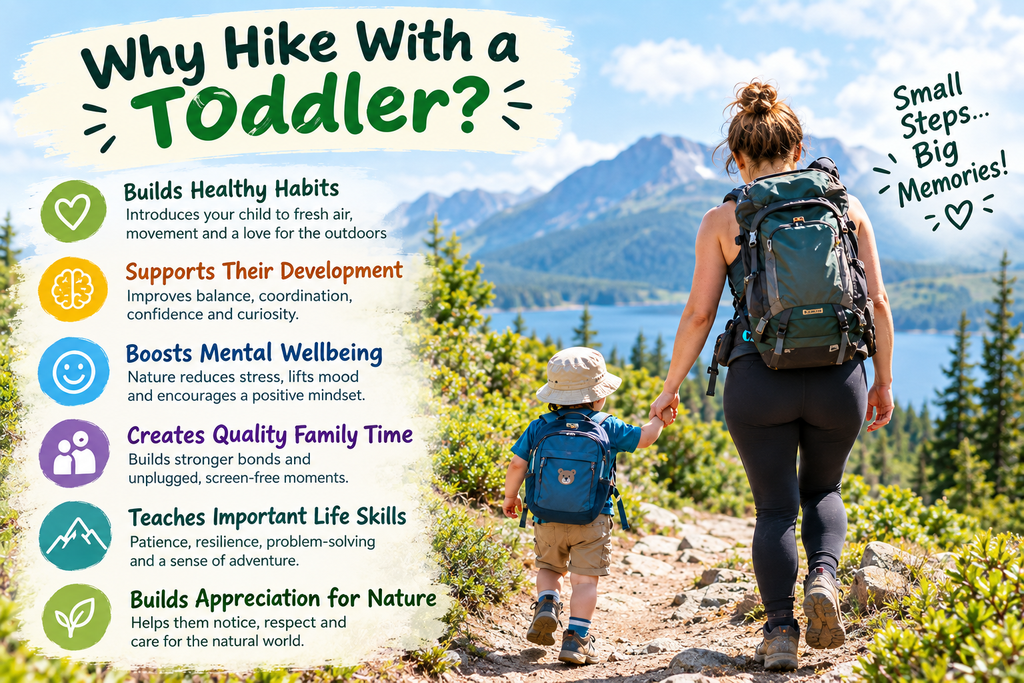
Toddlers learn through their senses, and trails are full of things to touch, smell, he, ar and see. Regular time outside also gives them a chance to burn energy, practice balance, and build confidence. For parents, a short hike can be a reset on a long day. Many families say that toddlers sleep well after a morning on the trail.
It also gets easier. The habits you build now, like carrying snacks, planning for breaks, and keeping the pace slow, carry over to every hike you will do as your child grows.
How Far Can a Toddler Hike?
There is no single answer, because toddlers vary in age, energy, mood,d and experience. As a rough guide (recreate this as a WordPress Table block — /table — instead of pasting as plain text):
| Age | Typical distance on foot | What to expect |
|---|---|---|
| New walkers (about 12 to 18 months) | A few hundred feet to 0.25 mile | Mostly carried, short bursts of walking |
| 18 to 24 months | About 0.25 to 0.milesle | Many stops, wants to explore |
| 2 to 3 years | About 0.5 to 1 mile | More stamina, still needs rest and carrying |
| 3 to 4 years | About 1 to 2 miles | Longer walks with games and snacks |
These numbers are general guidance, not rules. Many toddlers will cover far less than a mile in an hour, and that is completely normal. Plan the hike around the slowest, smallest person.
Step 1: Choose the Right Trail
The right trail makes or breaks the day. Look for:
- Short and flat. A loop of under a mile, or an out-and-back you can shorten.
- Wide, smooth path. Boardwalks, packed dirt, or paved paths are easier on small feet.
- Shade. Toddlers overheat quickly.
- Something to do. A stream, a pond, a playground, a bridge, a tree to hug.
- Safe edges. Avoid steep drop-offs, fast water, and narrow ledges.
- Facilities. A restroom at the trailhead makes diaper changes and potty breaks easier.
Nature centers, local parks,s and state parks often have excellent toddler-friendly trails. National parks also have several, and our list of family-friendly hikes in the U.S. includes short loops, such as Sprague Lake and Trail of the Cedars, that work well for small children. Check the official page for current conditions before you go.
Step 2: Plan Around Naps, Meals and Moods
Timing matters more than distance.
- Avoid nap time. A tired toddler turns a fun hike into a meltdown quickly. Many families start after breakfast and finish before the afternoon nap.
- Feed before you go. A full tummy helps with patience.
- Start early. Cooler weather, fewer crowds, and easier parking.
- Build in breaks. Plan to stop every 10 to 15 minutes, even if no one asks.
- Keep the plan flexible. Treat your distance goal as a maximum, not a target.
If your child sleeps in a carrier, plan for a long, quiet stretch and a calm stop when they wake up.
Step 3: What to Wear
Dress toddlers in layers, since they cannot tell you when they are too hot or too cold.
- Base layer: soft, moisture-wicking fabric
- Warm layer: fleece or a light jacket
- Rain layer: a waterproof jacket, even if the forecast is clear
- Hat: a wide-brimmed sun hat, or a warm hat in cool weather
- Shoes: sturdy, comfortable closed-toe shoes that are already broken in
- Socks: wool or synthetic, with a spare pair
- Sunglasses and sunscreen: for older toddlers who will wear them
- Spare outfit: a full change of clothes in your pack
Avoid cotton where you can, because it stays wet and cold. For babies under six months, the American Academy of Pediatrics advises keeping them out of direct sun and using clothing and shade for protection. The HealthyChildren.org website offers detailed guidance on sun safety for children.
Step 4: What to Pack for a Toddler Hike
You do not need a lot, but you need the right items. Our guide to the best travel gear for kids covers carriers and packs in more depth.
The toddler hiking kit
- Water for everyone, and a small cup or bottle for your toddler
- Plenty of easy snacks, such as fruit, crackers, cheese, and trail mix (avoid whole nuts and other choking hazards for young children)
- A child carrier, if you plan to walk more than a short distance
- Diapers, wipes, a changing mat and bags to pack out used diapers
- A small portable potty or extra clothes, if you are potty training
- Hand sanitizer
- First-aid kit with bandages, antiseptic wipes,s and tweezers
- Sunscreen, hats,s and insect repellent suitable for children
- A comfort item and a small toy or two
- A trash bag
- A charged phone and a map
Choosing a Carrier
A good carrier can turn a short walk into a longer outing.
- Soft-structured carriers work for short outings with younger toddlers.
- Framed hiking carriers distribute weight more comfortably for longer hikes and usually include sun shades and storage.
- Fit matters. Test the carrier at home and adjust it for both the adult and the child.
- Follow the manufacturer’s age and weight limits. Most framed carriers are designed for children who can sit up on their own.
- Be careful on rough ground. Carrying a child changes your balance, so avoid steep, slippery,ery or rocky sections.
Switch carrying duties between adults, and plan rest stops. Carrying a toddler is a workout.
Step 5: Keep Your Toddler Happy on the Trail
Toddlers need engagement, not pressure. Try:
- Treasure hunts. Look for a pinecone, a feather, something red, or a “bumpy” rock.
- Sensory games. Touch bark, smell flowers, listen for birds.
- Simple songs and rhymes. Walking songs work wonders.
- Mini destinations. “Let’s walk to the bridge!” is better than “Let’s hike a mile.”
- Water play. Splashing at a safe, shallow creek edge is a highlight for many children.
- A special backpack. A tiny pack with a snack makes them feel like a real hiker.
- Name things. Practice words like tree, rock, bird, and leaf.
- Give choices. “Do you want to walk or ride?” is easier than “We have to keep going.”
If your toddler gets cranky, stop, offer a snack, sit down together, and reset. It is often not about the trail. Hunger, tiredness,s or boredom is usually the cause.
Safety With Toddlers on the Trail
Toddlers move fast and have no sense of danger, so stay close. Our guide to family travel safety tips covers more, and here are the essentials:
- Stay within arm’s reach near water, edges, es and steep ground.
- Never leave a toddler unattended, even for a moment.
- Watch for sun and heat. Offer water and shade often. The CDC explains the signs of heat-related illness and how to prevent it.
- Check for ticks after hikes in wooded or grassy areas.
- Learn to recognize plants like poison ivy and teach older toddlers not to touch unknown plants.
- Watch for animals. Keep a safe distance and never let a toddler approach wildlife.
- Choose repellent carefully. Follow label age limits, and check health agency guidance, because some repellents are not recommended for very young children.
- Check the weather. Use the National Weather Service forecast, and avoid hiking in thunderstorms.
- Carry a whistle for older toddlers who can learn to blow it.
Diapers, Potty Breaks and Leave No Trace
This is the question many parents quietly worry about.
- Pack out used diapers. Never leave them on the trail or bury them. Carry sealable bags for trash.
- Plan potty stops before you leave the trailhead and at any restrooms along the way.
- For potty training, bring a portable potty or extra clothes and wipes.
- If you must go in the woods, follow Leave No Trace guidance. The Leave No Trace Center recommends digging a small hole well away from water, trails, and campsites, and packing out toilet paper.
A Sample 1-Mile Toddler Hike Timeline
This is an example for a toddler around two to three years old. Adjust it for your child. (Again, recreate this as a WordPress Table block rather than pasting the raw table below.)
| Time | What happens |
|---|---|
| 9:00 | Arrive, restroom stop, sunscreen, snack |
| 9:15 | Start walking, toddler leads |
| 9:45 | Snack break at a bridge or log |
| 10:15 | Reach the creek or lookout, play and explore |
| 10:45 | Carry or walk back, singing a song |
| 11:30 | Back at the car, picnic lunch and a treat |
| 12:30 | Head home for nap time |
Notice that the actual walking is a small part of the day.
Common Toddler Hiking Mistakes
- Planning too far. A shorter hike nearly always works better.
- Starting too late. Missing nap time is risky.
- Skimping on snacks and water. Hunger and thirst cause most trail meltdowns.
- Forgetting spare clothes. Mud, water, and accidents are part of toddler hiking.
- Not having a carrier. Even strong walkers get tired.
- Rushing. Slow down and enjoy their discoveries.
- Ignoring the weather. Heat, wind, and rain affect small children quickly.
Building Up to Longer Hikes
As your toddler grows, you can slowly add distance and variety. Start with neighborhood walks, then local park trails, then longer family loops. When your child is comfortable walking a couple of miles, our guide to backpacking with kids shows how to take the next step. A small overnight trip at a drive-up campsite, using our family camping checklist, is also a nice bridge.
Frequently Asked Questions
At what age can toddlers start hiking?
Toddlers can start as soon as they can walk, and even before that in a carrier. Keep the first hikes very short and focus on fun.
How far can a 2-year-old hike?
Many 2-year-olds enjoy about a quarter to half a mile on foot, with plenty of stops. Some can do more on a flat, interesting trail, and others will want to be carried. Let your child’s energy decide.
What is the best way to carry a toddler on a hike?
A well-fitted carrier suited to your child’s age and weight is the most comfortable option. Soft-structured carriers suit short outings, while framed carriers work better on longer hikes. Always follow the manufacturer’s guidelines.
What should I do if my toddler refuses to walk?
Stay calm, offer a snack, carry them for a bit, change the gam,e or turn back. Forcing a toddler to walk rarely works and can make them dislike hiking.
How do I keep my toddler safe near water?
Stay within arm’s reach at all times and never rely on a life jacket or floaties as a substitute for supervision. Choose shallow, calm spots for water play, and avoid fast-moving or deep water.
What snacks are good for toddlers on hikes?
Easy, safe snacks such as banana slices, cheese, crackers, yogurt pouches, cereal, al and soft fruit work well. Avoid choking hazards like whole nuts, whole grapes, and hard candy, and check for allergies.
Final Thoughts
Hiking with toddlers is slower, messier and more unpredictable than hiking on your own. It is also full of wonder. Pick an easy trail, pack snacks, let your toddler lead, and leave room for puddles, sticks, and surprises. The best toddler hikes are often the shortest ones.
Looking for more ideas? Explore our guide to family-friendly mountain getaways, or browse the best family vacations in the U.S. for places that welcome little hikers.