A stroller can be a lifesaver on a family trip. It carries tired toddlers through airports, holds your bags at theme parks, gives a baby a place to nap,p and saves your back on long days of sightseeing. But the stroller that works at home is not always the one that works on the road. A big, heavy stroller is a nightmare on stairs, public transit, and airplane aisles.
This guide explains how to choose a travel stroller: the main types, what features matter, weight and fold size, how strollers work with airlines and security, safety rules,s and a checklist you can use when shopping. It does not recommend specific brands, because models and prices change quickly, but it shows you what to look for. For more packing help, see our guide to how to pack light for a family trip.
Important: This article offers general information. Always follow the manufacturer’s instructions, age and weight limits and current safety guidelines. Talk to your pediatrician about what is appropriate for your baby.
Quick answer: how do you choose a travel stroller? Look for a lightweight, compact stroller that folds quickly with one hand, fits in an airplane overhead bin or can be gate-checked, has a good harness, working brakes, a sun canopy and a seat that suits your child’s age. Match the type to your trip: umbrella strollers for short trips, compact travel strollers for flights and all-terrain strollers for rough ground.
Types of Travel Strollers
| Type | Best for | Pros | Cons |
|---|---|---|---|
| Umbrella stroller | Short trips, toddlers, quick errands | Very light, cheap, folds small | Less support, small canopy and basket, bumpy ride |
| Compact or ultra-compact travel stroller | Flights, public transit, city trips | Light, folds small, often fits in overhead bins | Smaller basket, fewer features |
| Lightweight full-size stroller | Everyday use plus travel | More comfortable and supportive, bigger basket | Heavier and bulkier |
| All-terrain stroller | Trails, gravel, parks | Smooth ride on rough ground, large wheels | Heavy, bulky and often hard to fold |
| Jogging stroller | Running and long walks | Excellent suspension and wheels | Not designed for tight spaces or newborns |
| Travel system | Newborns and infants | Car seat clicks into the stroller | Bulky and heavy for travel |
| Double stroller | Two kids | Seats two children | Large and heavy, hard on public transit |
Umbrella strollers
These are very light and cheap, but they often lack padding, recline,e and good canopies. They suit toddlers who walk some of the time, short trips,ips and families who want a backup stroller.
Compact travel strollers
These are made for travel. Many fold into a small package that you can carry or fit in an overhead bin. Look for one with a good seat and canopy, a decebasketket, and a one-hand fold.
All-terrain strollers
These are great for trails and parks, but usually too heavy for flights and public transit. Consider renting one at your destination if you need it.
Age and Stroller Choice
- Newborns and young babies: need a stroller with a fully reclining seat, a bassinet or a car seat attachment. Many compact strollers are not suitable for newborns. Check the manufacturer’s minimum age and weight, and ask your pediatrician.
- Babies who can sit up: most strollers work, ideally with a good recline for naps.
- Toddlers: a lightweight stroller with a good harness, a canopy,y and a seat that supports naps is ideal.
- Older kids (3 to 5): a stroller is useful for long days, and some compact strollers support heavier weights. Check the weight limit.
Our guides to hiking with a baby and baby carriers for hiking explain when a carrier is a better choice than a stroller.
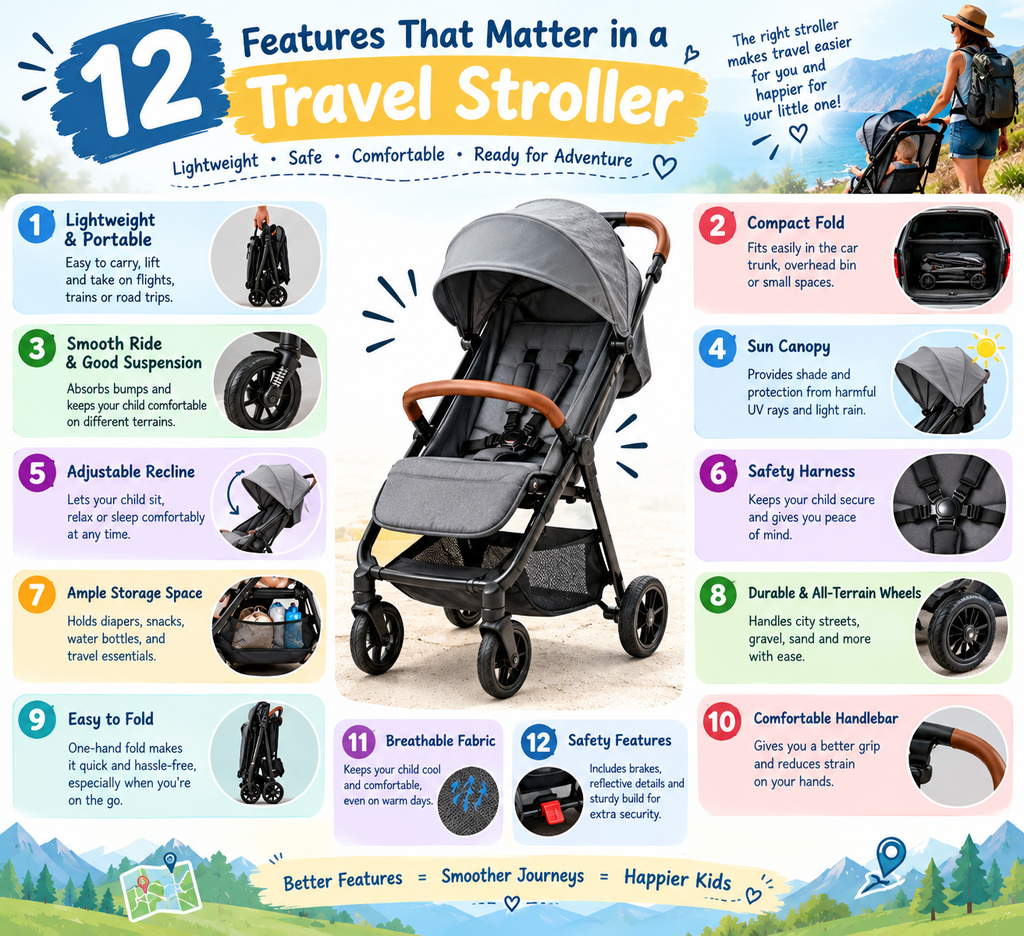
12 Features That Matter in a Travel Stroller
1. Weight
A lighter stroller is easier to carry on stairs and through airports. Many compact travel strollers weigh roughly 10 to 20 pounds, but this varies. Check the weight and the weight of the child it supports.
2. Folded size
Check the folded dimensions. Some fit in an airplane overhead bin, and some fit in a car trunk easily. Others do not.
3. Folding mechanism
A one-hand fold makes a big difference when you are holding a child. Test it at the store. It should fold and unfold smoothly.
4. Seat comfort and recline
A padded seat and a recline for naps make long days easier. For babies, look for a seat that reclines far enough.
5. Harness and brakes
A five-point harness keeps your child secure. Brakes should lock easily and hold on slopes. These are key safety features.
6. Canopy and sun protection
A large, extendable canopy with sun protection and a peek-a-boo window helps in sunny weather.
7. Storage basket
Check the size and the weight limit. A basket that is easy to reach, even when the seat is reclined, is helpful.
8. Wheels and suspension
Small wheels are fine for smooth surfaces, while larger wheels and some suspension handle bumps and uneven ground better.
9. Handlebar and height
An adjustable handlebar suits different heights, and a comfortable grip matters on long days.
10. Carry strap or bag
A shoulder strap or a travel bag makes it easier to carry the stroller when folded.
11. Maneuverability
Test turning radius and steering. A stroller that handles crowded areas and tight spaces is a plus.
12. Safety certification and recalls
Look for strollers that meet current safety standards. In the U.S., the Consumer Product Safety Commission sets requirements for strollers, and many products carry certification from the Juvenile Products Manufacturers Association. Check for recalls at CPSC.gov before you buy a new or used stroller.
Travel Stroller Safety Rules
- Always use the harness, every time.
- Set the brakes whenever you stop.
- Do not hang heavy bags on the handles. They can tip the stroller over.
- Never leave a child unattended in a stroller.
- Keep fingers and hands clear when folding and unfolding.
- Watch for sun and heat. A stroller can get hot under direct sun, so use the canopy and take breaks in the shade.
- Do not let babies sleep unsupervised in a stroller. The American Academy of Pediatrics’ HealthyChildren.org has safe-sleep guidance, and a stroller seat is not designed for unsupervised overnight sleep.
- Follow the weight and age limits from the manufacturer.
- Be careful on slopes, curbs, and stairs.
- Check for loose parts or wear before each trip.
For more family safety tips, see our family travel safety tips.
Strollers and Airlines
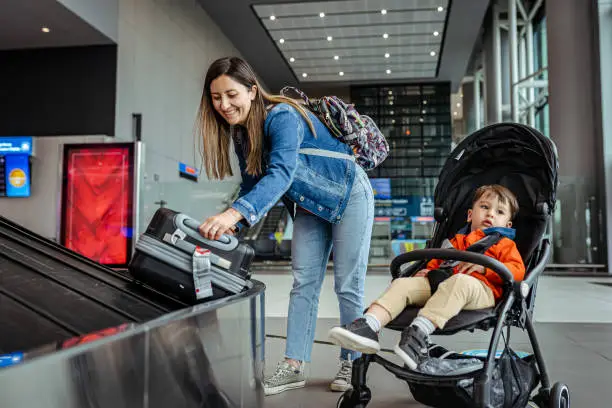
Rules vary by airline and country, so always check the airline’s current policy before you fly.
- Gate-checking: many airlines let you take a stroller to the gate, then check it as you board and pick it up when you land. Many U.S. airlines do not charge for this, but confirm first.
- Carry-on strollers: some very compact strollers fold small enough to fit in an overhead bin, subject to airline size limits.
- Checked strollers: if you check your stroller at the counter, protect it with a travel bag.
- Stroller bags: a padded bag helps prevent damage and keeps dirt off.
- Check the weight and size limits for baby gear.
- Label your stroller with your name and contact information.
- Take valuables and loose items out before checking.
Our guide to flying with a toddler covers more airport and plane tips.
At airport security
At TSA checkpoints, strollers usually need to be screened. Depending on the airport, you may need to fold the stroller and put it through the X-ray, or an officer may inspect it. You will be asked to take your child out of the stroller. Check TSA.gov for current rules and tips for traveling with children.
Stroller or Carrier?
Many families use both.
| Stroller | Carrier | |
|---|---|---|
| Best for | Long days, naps,s and carrying gear | Stairs, crowds, trails and hands-free walking |
| Pros | Gives your back a rest, holds bags, good for naps | Compact, easy on stairs, keeps baby close |
| Cons | Bulky, hard on stairs and rough ground | Can be tiring on long days, hot in summer |
A carrier is great for stairs, public trans,, and trails, while a stroller is better for long city days. A compact stroller plus a lightweight carrier gives you the most flexibility.
Strollers for Different Trips
Flights and airports
Choose a compact, light stroller that folds quickly and can be gate-checked. A stroller bag helps protect it.
City trips and public transit
Choose a light, narrow stroller with a one-hand fold and good maneuverability. A carrier helps on stairs and in crowded subways.
Road trips
A compact stroller fits easily in the trunk and is good for stops. Our guide to surviving a long car ride with a toddler has tips for making stops more fun.
Theme parks and festivals
Choose a sturdy stroller with a large canopy, a good basket, and a comfortable seat. Check park rules about stroller sizes.
Beaches and trails
An all-terrain stroller with large wheels handles sand and gravel. For rough trails, a carrier is often better. See our family-friendly hikes in the U.S. for easier trails that work with strollers.
Renting a Stroller
Renting can be a good option:
- Many destinations offer baby gear rentals, including strollers.
- Rentals save airline hassle, and you can choose the type that suits your trip.
- Check cleanliness and safety, and ask about recalls and maintenance.
- Book ahead, especially for peak seasons.
Renting works best if you only need a stroller for a few days.
Buying New vs. Used
New: you get a full warranty and the latest safety features, and no worries about wear.
Used: you can save money, but check carefully.
- Check for recalls on CPSC.gov.
- Inspect the frame, wheels, brakes, harness, and fabric.
- Make sure it folds and unfolds smoothly.
- Make sure all parts are present, and the instructions are available.
- Avoid very old strollers that may not meet current standards.
Stroller Shopping Checklist
- Suits your child’s age and weight
- Light enough for you to carry
- Folds easily with one hand and fits in your trunk or an overhead bin
- Comfortable seat with recline for naps
- Five-point harness and reliable brakes
- Large, sun-protective canopy
- Decent basket and cup holders
- Smooth, maneuverable wheels
- Carry strap or travel bag
- Safety certification and no recalls
- Tested in the store or with a return policy
Taking Care of Your Travel Stroller
- Wipe down the frame and fabric after trips.
- Check wheels and brakes regularly.
- Dry the stroller if it gets wet.
- Clean the seat according to the manual.
- Lubricate moving parts as directed.
- Store it in a dry place.
Common Mistakes When Choosing a Travel Stroller
- Choosing a stroller that is too heavy or hard to fold.
- Not checking the minimum age for newborns.
- Skipping a store test.
- Ignoring airline size and weight rules.
- Overloading the handles with bags.
- Not using the harness.
- Forgetting sun protection.
- Buying only on price.
- Forgetting a travel bag for flights.
Frequently Asked Questions
What is the best type of stroller for travel?
A compact, lightweight stroller with a quick fold is usually best for flights and public transit. Umbrella strollers work for short trips, and all-terrain strollers suit rough ground.
Can you take a stroller on a plane?
Usually yes. Many airlines let you gate-check a stroller, often free of charge, and some very compact strollers fit in overhead bins. Check your airline’s policy before you fly.
What is a good stroller weight for travel?
Lighter is easier. Many compact travel strollers weigh roughly 10 to 20 pounds, but check the weight and what you can comfortably carry.
Do I need a stroller for travel with a toddler?
Not always, but many families find one helpful for airports, long days and naps. A carrier can work for shorter outings.
Is a travel stroller safe for newborns?
Only if it is designed for newborns, with a fully reclining seat or a car seat attachment. Many compact strollers are not suitable for newborns, so check the manufacturer’s instructions and ask your pediatrician.
Should I buy or rent a stroller for vacation?
Buy if you will use it often, and rent if you only need one for a short trip or want to avoid airline hassle.
How do I protect my stroller on a flight?
Use a padded stroller bag, remove loose items,s and label the stroller. Check airline policies on damage and gate-checking.
Final Thoughts
The best travel stroller is the one you can carry, fold with one hand,n d and use comfortably with your child. Think about how you travel, check the weight and fold size, look for safety features, and test the stroller before you buy. A good stroller turns long travel days into easier ones, and gives everyone, especially tired parents, a welcome break.
Ready for more help? Read our guide to how to pack light for a family trip, learn about flying with a toddler, or browse the best family vacations in the U.S. for places to explore with your family.