Few things can end a family hike faster than sore feet. A blister, a too-tight shoe, or soaked socks can turn an enthusiastic young hiker into a child who refuses to take another step. The good news is that choosing hiking shoes for kids isn’t complicated, and you don’t need the most expensive pair on the shelf.
This guide explains the main types of kids’ hiking footwear, how to check the fit, what to look for in a good shoe, how to prevent blisters, and when to replace shoes. It also covers budget tips for the one thing kids do best: outgrow things. For the full gear picture, see our guide to the best travel gear for kids, and if you are just getting started, begin with our beginner’s guide to hiking with kids.
Quick answer: what shoes should kids wear for hiking? For most family hikes, a comfortable closed-toe trail shoe or light hiking shoe with good grip, a roomy toe box and a secure fit is enough. Choose boots for rough, wet or cold terrain. Always test the fit with hiking socks, leave about a thumb’s width of space at the toe, and break shoes in before the trip.
Do Kids Really Need Hiking Shoes?
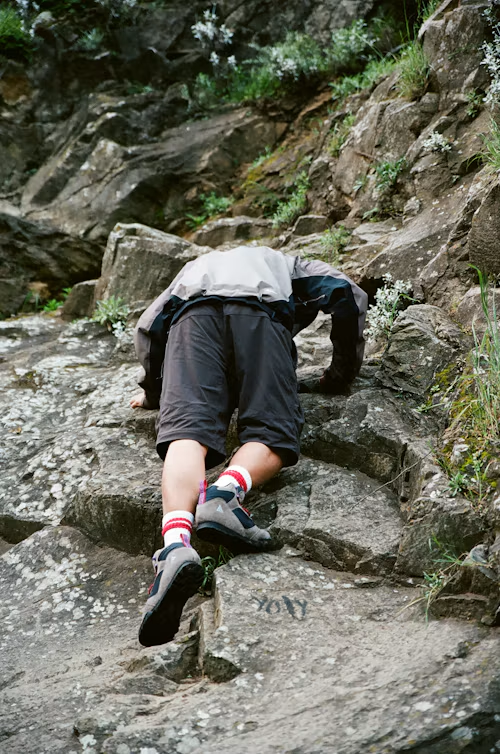
For short, easy walks on flat paths, ordinary sneakers can work. But when trails get rocky, muddy, or steep, proper hiking footwear gives:
- Better traction on loose dirt, wet rocks,s and roots
- More support and protection for feet and toes
- Comfort over longer distances, with less rubbing and fewer blisters
- Better weather performance, including options that dry quickly or keep water out
You do not need to buy specialist boots for a first one-mile hike. But if your family hikes regularly, a good pair of trail shoes pays off quickly.
Types of Kids’ Hiking Footwear
| Type | Best for | Pros | Cons |
|---|---|---|---|
| Trail shoes or trail runners | Most family day hikes, warm weather | Light, comfortable, dry quickly | Less ankle support and weather protection |
| Light hiking shoes | Day hikes on varied terrain | Sturdier sole, more protection | Slightly heavier than trail shoes |
| Hiking boots | Rough, wet, cold or rocky trails, longer hikes | Ankle support, protection, warmth | Heavier, can be hot, need breaking in |
| Closed-toe sport sandals | Warm weather, creek crossings, water play | Cool, quick-drying | Less protection for toes and soles |
| Rain boots | Short, muddy, wet walks | Waterproof | Heavy, less grip and support for real hiking |
For most families, trail shoes or light hiking shoes are the best all-round choice. Boots make sense when conditions are harsh, and sandals are a nice extra for water days.
What to Look for in Kids’ Hiking Shoes
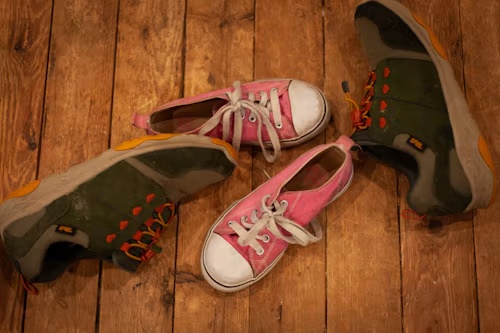
Grip (outsole)
Look for a rubber sole with lugs (deep treads). Good grip prevents slips on mud, roots, and wet rock. Smooth, flat soles are poor for hiking.
Fit and toe room
A roomy toe box lets toes spread and prevents jammed toes on downhills. Narrow, pointed shoes cause blisters.
Cushioning and flexibility
Kids’ feet are still developing, and they need shoes that flex naturally but protect from sharp rocks. Choose a sole that bends at the ball of the foot, not in the middle.
Toe protection
A rubber toe cap helps protect little toes from rocks and roots, which kids kick often.
Weight
Light shoes mean less tired legs. Heavy shoes slow children down and make walking harder.
Breathability and water resistance
Mesh shoes breathe and dry quickly. Waterproof membranes keep rain and puddles out but can feel hotter and take longer to dry if water gets inside. If you hike in warm weather or wade through creeks, quick-dry shoes are often better. In cold, wet or snowy weather, waterproof boots are more useful.
Secure closure
Laces, hook-and-loop straps,s or quick-lace systems should hold the foot firmly. For young children who cannot tie laces, straps or elastic laces are convenient. Make sure the heel does not slip.
How to Check the Fit (Step by Step)
Good fit matters more than brand or price.
- Shop in the afternoon or evening. Feet swell during the day.
- Bring hiking socks. Wear the socks your child will actually hike in.
- Measure both feet. Feet can be slightly different sizes, so fit the larger one.
- Have your child stand up. Feet spread when weight is on them.
- Check the toe room. There should be about a thumb’s width (roughly 1/2 inch) between the longest toe and the front of the shoe.
- Check the heel. It should stay snug without slipping when your child walks.
- Check the width. The shoe should hold the foot comfortably without pinching.
- Let them walk, jump, mp and go up and down a ramp or stairs. Toes should not jam on the way down.
- Ask how it feels, and watch their walking for any limp or discomfort.
If a shoe does not feel right in the store, it will feel worse on a trail.
Socks Matter Too
The wrong socks can ruin the best shoes.
- Choose wool or synthetic hiking socks. They wick moisture and cushion the foot.
- Avoid cotton, which holds moisture and increases blisters.
- Pack a spare pair, or two for wet hikes.
- Check for seams or bunching, which cause rubbing.
- Match thickness to the shoe, since thicker socks change the fit.
Break Them In First
New shoes should never make their debut on a big hike.
- Have your child wear the shoes around the house for short periods.
- Take them on short walks, then longer ones.
- Check feet for red spots after each outing.
- Replace or adjust if rubbing continues.
Breaking in boots can take several outings, while soft trail shoes may need very little.
How to Prevent and Treat Blisters
Blisters are the number one foot complaint on family hikes.
Prevent them
- Choose shoes that fit well and are broken in
- Use dry, clean, well-fitting socks
- Lace shoes snugly, especially on downhills
- Change wet socks promptly
- Trim toenails short
- Stop early if a child says a spot feels “hot” or “rubby,” because that is a warning sign
Treat them
- Cover hot spots with blister bandages or adhesive foam before a blister forms.
- Do not pop blisters unless advised; cover them with a clean bandage
- Rest, adjust the shoes or socks,s and head back if needed
Pack blister bandages in your first-aid kit. Our family travel safety tips include a full list of first-aid essentials.
Shoes for Different Ages
Babies and early walkers
Babies who are not walking do not need hiking shoes. Warm socks and booties are enough in a carrier. For new walkers, choose soft, flexible, lightweight shoes that allow natural movement. See our guides to hiking with a baby and hiking with toddlers for more.
Preschoolers and school-age kids
Lightweight trail shoes or hiking shoes with good grip and a roomy toe box work well. This is the age where you will outgrow sizes quickly, so prioritize comfort over expensive features.
Tweens and teens
Older kids can often use adult-style hiking shoes or boots, especially for longer or tougher hikes. Involve them in choosing, since shoes they like are shoes they wear.
Dealing With Wet, Muddy or Cold Conditions
- Rain and mud: Waterproof shoes help, but quick-dry shoes with spare socks also work. Our guide to hiking in the rain with kids covers wet-weather clothing.
- Creek crossings: Closed-toe sport sandals or quick-dry shoes are better than leather boots.
- Cold weather: Insulated, waterproof boots with warm wool socks. Check that circulation is not restricted by a tight fit.
- Snow: Waterproof insulated boots and gaiters.
If shoes get wet, dry them slowly, away from direct heat, by stuffing them with paper and changing the paper as it gets damp.
When to Replace Kids’ Hiking Shoes
Kids’ feet can grow a size in a matter of months. Replace shoes when:
- Toes touch the front, or your child complains about tight shoes
- You can no longer fit a thumb’s width at the toe
- The tread is worn smooth, or the sole is separating
- The upper is torn, or the structure has collapsed
- Your child has repeated blisters or red spots in the same place
Check fit before every big hiking season and before long trips.
Money-Saving Tips
- Buy secondhand. Used hiking shoes and boots from local swap groups, resale shops,s and hand-me-downs are common, since kids outgrow them quickly. Check the soles, support, rt and cleanliness.
- Buy for the season, not “room to grow.” Shoes that are too big cause blisters and trips.
- Watch for sales at the end of the season.
- Choose versatile shoes that work for hiking and everyday wear.
- Care for them by cleaning off mud and drying them properly so they last longer or can be passed on.
Do not skimp on fit. A moderately priced shoe that fits well beats an expensive one that does not.
Hiking Shoe Checklist Before You Go
- Shoes fit with hiking socks and have a thumb’s width at the toe
- Grip on the soles is not worn
- Laces or straps work and are secure
- Shoes have been broken in
- Spare socks and blister bandages are in the pack
- You know the weather and trail conditions
For more ideas on keeping kids comfortable and motivated, read our guide on how to get kids to like hiking, and to find easy trails to try the new shoes, see our list of family-friendly hikes in the U.S.
Frequently Asked Questions
What are the best hiking shoes for kids?
The best pair is the one that fits well, grips the ground, is comfortable, and suits your hikes. For most families, light trail shoes or hiking shoes are a good all-round choice. Boots help on rough, wet, or cold trails.
Do kids need hiking boots or are trail shoes enough?
For most easy day hikes in decent weather, trail shoes are enough. Boots are useful for rocky, muddy,y or cold terrain, and for carrying heavier packs.
How much room should kids’ hiking shoes have?
About a thumb’s width (around 1/2 inch) between the longest toe and the front of the shoe, with a snug heel and enough width for toes to spread.
Are waterproof shoes better for kids?
Not always. Waterproof shoes keep rain out, but they can be hotter and slow to dry if water gets in. For warm or creek-heavy hikes, quick-dry shoes may be better.
How often should I replace my child’s hiking shoes?
Whenever they no longer fit, the tread is worn, rn or the shoe is damaged. Kids’ feet can grow quickly, so check fit regularly.
Can kids hike in sandals?
Closed-toe sport sandals work for warm weather, creek walks, and easy trails. Avoid flip-flops and open-toed sandals for hiking, because they do not protect toes or give enough support.
Where can I learn more about children’s foot health?
The American Academy of Pediatrics’ HealthyChildren.org website has guidance on children’s health, including footwear, and your pediatrician can answer questions specific to your child.
Final Thoughts
You do not need fancy gear to enjoy hiking with kids, but you do need shoes that fit. Pick a comfortable, grippy pair, test the fit with hiking socks, break them in, and pack blister bandages. Happy feet make for happy hikers, and happy hikers ask to go again.
Looking for trails to try next? Read our guide to family-friendly mountain getaways, or explore the best national parks for families with young kids. You can also check ththe Nationalark SServicewebsite for trail conditions and follow Leave No Trace principles to protect the places you hike.
Pingback: How to Choose Rain Gear for Kids: A Simple Buying Guide