Kids and rain are a good match, but only if they’re dressed properly. A wet child gets cold, cranky, and miserable fast, and the best-planned rainy hike or camping trip can end in tears. The right rain gear changes everything. It keeps kids dry, warm,m and ready to splash in puddles for hours.
But shopping for kids’ rain gear is confusing. Labels say “waterproof,” “water-resistant,” “breathable, le” and “DWR,” and prices vary wildly. This buying guide explains what actually matters: waterproof versus water-resistant, jackets, pants, boots, hats and gloves, sizing, safety, layering, budget options, care, and a quick checklist. It doesn’trecommend brands because models and prices change quickly. For wet-weather activities, see our guides to hiking in the rain with kids and camping in the rain with kids.
Quick answer: For most families, a waterproof, breathable rain jacket with a hood and snug cuffs, plus rain pants (or bibs for toddlers) and waterproof boots or quick-dry shoes with wool socks, covers almost every wet day. Choose a size with room for a fleece underneath, avoid cotton layers and skip drawstrings near the neck.
Waterproof vs. Water-Resistant vs. Showerproof
These words are not the same, and the difference matters.
| Label | What it means | Good for |
|---|---|---|
| Water-resistant | Sheds drizzle for a short time | A quick dash outside |
| Water-repellent (DWR) | A coating that makes water bead and roll off, but wears off | A finish on many jackets, not a full barrier |
| Waterproof | Fabric and seams keep water out in steady rain | Hikes, camping and wet days |
| Waterproof and breathable | Keeps rain out and lets sweat escape | Active kids on trails |
For real rainy days, choose waterproof. Water-resistant gear can soak through in steady rain. Look for taped or sealed seams, which keep water from leaking through stitching.
What about waterproof ratings?
Many jackets list a waterproof rating in millimeters. A higher number generally means more resistance to water pressure, and a rating in the low thousands is often enough for kids’ everyday use. Breathability ratings, often listed in grams, tell you how well sweat can escape. Higher numbers generally mean more breathable, but ratings are not standardized across all brands. Use them to compare similar products, and read reviews from other parents.
The Rain Gear Kids Actually Need
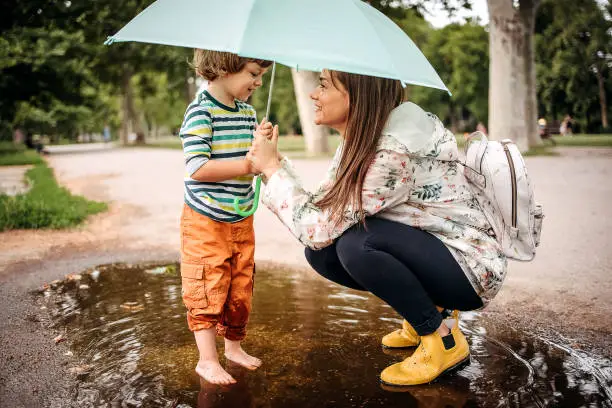
1. Rain jacket
The jacket is the most important piece. Look for:
- A hood that stays on and has a brim to keep rain off the face
- Snug cuffs (elastic or hook-and-loop) to keep water out
- Sealed or taped seams
- A zipper with a storm flap so water cannot sneak through
- Pockets with covers or zippers
- Bright colors or reflective details for visibility
- Room for layers under it, without being huge
- Ventilation, such as underarm zippers or a mesh lining, for active kids
- Easy-to-use closures that little hands can manage
2. Rain pants or bibs
Wet legs and bottoms end hikes fast. Rain pants keep kids dry when they sit, slide or play in mud.
- Elastic waists are easy for kids to use.
- Ankle zippers or snaps make them easy to put on over boots.
- Bibs (overalls style) keep toddlers dry and cover the middle, and they work well for babies learning to walk.
- Stretchy, durable fabric at the knees and seat.
3. Boots or waterproof shoes
Wet feet make kids miserable.
- Rain boots are great for puddles and short, muddy walks, but they are heavy and not ideal for hiking.
- Waterproof hiking boots or shoes are better for longer walks.
- Quick-dry trail shoes with wool socks work in warm weather because they dry fast even if they get soaked.
- Check the fit. Leave a thumb’s width at the toe, and make sure there is room for warm socks. Our guide to hiking shoes for kids explains how to check fit.
- Pack spare socks. Dry socks are one of the best rainy-day items.
4. Hats and hoods
A brimmed rain hat keeps water off the face, and a warm hat under the hood helps in cold rain.
5. Gloves and mittens
For cold, wet days, waterproof mittens or gloves keep hands warm. Mittens are usually warmer for young children.
6. Layers underneath
Rain gear works best as the outer layer.
- Base layer: moisture-wicking synthetic or wool.
- Mid layer: fleece or a light insulated jacket.
- Avoid cotton. It holds water and chills kids.
Our guide to winter hiking with kids explains layering in more detail.
Jackets, Ponchos and Rain Suits: Which Is Best?
| Option | Pros | Cons | Best for |
|---|---|---|---|
| Rain jacket and pants | Versatile, allows layering, good for active kids | More pieces to manage | Hikes, camping, school |
| One-piece rain suit | Great coverage for toddlers, easy to put on | Hard for bathroom breaks, less ventilation | Little kids and mud play |
| Poncho | Cheap, packs small, easy to share | Flaps in wind, covers little, not great for active play | Emergency backup, theme parks |
| Umbrella | Light and easy | Hard for kids to hold, useless in wind | Short walks, with an adult |
For families who hike or camp, a jacket and pants are usually the best long-term choice, while a poncho is a good cheap backup in the car.
How to Choose the Right Size
- Try on over a fleece, so you know the jacket fits with layers.
- Check sleeve and pant length. Sleeves should reach the wrists, and pants should cover the ankles without dragging.
- Allow a little growing room, but avoid gear that is far too large, since big sleeves and hoods can get in the way and let water in.
- Look for adjustable features, such as cuffs, hems,s and hoods.
- Check brand size charts, since sizes vary.
- Plan to buy again next year, because kids grow quickly.
Safety Features to Check
- Avoid drawstrings and cords around the neck and hood on children’s outerwear, especially for young children, because they can catch on objects and cause serious injury. The U.S. Consumer Product Safety Commission publishes guidance on drawstrings in children’s clothing. See CPSC.gov.
- Choose bright colors or reflective details so children are visible in rain and fog.
- Make sure hoods do not block vision. A brim helps.
- Check that boots have good grip. Slippery soles are a hazard on wet ground.
- Keep kids warm. Wet and cold conditions can cause hypothermia even above freezing. The American Academy of Pediatrics’ HealthyChildren.org has guidance on keeping kids safe in cold and wet weather.
For more outdoor safety tips, see our family travel safety tips.
Budget Tips for Kids’ Rain Gear
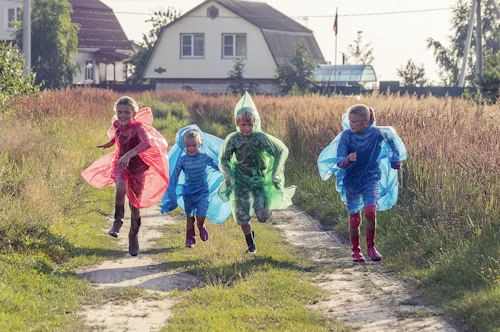
Kids outgrow gear fast, so you do not need the most expensive pieces.
- Buy secondhand. Local swap groups, resale shops, and hand-me-downs are great sources. Check seams, zippers,s and waterproofing.
- Prioritize the jacket and boots, then add pants.
- Buy at the end of the season for lower prices.
- Choose adjustable gear that fits for more than one season.
- Use a poncho as a cheap backup.
- Spend more on breathability if your kids are active hikers.
- Care for the gear so you can pass it on. Our guide to the best travel gear for kids explains what is worth buying and what to borrow.
How to Care for Rain Gear
Good care makes waterproof gear last longer.
- Wash according to the care label. Use a gentle detergent made for technical fabrics, and avoid fabric softeners, which can reduce water repellency.
- Dry thoroughly, and check the label for tumble-drying advice. Gentle heat can help restore the water-repellent finish on some fabrics.
- Reapply the water-repellent coating if water stops beading, using a wash-in or spray-on product made for outdoor gear.
- Fix small tears with repair tape.
- Hang to dry after wet trips, and do not store damp gear, since mold can grow.
- Store loosely in a cool, dry place.
Rain Gear for Different Activities
Hiking
Choose a breathable jacket, rain pants, t-shirts, nd waterproof shoes or boots, with spare socks and layers. See our guide to hiking in the rain with kids.
Camping
Add a tarp, a waterproof bag for dry clothes and a spare set of rain gear. See our guide to camping in the rain with kids.
School and daily life
A simple jacket, boots and an umbrella are usually enough.
Theme parks and travel
A poncho is a cheap, easy option that packs small. For longer trips, a light, packable jacket works well. See our guide on how to pack light for a family trip.
Winter and wet snow
Choose waterproof, insulated layers and boots. See our guide to winter hiking with kids.
Rain Gear Buying Checklist
- Waterproof (not just water-resistant) jacket with taped seams
- Hood with a brim that does not block vision
- Snug cuffs and a storm flap
- Room for a fleece underneath
- Rain pants or bibs with an easy fit
- Waterproof boots or quick-dry shoes with good grip
- Warm hat and mittens for cold rain
- No drawstrings around the neck
- Bright color or reflective details
- Spare socks and a dry bag
- Care label checked, and a plan for washing
Common Mistakes When Buying Kids’ Rain Gear
- Buying water-resistant gear and expecting waterproof performance.
- Choosing gear that is too big, which lets water in.
- Ignoring the pants. Wet legs ruin a day.
- Forgetting boots and socks.
- Wearing cotton underneath.
- Skipping spare clothes.
- Ignoring safety details, like neck drawstrings.
- Never washing or reproofing, which reduces performance.
- Buying the cheapest option for active use, when breathability matters.
Frequently Asked Questions
What rain gear do kids need?
A waterproof rain jacket with a hood, rain pants or bibs, waterproof boots or quick-dry shoes, spare socks and, for cold rain, a warm hat and mittens.
What is the difference between waterproof and water-resistant?
Water-resistant gear handles drizzle for a short time, while waterproof gear keeps water out in steady rain, especially with taped seams.
Do kids need rain pants?
Yes, for hikes, ccampinga nd playing outdoors. Wet legs and bottoms make kids cold and unhappy quickly.
Are ponchos good for kids?
Ponchos are cheap and easy, but they flap in the wind and cover less than a jacket and pants. They work as an emergency backup.
How should a kid’s rain jacket fit?
Snug enough to keep water out, with room for a fleece underneath, sleeves that reach the wrists, and a hood that does not block vision.
How do I keep kids warm in the rain?
Dress them in moisture-wicking layers under rain gear, avoid cotton, pack dry clothes and socks, offer warm drinks and snacks,k,s and head back if they get cold.
How do I wash kids’ rain gear?
Follow the care label, use a gentle detergent made for technical fabrics, avoid fabric softener,r and reapply the water-repellent coating when water stops beading.
Final Thoughts
Good rain gear is not about spending the most. It is about choosing waterproof pieces that fit, layering properly,y and keeping feet and hands dry. With a jacket, pants, and boots that work, a rainy day becomes a chance for puddles, mud,ud and stories, not a reason to stay inside.
Ready to get outdoors? Read our guide to hiking in the rain with kids, learn how to pack for a family trip, or browse the best family vacations in the U.S. for places to splash around.