A good carrier can turn hiking with a baby from impossible to enjoyable. It frees your hands, keeps your baby close, and lets you reach places a stroller cannot. But there are many types, and the wrong carrier can be uncomfortable for you, unsafe for your baby,y and a waste of money.
This guide explains how to choose baby carriers for hiking: the main types, what to look for, age and weight guidelines, how to fit a carrier correctly, safety rules, comfort features, weather protection, trail tips, ps and a checklist before your first hike. It does not recommend specific brands, because models and prices change quickly, but it tells you what to look for. For trail advice, see our guide to hiking with a baby.
Important: This article offers general information, not medical advice. Talk to your pediatrician about when it is safe to hike with your baby, and always follow the manufacturer’s instructions for your carrier.
Quick answer: how do you choose a baby carrier for hiking? For short, easy walks, a soft-structured carrier is often enough. For longer hikes with a baby who can sit up on their own, a framed hiking carrier offers better weight distribution, storage and sun protection. Check the age and weight limits, make sure it fits both you and your baby, keep your baby’s airway clear and choose features for weather and comfort.
Types of Baby Carriers for Hiking
| Type | Best for | Pros | Cons |
|---|---|---|---|
| Wrap or sling | Newborns and short walks | Soft, snug, packs small | Less support for long walks and heavier babies |
| Soft-structured carrier | Babies and young toddlers, short to medium hikes | Comfortable, easy to use, front, back and sometimes hip carry | Less storage and shade, and less supportive on long hikes |
| Framed hiking carrier | Babies who can sit up, longer hikes | Weight rests on the hips, built-in shade, storage and a stand | Heavier, bulkier and more expensive |
| Hybrid or hiking-style soft carrier | Families who want one carrier for many uses | Lighter than frames, good support | Less storage than frames |
Wraps and slings
Wraps and slings are soft and cozy for newborns. They work for short, flat walks near home. They are not designed for long hikes, since they offer less back support for the adult and hold more weight on the shoulders.
Soft-structured carriers
These have padded straps and a waist belt, and they are popular for everyday use and short trails. Many can be worn on the front or back and used for babies and toddlers within the manufacturer’s limits.
Framed hiking carriers
Framed carriers look like small backpacks with a seat. They are designed for longer hikes with babies who can sit up unaided. They move most of the weight to your hips, and they often include a sun shade, rain cover, storage pockets and a kickstand. They are the most comfortable for long trips, but heavier and pricier.
When Can Your Baby Use a Carrier?
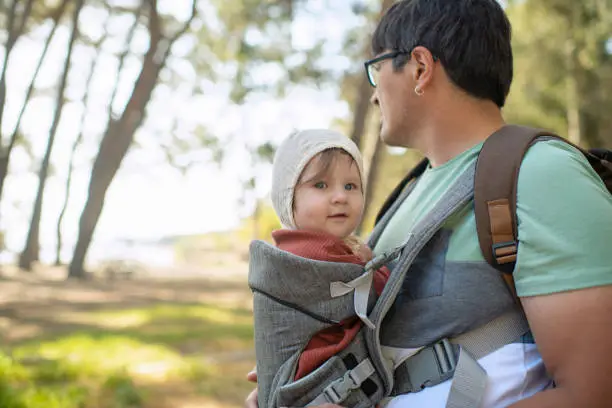
There is no single age. It depends on your baby’s size, head and neck control, your pediatrician’s advice,ce and the carrier’s instructions.
- Newborns and young infants: may be carried in a wrap or a soft carrier designed for infants, with correct positioning and any recommended inserts.
- Babies about 4 to 6 months: many soft carriers become more comfortable as babies gain head and neck control.
- Babies who can sit up unassisted (often around 6 months): many framed hiking carriers are designed for this stage.
- Toddlers: can use framed carriers or heavy-duty soft carriers until they reach the weight limit.
Always follow the age and weight limits listed by the manufacturer, and ask your pediatrician for advice. Our guide to hiking with a baby explains when to start and how to plan a first hike.
12 Things to Look for in a Hiking Carrier
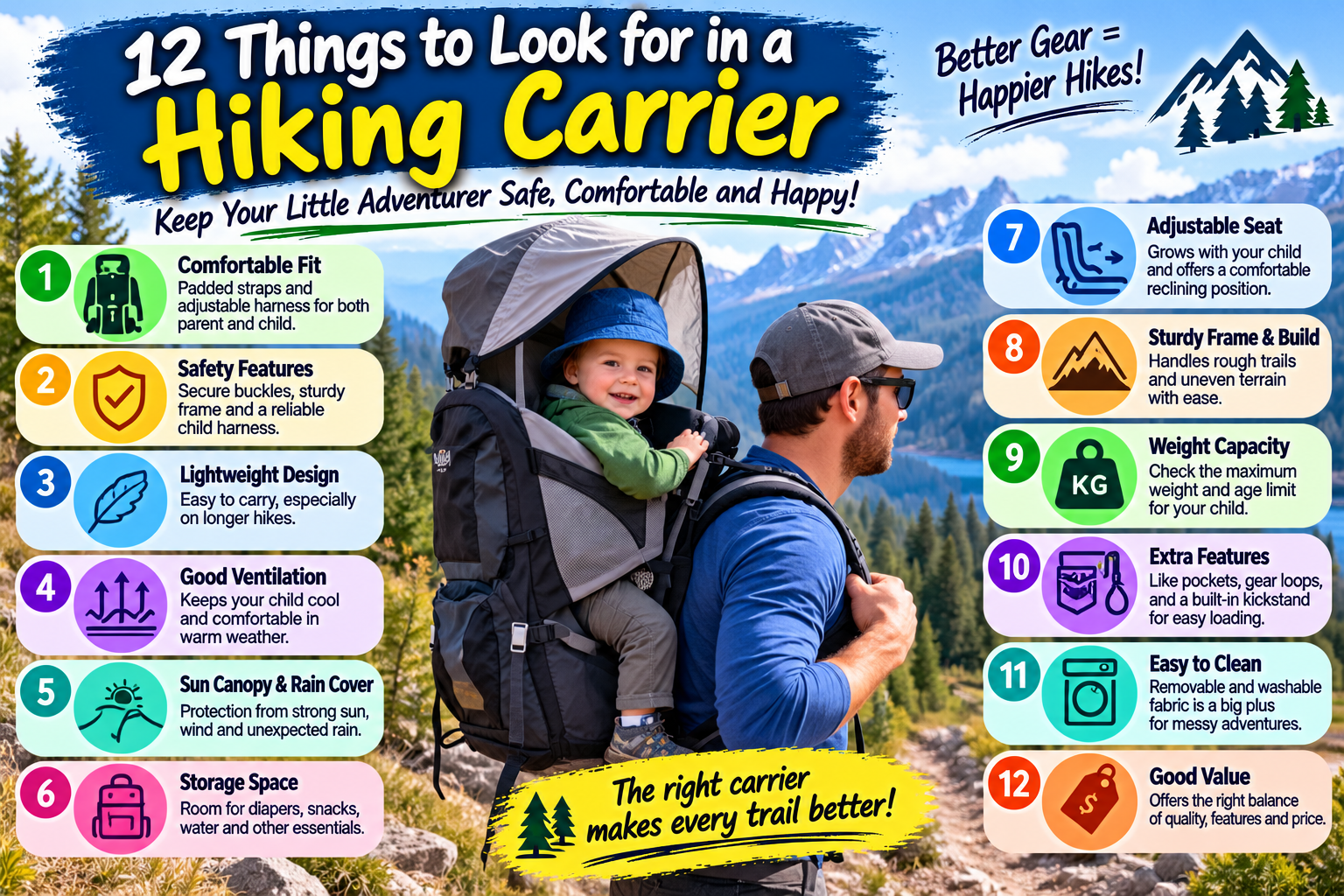
1. Age and weight range
Check the minimum and maximum weight and age. Remember to include the weight of your gear, since the total load matters.
2. Safe positioning
The carrier should support your baby’s back and keep their airway clear. Look for a hip-healthy position, with the baby’s knees higher than their bottom and thighs supported, as recommended by pediatric orthopedic guidance.
3. Adult fit and adjustability
A good carrier adjusts to your torso, shoulders,ders and waist. This matters most if two adults will share it. Framed carriers often have adjustable torso length.
4. Padded hip belt and shoulder straps
Most of the weight should rest on your hips. A padded, supportive hip belt is key for comfort on long hikes.
5. Sun and rain protection
Look for a built-in sun shade or the option to add one, and a rain cover. Our guide to hiking in the rain with kids has tips for wet weather.
6. Ventilation
A breathable back panel and mesh help keep your baby and you cooler, which is important in warm weather.
7. Storage
Pockets and compartments for diapers, wipes, a water bottle, and snacks make a big difference. Framed carriers often have more storage.
8. Stability and kickstand
A stable stand lets you set the carrier down for breaks. Make sure it is secure on level ground, and never leave a baby in a carrier unattended.
9. Safety harness and buckles
A secure harness keeps your baby in place, and strong, easy-to-use buckles matter. Check for sturdy stitching and good reviews.
10. Weight of the carrier
A lighter carrier reduces your load. But keep in mind that very light carriers may be less supportive.
11. Ease of getting on and off
Practice putting the carrier on by yourself. A carrier that is hard to get on can be frustrating on the trail.
12. Safety standards
Look for carriers that meet current safety standards in your country, and check for recalls. The manufacturer’s instructions should be clear and easy to follow.
How to Fit a Baby Carrier Correctly
Fit matters for both comfort and safety. Always follow the manufacturer’s instructions, and practice at home first.
- Adjust the carrier to your torso length and waist before putting your baby in.
- Place your baby in the carrier with their back and bottom supported, legs in a natural, spread position,n and knees higher than the bottom.
- Tighten the straps so your baby is snug against you or the frame, without being squeezed.
- Fasten the hip belt over your hips, so it takes most of the weight.
- Adjust the shoulder straps so the load sits close to your body.
- Check your baby’s position, including airway, head, hips ,and legs.
- Ask a friend to check the fit, or use a mirror.
- Walk around for a few minutes, and adjust as needed.
Safety checks: T.I.C.K.S.
For front and soft carriers, the well-known T.I.C.K.S. guideline can help:
- Tight: the carrier should hold your baby snugly against you.
- In view: you should always be able to see your baby’s face.
- Close enough to kiss: your baby’s head should be close enough for you to kiss.
- Keep chin off chest: keep your baby’s airway open.
- Supported back: your baby’s back should be in a natural position.
Safety Rules for Hiking With a Carrier
- Follow the age and weight limits.
- Keep your baby’s face visible and airway clear.
- Avoid slippery, steep, or rocky trails. Carrying a baby changes your balance, and a fall is more serious.
- Do not carry your baby while cooking, driving,g or near fire.
- Never leave a baby in a carrier on the ground unattended, especially a framed carrier on a stand.
- Watch for heat and cold. Check your baby’s temperature by feeling the back of the neck or chest.
- Use sun protection: a hat, shade,e and light clothing. Keep babies under six months out of direct sun and ask your pediatrician about sunscreen.
- Watch for bugs and ticks. Use netting, and check for ticks after hikes. The CDC has advice on tick prevention.
- Take frequent breaks to feed, change, and cool down.
- Use trekking poles if they help with balance.
- Know your limits. If you feel tired or unsteady, rest.
- Tell someone your plan.
For more safety tips, see our family travel safety tips.
Keeping Your Baby Comfortable on the Trail
- Dress your baby in layers that you can add or remove.
- Avoid overdressing, since carrying adds body heat.
- Offer feeds regularly, and plan stops for diaper changes.
- Bring a lightweight blanket for stops.
- Offer something to hold, like a soft toy or teether.
- Talk and sing to your baby as you walk.
- Choose shaded trails in warm weather. Our guide to family-friendly hikes in the U.S. includes short trails that work well with a carrier.
Comfort for the Adult
- Wear supportive shoes. See our guide to hiking shoes for kids for fit tips that apply to adults too.
- Adjust straps often, since weight shifts as you walk.
- Stretch at stops, especially shoulders, back, and hips.
- Stay hydrated.
- Share carrying duties between adults.
- Build up gradually. Start with short hikes to get used to the load.
What to Pack With a Carrier
Our best travel gear for kids guide covers more, and here is a quick list for a baby carrier hike:
- Diapers, wipes, and a changing mat
- Spare clothes for your baby and a spare shirt for you
- Water, snacks and any feeding supplies
- A sun hat and sunscreen if appropriate
- A rain cover and a lightweight jacket
- A first-aid kit and any medicines
- A phone and a map
- A blanket and a soft toy
Keep the pack as light as possible.
Cleaning and Care
- Follow the care label. Many soft carriers can be machine washed, while framed carriers may need spot cleaning.
- Wipe down straps and fabric after each hike.
- Dry thoroughly before storing.
- Check stitching, buckles, dandframes regularly for wear.
- Store in a cool, dry place.
Budget Tips
- Compare features, not just price. Fit and comfort matter most.
- Try before you buy, at a store or with a friend’s carrier.
- Rent a framed carrier if you will only use it a few times.
- Buy secondhand carefully. Check for recalls, damage, missingpartsr,partsts and safety standards.
- Prioritize the hip belt and fit over extra features.
- Consider a versatile soft carrier if you want one carrier for everything.
Baby Carrier Checklist Before Your First Hike
- Age and weight limits checked
- Pediatrician advice received
- Carrier fitted to both adults, if sharing
- Fit and positioning checked
- Short practice walk done
- Sun hat, layers and spare clothes packed
- Diapers, wipes and feeding supplies packed
- Weather and trail checked
- Plan shared with someone
- Ready to turn back if needed
Common Mistakes With Baby Carriers
- Using a carrier too early or ignoring weight limits.
- Choosing the wrong type for the hike.
- Skipping the fit check.
- Overdressing or underdressing your baby.
- Forgetting sun protection.
- Taking on a trail that is too hard.
- Not practicing with the carrier before the hike.
- Ignoring signs your baby is uncomfortable.
- Carrying for too long without breaks.
Frequently Asked Questions
What is the best baby carrier for hiking?
It depends on your baby’s age and the hike. Soft-structured carriers suit short outings, and framed hiking carriers are more comfortable for longer hikes with older babies who can sit up. Choose one that fits you and your baby well.
When can you use a framed carrier for hiking?
Many framed carriers are designed for babies who can sit up unassisted, often around six months. Always follow the manufacturer’s age and weight limits and your pediatrician’s advice.
Is it safe to hike with a baby in a carrier?
Yes, when you choose a suitable carrier, fit it correctly, followsafety guidelines,s and choose easy, safe trails. Check your baby often and take regular breaks.
Can you hike with a newborn in a carrier?
Some families do very short, easy walks with a newborn in a carrier designed for infants. Ask your pediatrician before hiking with a newborn, and use correct positioning. See our guide to hiking with a baby.
How far can you hike with a baby carrier?
Start with short hikes, such as one to two miles or less, and build up. Your comfort and your baby’s mood should decide the distance.
How do I keep my baby cool in a carrier?
Choose shaded trails, dress your baby in light layers, take breaks, offer fluids and feeds, eds and watch for signs of overheating, such as flushed skin or fussiness. Avoid hiking in the hottest part of the day.
Are soft carriers okay for long hikes?
They can work for shorter outings, but framed carriers are usually more comfortable on long hikes because they place the weight on your hips and offer storage and shade.
Final Thoughts
The right baby carrier makes hiking with a little one possible, safe and fun. Choose a carrier that matches your baby’s age, your hike,e and your body, practice the fit, follow the safety rules, es and keep your expectations simple. A short walk with a happy baby on your back is the start of a lifetime of trail memories.
Ready for the next step? Read our guide to hiking with a baby, learn about hiking wwith toddlers or browse the best family vacations in the U.S. for places to take your new hiking buddy.
Pingback: How to Choose a Travel Stroller: Types and Key Features